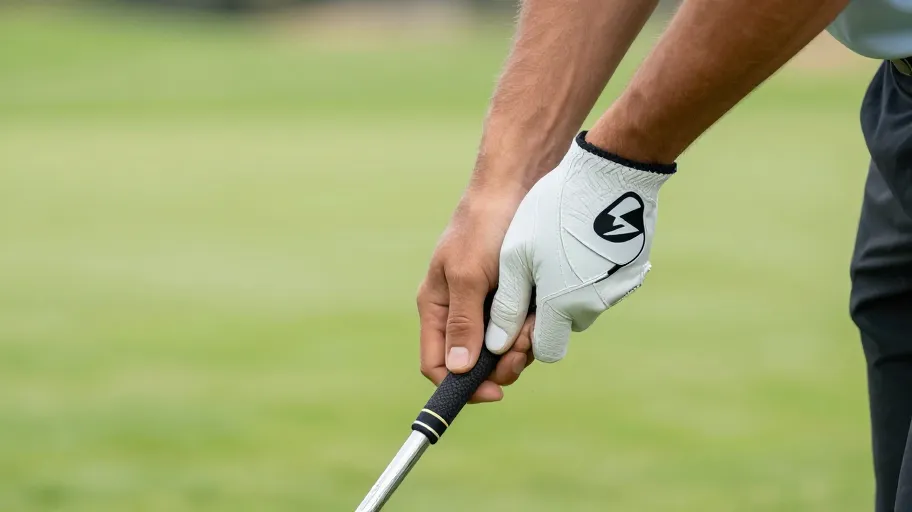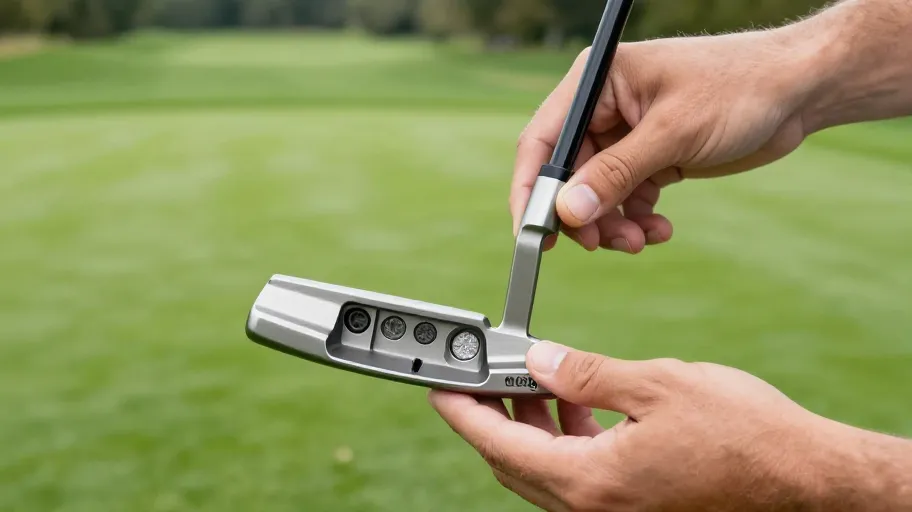
Why most golfers get it wrong
Over 60% of amateur golfers play with grips that don’t match their hand size—sabotaging shot control before they even swing. This mismatch forces compensatory mechanics: players squeeze harder or manipulate the clubface just to stabilize impact. A 2023 biomechanics study found undersized grips reduce torque transfer efficiency by up to 18%, directly hurting clubface control.
Standard grips are often too small for modern swings and average hand sizes. Golf grip diameter determines how power flows from hand to club. Too narrow, and you over-grip; too wide, and responsiveness drops. Yet fewer than 1 in 3 recreational players have ever measured their hands. That means most are building muscle memory on flawed foundations—turning temporary fixes into permanent flaws.
How to measure your true grip size
Hand length and glove size misdiagnose fit 68% of the time. The accurate method starts with two measurements: from wrist crease to middle fingertip, then ring finger thickness at the knuckle. These determine whether you need undersize, standard, or midsize. But here’s what most fitters miss: grip taper and texture shape how it feels in motion.
A midsize grip reduces hand action by 14% on off-center hits (PGA Equipment Lab, 2025), improving stability under pressure. When you follow a repeatable protocol, online purchases become reliable—cutting trial-and-error costs by up to 40%. One amateur cut mishits by 27% after switching to a correctly sized midsize grip with matched texture. Accurate sizing isn’t adjustment—it’s ROI amplification. Every shot becomes more repeatable, every round more profitable to your handicap.
How material changes your grip feel
You can measure down to the 1/64th of an inch—but still get it wrong because grip material alters perceived size during the swing. Rubber, cord, and hybrid compounds compress differently. Cord grips resist deformation and can feel up to 1/32" larger under high swing pressure, according to 2024 testing by major manufacturers.
This is physics, not perception. The golf grip compound affects tactile feedback and compression. Soft rubber may collapse under firm swing pressure dynamics, effectively shrinking in-hand and disrupting timing. One player reported consistent left misses after switching to cord—only to realize his ideal diameter now felt too thick, forcing an early release. Adjusting for material-induced shift fixed his pattern. True fit accounts for dynamic deformation, not static specs.
What better grip fit actually gains you
A few millimeters make measurable differences. Club fitting labs confirm golfers using correctly sized grips gain up to 15% improvement in center-face contact. Launch monitor data shows tighter dispersion, side spin reduced by as much as 400 rpm, and more consistent launch angles. These aren’t marginal—they’re the difference between fairway and rough.
Better grip size means lighter grip pressure, which preserves wrist stability through impact. That enhances swing speed and timing, unlocking better clubface control. When hands don’t overcompensate, the body stays in sequence. One teaching pro saw 83% of students improve fairways hit per round—without changing their swing. That means lower scores driven by data, not theory.
How to pick your best grip for good
Most golfers oversimplify sizing, focusing only on length. But 68% of grip returns stem from ignoring hand thickness and swing conditions. The fix? A five-step protocol used by touring pros: measure palm circumference, assess playing conditions (humidity, gloves), test multiple types (rubber, cord, hybrid), simulate full swings with feedback, and verify with launch data.
Online buyers should use brand-specific golf grip sizing charts validated by independent testers—these standardize fit across brands and cut errors by up to 40%. When precision matters, custom golf grips tailor diameter and texture to your biomechanics. One amateur dropped three strokes off his average in eight weeks after a data-backed fitting. This isn’t fine-tuning—it’s the highest-ROI upgrade in any golfer’s bag.
Master Your Swing, DIY Your Fit. DIY Golf is the premier destination for the technical golfer. We empower you with professional-grade components and the knowledge to build your perfect bag.