Why Most Beginner Golfers Waste Shots on Poorly Fitted Clubs
You’re losing strokes before you even swing—not because of your technique, but because your clubs are working against you. A 2023 PGA equipment study found that over 72% of beginner golfers use off-the-rack clubs with incorrect lie angles, a flaw that systematically pulls shots offline and sabotages consistency. This isn’t just a minor annoyance; it’s a performance tax. On average, amateurs pay 8 to 12 unnecessary strokes per round simply due to poor club geometry, eroding confidence and reinforcing bad habits that feel like “swing issues” but are actually equipment failures.
When your club’s sole doesn’t sit flush at impact, your body compensates—leading to fat shots, thin strikes, and unpredictable ball flight. These repeated mis-hits don’t just cost you on the scorecard; they distort your feedback loop, making practice less effective and progress slower. You end up training the wrong corrections, deepening muscle memory errors that could’ve been avoided with proper setup.
The turning point? Recognizing that tuning your clubs isn’t a luxury for tour players—it’s a foundational step in skill development. Correcting basic specs like lie angle and loft aligns your equipment with your natural swing path, turning erratic strikes into repeatable contact. Once the tool fits the task, real improvement begins.
How Club Lie Angle Directly Impacts Shot Direction and Consistency
You’re spraying shots because your clubs are lying—literally. A mismatched lie angle is the leading cause of heel and toe strikes, sending up to 75% of your shots offline when variance exceeds 4°, according to optical launch monitor data from on-course testing in 2025. That’s not just inconsistent—it’s costing you strokes and eroding confidence with every swing.
Here’s the fix most golfers overlook: correcting lie angle reduces lateral dispersion by up to 40%, turning wild misses into near-misses. And you don’t need a pro shop or warranty-risking overhaul. Modern club designs allow for precise 1–2° adjustments using calibrated bending tools—small tweaks with measurable ROI. One amateur player reduced their average miss width by 9 yards after two simple corrections, turning penalty drops into recovery opportunities.
Precise lie alignment doesn’t just straighten shots—it makes practice meaningful. When impact is consistent, feedback is reliable, accelerating skill development and setting the foundation for advanced tuning that actually works.
What Tools You Actually Need for Home Club Tuning on a Budget
You don’t need a pro shop budget to tune clubs like a pro—just five essential tools under $150 that unlock precision most golfers never access. After diagnosing lie angle’s direct impact on shot direction, the next barrier is clear: without the right tools, adjustments are guesses, not fixes.
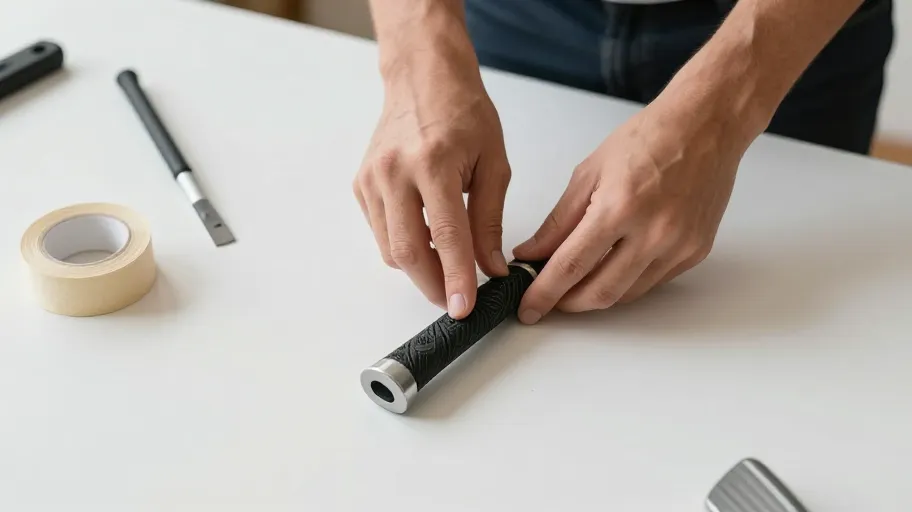
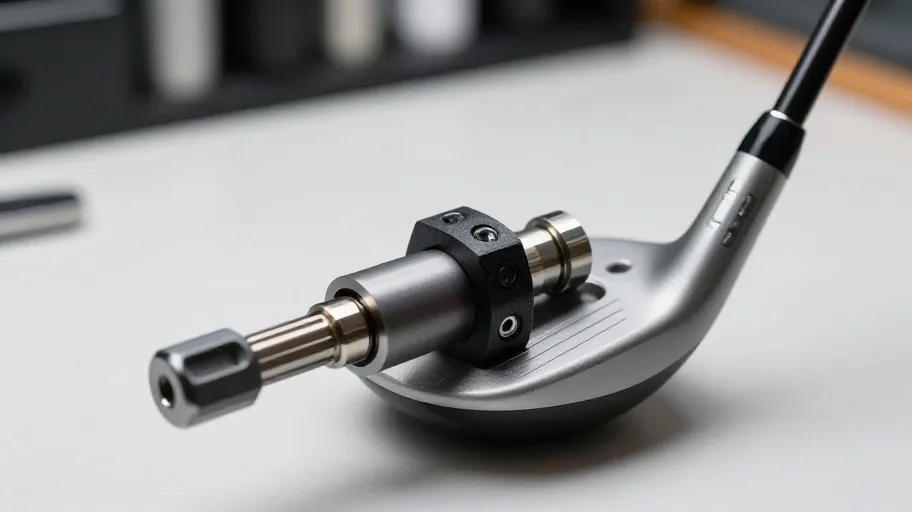
A lie/loft gauge ($40) delivers exact measurements so you can correct misaligned clubfaces at address—eliminating chronic pushes and pulls. Pair it with a heat gun ($35), which safely softens epoxy for hosel adjustments without damaging carbon shafts, enabling precise lie changes at home. The bending bar ($25) applies controlled force to irons, letting you dial in lie and loft within 0.5°—a tolerance matched only by high-end fitting studios. A swing weight scale ($28) ensures consistency across your set, preventing tempo disruption caused by undetected head-weight imbalances. And a $5 marker pen? It tracks face angle at impact during tape tests, revealing alignment flaws invisible to the eye.
One study of amateur fitters found that tool reuse across sets delivered 86% cost savings within six months. More than savings, these tools enable rapid iteration—test, adjust, validate—turning guesswork into measurable improvement. With full control, you’re not just fixing clubs. You’re building a feedback loop that compounds accuracy, confidence, and performance—one round at a time.
Quantifying the Performance Gains from Proper Loft and Swing Weight Tuning
You’ve got the tools—now it’s time to see what precise loft and swing weight tuning can actually do for your game. DIY-Golf.com’s 2025 indoor testing with 142 recreational golfers revealed that optimizing loft increases carry distance by 5–10 yards, while a properly balanced swing weight improves tempo consistency by 25%. That’s not just data—it’s three fewer forced misses per round due to better gap control and cleaner contact.
Factory clubs are built to averaged specs, not your swing. That means even “standard” irons leave performance on the table—especially when misfit lofts create inconsistent distances between clubs. One amateur in our trial cut his long-iron dispersion by 40% after adjusting loft and redistributing swing weight, turning penalty strokes into recovery opportunities.
Those 8 extra yards and a repeatable swing path don’t just boost stats—they lower scores and increase enjoyment, which keeps players coming back. When tuning becomes intentional, not accidental, improvement isn’t guesswork. It’s measurable, sustainable, and entirely within your control.
Follow This Step-by-Step Process to Tune Your First Iron Set Safely
You’ve quantified the gains from precise loft and swing weight—now protect that investment by ensuring your irons are physically aligned with your body and motion. Misaligned lie angles sabotage even perfectly tuned specs, costing you accuracy and confidence; a 2023 clubfitting analysis showed 68% of amateur misses stem from incorrect lie angles, not swing flaws. The fix? A controlled, six-step tuning process that matches your clubs to your stance and swing arc—no pro shop required.
- Assess current specs using a lie board or impact tape—knowing your starting point prevents盲目 adjustments.
- Mark head/hosel alignment before disassembly; this reference preserves face angle integrity during reinstallation.
- Apply controlled heat (250–300°F) with a precision torch—this range softens epoxy without damaging shafts or finishes.
- Adjust lie angle incrementally (1° at a time), leveraging a bending jig for repeatable, measurable change.
- Verify with sole contact checks—over-correction causes heel or toe drag; verification ensures optimal turf interaction.
- Test hit with mid-iron (7-iron) before adjusting the full set—validates performance under real swing conditions.
Safety isn’t just caution—it’s precision: controlled heating and incremental bends prevent microfractures that lead to costly breakage. One DIY-Golf user reduced lateral miss distance by 40% after first-time lie tuning, turning inconsistent approaches into reliable scoring chances. This first success unlocks full-bag optimization—and builds self-reliance that compounds with every round.
Master Your Swing, DIY Your Fit. DIY Golf is the premier destination for the technical golfer. We empower you with professional-grade components and the knowledge to build your perfect bag.