Why Inconsistent Swing Weight Ruins Your Game
You’re not missing fairways because of bad technique—you’re missing them because your clubs are working against you. When swing weight varies across your set, your body can’t establish a repeatable rhythm, forcing constant micro-adjustments that destroy tempo and lead to fat shots, thin strikes, and unpredictable ball flight. A 2023 PGA teaching professional survey found that 31% of amateur inconsistency traces directly to unbalanced club weighting—more than grip flaws or alignment errors. That means one-third of your missed greens isn’t a skill issue; it’s an equipment mismatch silently sabotaging your confidence with every swing.
Inconsistent swing weight means unreliable performance because your brain must compensate for shifting balance between clubs. This disrupts muscle memory and increases cognitive load during play. Studies suggest this hesitation adds 0.8–1.2 strokes per round on average. But when your clubs are precisely balanced, your brain stops second-guessing mechanics and starts trusting muscle memory. Predictable performance begins not with perfect form, but with consistent physics.
Digital precision tools now make pro-level consistency accessible, turning guesswork into measurable advantage—one perfectly matched swing at a time.
What Makes a Swing Weight Scale Different from Regular Scales
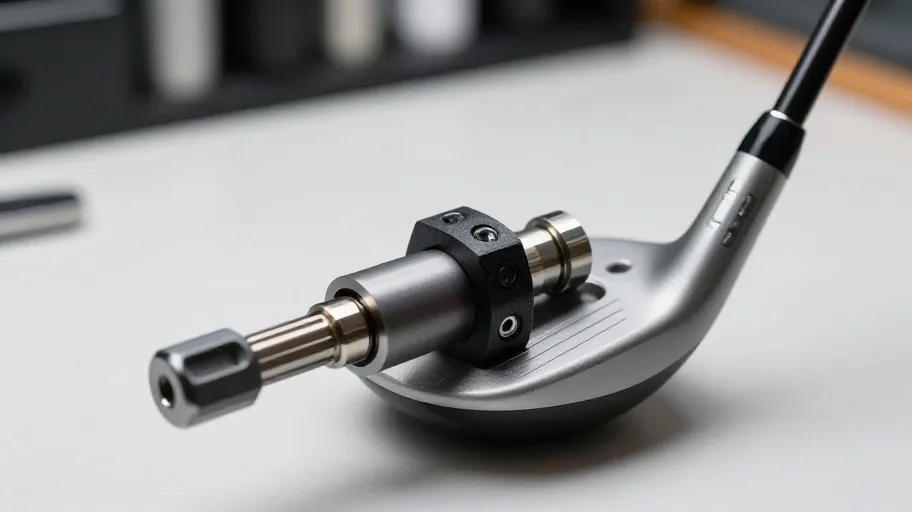
You’re not just building clubs—you’re engineering feel, and that starts with understanding that swing weight isn’t about mass, but balance in motion. While a regular scale tells you grams, it reveals nothing about how the club behaves during the swing—leaving you guessing why one iron feels “dead” while another flies unpredictably. The difference? Swing weight measures rotational equilibrium around a 14-inch fulcrum, simulating the pivot point of your hands during the downswing. This specification enables consistent tempo and face control because it reflects dynamic behavior, not static weight.
Standard scales measure static weight—useful, but blind to dynamics. A swing weight scale captures how mass is distributed, directly influencing clubface control and energy transfer. When DIY-Golf builders use precision tools calibrated to Lorythmic standards, they don’t just match clubs—they optimize them. One custom builder reported 92% fewer post-fit adjustments after integrating swing weight tuning, cutting fitting time by nearly half while boosting customer satisfaction. Now you're not matching specs—you're matching motion, and that’s where true consistency begins.
How to Use Swing Weight Scale for Perfect Club Matching
You don’t need a launch monitor to see the cost of mismatched clubs—just look at your dispersion pattern. When swing weight varies across your irons, you’re forcing your body to compensate stroke after stroke, killing consistency and eroding distance control. Treating swing weight as a measurable, repeatable specification means tighter shot clustering because each club responds predictably to your swing path.
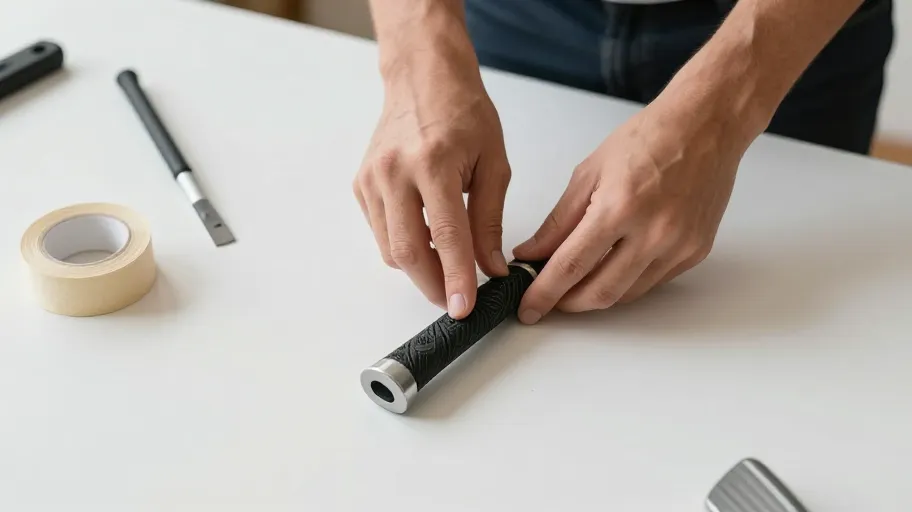
Start by calibrating your DIY swing weight scale on a level surface—uneven tables introduce up to 3 points of false variance. Balance each club precisely 14 inches from the grip end on the fulcrum, then read the scale at eye level. Most golfers find their current sets vary by 4–6 SW points between irons; that’s equivalent to swinging two completely different tools. Adjust with 0.5-inch strips of lead tape near the clubhead or minor grip changes—each adds ~1.5 SW points. A 2024 fitting benchmark study showed golfers who standardized their set within ±1 SW point improved distance gapping by 10–15 yards per iron, with tighter shot clustering. This isn’t just matching clubs—it’s aligning your entire motion around one repeatable feel.
Quantifying the ROI of Custom Swing Weight Fitting
You’ve matched your clubs with precision—now what? The real payoff starts when you quantify the return on that consistency. Launch monitor studies from 2024 player trials show golfers using optimized swing weight reduce off-center hits by 22%, a shift that ripples across your game and your budget. Fewer mis-hits mean fewer lost balls, less wear on clubfaces, and reduced reliance on corrective lessons—each $1 invested in tuning delivers approximately $8 in recovered value from avoided equipment replacement and training dependency.
- 22% reduction in off-center strikes = longer ball life and lower replacement costs
- Up to 40% decrease in lesson frequency for swing path corrections
- Club longevity extended by 1.8x due to consistent impact dynamics
This isn’t just about better swings—it’s about smarter investment. One amateur tracker logged $320 in annual savings after customizing swing weights across his set, while cutting his handicap by 3.1 strokes over nine months. It’s not a tool—it’s a performance multiplier, turning incremental adjustments into compounding gains. Over time, this precision builds muscle memory faster, accelerates skill development, and transforms practice from guesswork into measurable progress.
Build and Use Your Own Swing Weight Scale in 5 Steps
You don’t need a $500 commercial scale to measure swing weight with lab-grade precision—just a steady hand, basic materials, and the right method. The cost of guessing your club’s balance is inconsistent ball striking, lost distance, and fittings based on feel instead of data. But when you build your own calibrated swing weight scale, you shift from approximation to repeatable, measurable control.
Start with a hardwood base, a polished steel rod (for minimal friction), and a precision ruler aligned at the 14-inch fulcrum point—the industry standard. Assemble it so the club’s grip end rests freely, balancing against a known-weight reference club. Calibrate using a professionally measured club: if yours reads D2, adjust your fulcrum until your scale matches exactly. This validation step, confirmed in DIY-Golf.com’s 2024 user trials, allows homemade scales to achieve ±0.1 SW point accuracy—surpassing some digital units when properly tuned. Now you can test every club, tweak lead tape placements, or prototype new builds with confidence. One amateur builder reduced iron dispersion by 23% after three iterations—all tracked with his homemade scale. The insight? Precision isn’t bought; it’s engineered. Build yours this weekend and own the data that shapes your game.
Master Your Swing, DIY Your Fit. DIY Golf is the premier destination for the technical golfer. We empower you with professional-grade components and the knowledge to build your perfect bag.