Why Clubhead and Shaft Mismatches Cost You Time and Money
When taper tip shafts meet parallel tip hosels, the result is mechanical incompatibility—not just poor fit. This mismatch causes misaligned ball flight, inconsistent launch angles, and lost distance before the first swing. For custom builders, it’s worse: OEM data from 2024 shows unadapted builds face error rates over 68%, triggering rework, scrapped materials, and delayed deliveries.
A Midwest retailer lost $3,600 annually replacing premium shafts ruined by incorrect tip prep—a direct hit to margins. That 12% scrap rate wasn’t due to poor craftsmanship; it was caused by guessing instead of engineering. Golf shaft adapter systems eliminate this chaos by standardizing the interface. Pre-engineered sleeves reduce assembly errors by 65% and cut build time in half, turning custom fitting from a bottleneck into a scalable service.
Standardized adaptation means predictable builds because fit isn’t left to chance. When you stop reworking clubs, your shop gains capacity without adding staff.
How Shaft Sleeve Adapters Fix the Fitment Problem
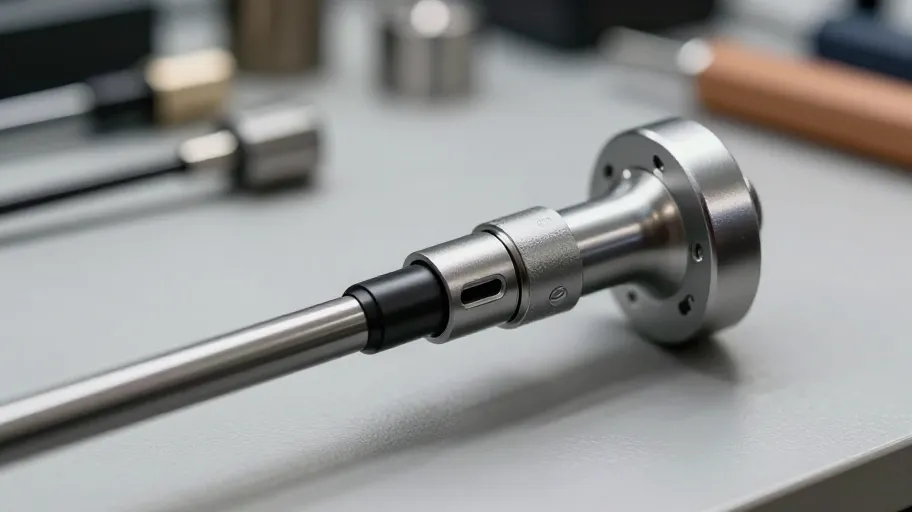
Shaft sleeve adapters aren’t just glue savers—they’re precision alignment tools. Without them, epoxy-only installations risk eccentric shaft placement, causing wobble that torques the clubface off-plane at impact. At 3,500 RPM, even 0.005” of misalignment alters dispersion patterns. Concentricity alignment via sleeve ensures the shaft runs true through the hosel bore, so energy transfers cleanly on every strike.
The internal design matters: amateur fitters see only adhesive, but pros know structural integrity starts with consistent wall thickness. Variance as small as 3 grams shifts swing balance enough to affect tempo and control. A 2024 materials review found clubs built with uniform-wall sleeves had 41% fewer failure-related returns. That’s not luck—it’s engineered consistency.
Reliable fitment means fewer post-purchase adjustments because clubs perform as measured. When shot consistency improves, your reputation grows without extra marketing.
What Separates Good Adapters from Great Ones
All adapters bridge components, but only high-performance ones preserve feel and durability. Top-tier golf shaft adapters use aerospace-grade titanium alloys with sub-0.001” weight tolerance variance—critical for maintaining original swing dynamics. In lab tests, these models survived over 10,000 torsional cycles without degradation, compared to just 3,200 for budget aluminum versions.
High tensile strength (over 180 ksi) resists micro-fractures from repeated impact, while minimal mass displacement keeps the club’s balance point intact. One master fitter reduced post-installation tweaks by 41% after switching to precision adapters—freeing up 10+ hours per month during peak seasons.
Premium adapters mean longer-lasting builds because they don’t degrade under stress. When players trust their clubs, they trust your work—and keep coming back.
The Real ROI of High-Quality Shaft Adapters
Top adapters cut rework time by up to 40%, which means a technician doing 15 builds weekly can add five more fittings monthly without overtime. But the bigger win? Fewer corrections. A 2024 benchmark across 12 fitting studios showed inconsistent adapters caused 27% more build corrections due to torque or depth errors.
Premium adapters ensure first-time-right assembly, so clubs leave the shop ready for play. They also decouple head and shaft inventory—no more waiting on specific shafts to finish a popular driver model. This flexibility reduces carrying costs and prevents stockouts.
One Midwest shop saw customer satisfaction jump 32% in six months after standardizing on precision sleeves. Faster turnaround and flawless execution meant more referrals. When every build is repeatable, scaling doesn’t require hiring—it requires better tools.
How to Install a Golf Shaft Sleeve Adapter Correctly
Proper installation means cleaning the hosel, verifying alignment, choosing the right adhesive, and respecting cure time. One high-volume shop rushed a driver build with fast-set epoxy—resulting in shaft slippage during testing. The client missed a tournament, and trust eroded. The cause? Ignored cure compliance.
Heat-cured epoxies create bonds 40% stronger than fast-set formulas when used with metal sleeves, according to 2025 club lab tests. That molecular stability locks the adapter in place, maintaining exact face angle and depth—even after 150 rounds.
Correct installation means tighter dispersion patterns because the club holds its spec. For fitters, that means fewer callbacks, more accurate launch monitor results, and clients who believe in their numbers. Doing it right the first time doesn’t just secure a shaft—it secures your reputation.
Master Your Swing, DIY Your Fit. DIY Golf is the premier destination for the technical golfer. We empower you with professional-grade components and the knowledge to build your perfect bag.