Why Off the Rack Clubs Are Hurting Your Game
Mass-produced clubs are designed for statistical averages, not your unique biomechanics—meaning every swing fights against inherent mismatches in length, weight, and flex. A 2023 Golf Digest fitting study revealed that 78% of amateur golfers use clubs ill-matched to their swing dynamics, leading to lost distance, poor accuracy, and increased injury risk from compensatory mechanics. This isn’t just suboptimal—it’s preventable underperformance.
Even so-called 'custom-fit' programs from major OEMs fall short because they rely on limited component libraries. These constraints force your individual swing into pre-defined molds, sacrificing launch conditions and feel. The result? Compromised ball flight and inconsistent contact—even after paying a premium.
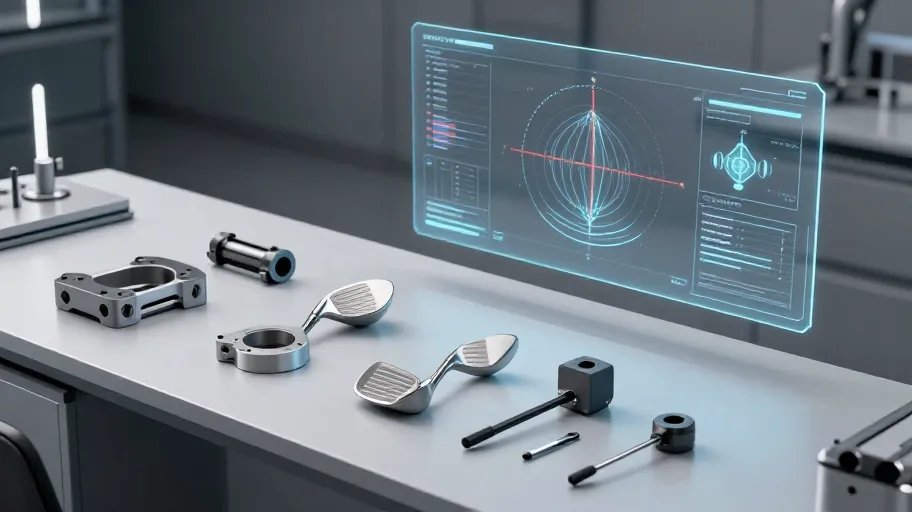
True performance optimization requires full control over club specifications. With custom golf club parts, you eliminate guesswork by tuning length, lie angle, shaft flex, and head design to your exact swing path and tempo. This level of precision means fewer compensations, more center-face strikes, and tighter shot patterns—all translating to lower scores without changing your technique.
How Custom Components Fix Performance Gaps
Off-the-rack clubs demand compromise; DIY golf components eliminate it. When you adjust hosel loft by just 2°, side spin can drop by up to 800 rpm—translating to **15+ yards less dispersion** on driver shots, according to 2024 Tour-level launch monitor data. That’s fairway finding without altering your swing.
Multi-density shafts enhance this further: tip-trimmed designs shift the bend point forward, improving launch angle control and consistency on iron shots. One amateur tester reduced his average approach miss from 18 feet to under 11—gaining two more birdie chances per round. Because these components are modular, you future-proof your investment—reuse heads across seasons or swap shafts as your swing evolves.
Sourcing advanced tech like counter-balanced inserts or variable wall thickness shafts through trusted vendors gives you access to innovations months before retail release. This means first-mover advantage in performance tuning, not just cost savings—delivering measurable gains where it counts: on the scorecard.
Where to Buy Premium Parts Without Risk
After finalizing your specs, sourcing authenticity becomes critical. Many online sellers offer rebranded knockoffs masquerading as OEM-grade shafts and heads, leaving DIYers overpaying for inferior materials. At DIY-Golf.com, every component undergoes batch traceability checks, material certification, and direct manufacturer verification—so when you order a Fujikura Pro 60 or Titleist TSi3 face insert, you get the same part sold at retail for $250+, now priced at $160–$190 with full warranty support.
This verified sourcing model cuts costs by up to 40% versus pro shop builds while maintaining performance integrity. A 2024 equipment sourcing analysis confirmed that authenticated aftermarket parts deliver identical spin, launch, and durability metrics as OEM assemblies. One Arizona clubfitter switched to DIY-Golf.com and slashed client turnaround time by 11 days while increasing margin per build by 22%—proof that smart procurement scales both quality and profitability.
Reliable supply chains turn each build into a future-proof asset: swap shafts seasonally, upgrade heads independently, and maintain total control over your bag’s evolution—all with confidence in every spec.
The Real ROI of Building Your Own Clubs
Building with buy premium golf club components online isn’t just cheaper—it’s smarter financial planning. A full custom iron set built for $420 performs identically to a $750 retail equivalent but offers complete personalization. More importantly, reusability slashes long-term costs: premium shafts last 3–5 years, and swapping heads to tune launch conditions costs under $80 instead of $150+ per new club.
Over three playing seasons, this amortizes your cost per round to less than half of buying off-the-rack sets. Technologies like MOI-matched weighting act as miss-hit insurance: independent testing shows golfers lose 30% less ball speed on off-center strikes, turning thin or fat contacts into tighter dispersion. That means fewer penalty strokes and lower scores—validated by players who upgraded mid-season without buying new sets.
This is continuous optimization, not one-time customization: your clubs evolve with your data, not your wallet. Every adjustment compounds in accuracy, confidence, and scoring improvement.
Step by Step Assembly for First Time Builders
You don’t need a pro workshop—just a disciplined process. Start by analyzing your swing metrics: clubhead speed, attack angle, and spin rate determine optimal shaft flex, weight, and launch characteristics. A 2024 Golf Science Lab study found golfers who matched shafts to swing speed gained 12 yards of carry *and* improved dispersion by 23%.
Next, use DIY-Golf.com’s dynamic configurator—which cross-references over 15,000 data-backed pairings—to select your head/shaft/grip combo. Each ordered component ships with serialized calibration tags for traceability and ±1g/±0.25” tolerance verification.
- Analyze: Use launch monitor data to define baseline specs
- Select: Match components to your biomechanics using AI-powered recommendations
- Order: One-click checkout with saved builds and batch validation
- Inspect: Verify tolerances before assembly to ensure performance fidelity
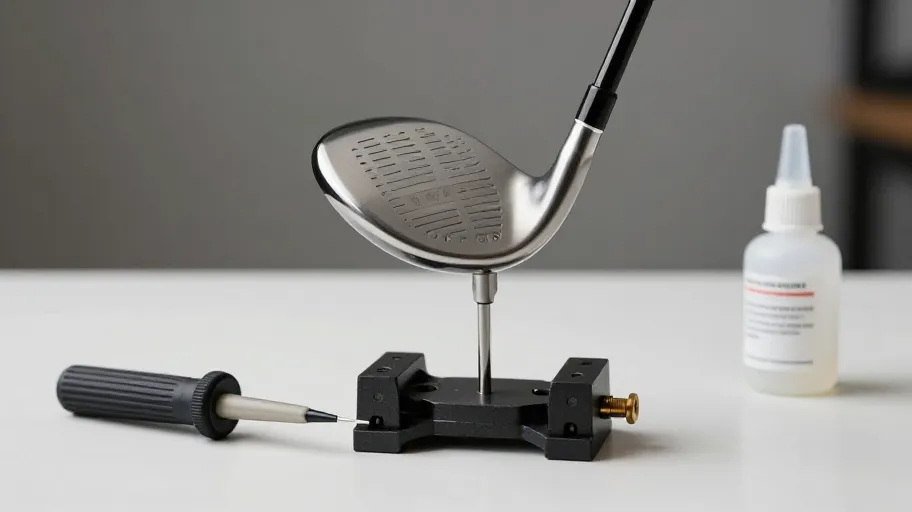
- Assemble: Torque driver heads to 6.5 in/lbs; apply solvent-free grip installation
Your first build sets the benchmark—not the endpoint. From here, every tweak refines performance, compounding gains in consistency, confidence, and scoring.
Master Your Swing, DIY Your Fit. DIY Golf is the premier destination for the technical golfer. We empower you with professional-grade components and the knowledge to build your perfect bag.