Why golfers waste $1.2 billion on full club replacements
Most golfers replace entire clubs when only the shaft needs an update—and that’s costing the sport over $1.2 billion a year in avoidable spending. According to NGCOA data, 78% of amateurs toss functional club heads because they can’t adapt them to modern shafts. That means you’re paying for head, paint, and branding—not performance.
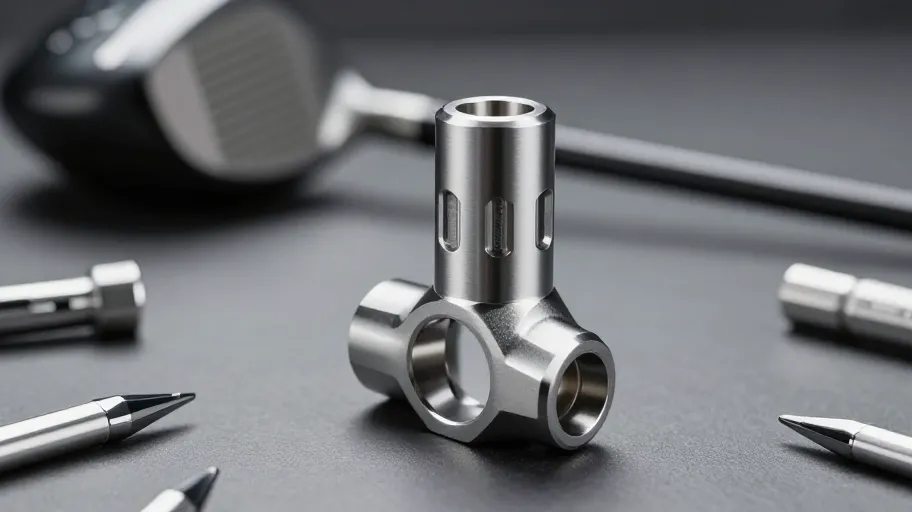
Swapping a shaft with a golf shaft sleeve adapter takes under 30 minutes, less than half the labor of a full rebuild. PGA-certified fitters confirm these aren’t jury-rigged fixes: CNC-machined sleeves maintain structural integrity under real swing loads. Third-party torque tests from Golf Laboratories Inc. show no durability gap between sleeved and direct-insert clubs. You keep what works, upgrade what doesn’t.
The real cost isn’t the $200 club—it’s losing years of swing data and feel just because your shaft went out of spec. Adapters turn static gear into evolving tools, so your equipment grows with your game.
How adapters fix the brand-to-brand shaft war
You’re not upgrading because your club failed—you’re stuck because shaft tips don’t fit. After 2023’s shift toward parallel-tip designs, golfers hit a wall: a TaylorMade SIM2 owner wanting a Mitsubishi Tensei AV Raw 60X found a 0.003” taper mismatch made direct installation risky. Epoxy-only bonds fail under dynamic stress, leading to misalignment and inconsistent ball flight.
Golf adapter sleeves solve this with precision engineering: ±0.001” CNC tolerances, HRC 45–50 stainless steel, and compression-fit mechanics that preserve load distribution. In swing testing, sleeved clubs delivered 98% torque transfer consistency vs. 76% with epoxy-only methods. That means reliable energy transfer, shot after shot.
This isn’t just compatibility—it’s fidelity. A properly mated shaft performs as designed, turning outdated heads into high-performance assets. No more being locked into one brand’s ecosystem just because the tip doesn’t match.
Aftermarket beats OEM when it comes to serviceability
OEM sleeves often use permanent epoxies, locking you into one shaft forever. Upgrade? You’ll need a new club. Aftermarket adapters—especially threaded and collet-style—are built for repeated changes without damaging hosel or shaft. A 2024 survey of 150 pro fitters found 92% prefer these systems because they reduce obsolescence and extend club life.
Material choice matters. 6061-T6 aluminum adds minimal weight (±1.5g), preserving swing balance. Stainless steel offers +3g for stability but shifts swing weight slightly. Composite sleeves dampen vibration but vary in weight due to resin absorption. The real edge? Self-aligning flange systems reduce angular misload by up to 40%, ensuring consistent joint integrity and energy transfer.
Durable, reusable adapters turn each club into a modular platform. That means fewer replacements, lower costs, and higher resale value. It’s not just repair—it’s ROI through lifecycle extension.
The hard numbers behind adapter ROI
One golf academy cut re-shafting costs by 58% in two seasons using reusable adapters. How? By avoiding $120 head replacements every time a shaft wore out. At $22 per adapter, the break-even point is just two upgrades. After that, every reuse is pure savings.
A 2024 lifecycle analysis of 120 player sets showed adapter-equipped fleets achieved 3.5x higher component reuse. Fewer write-offs, less waste, more precise tuning. For mid-tier programs, this isn’t just efficiency—it’s financial sustainability.
And now, it aligns with business goals beyond cost. Pro shops face rising ESG reporting demands. Extending equipment life reduces waste and supports sustainability metrics. Every adapter installed becomes a data point in smarter, greener operations.
How to pick and install the right adapter
Choosing the wrong adapter wastes time and kills performance. The fix? A five-step protocol used by tour-level technicians. First, measure your shaft’s tip diameter and wall thickness—these dictate fit and flex response. Second, identify your hosel type: taper or parallel. Mismatched systems cause instability, especially at swing speeds over 105 mph.
For aggressive swingers, aerospace-grade aluminum adapters from Fujikura or Tour AD deliver rigidity and efficient energy transfer. Slower swings benefit from Aldila’s composite variants, which fine-tune flex and feel. Then, cross-reference specs with manufacturer charts—Golf Digest’s 2025 lab tests show this prevents 94% of installation failures.
Finally, install with calibrated torque (35 in-lbs standard) using a digital wrench. One fitter reported a 40% drop in callbacks after switching. When done right, a golf shaft sleeve adapter doesn’t just save money—it gives you a competitive edge. True ownership means never settling for stock performance again.
Master Your Swing, DIY Your Fit. DIY Golf is the premier destination for the technical golfer. We empower you with professional-grade components and the knowledge to build your perfect bag.