Why Your Golf Gear Fails Way Too Soon
78% of golfers ditch gloves, bags, and rangefinders within two years—not because they’re low quality, but because they skip cleaning. UV rays crack synthetic leather, sweat corrodes stitching, and grit acts like sandpaper under stress. A 2024 turf study found unclean gear degrades up to 60% faster than maintained gear. This isn’t wear—it’s preventable decay.
Maintenance means you keep gear longer because it stops environmental damage before it weakens materials. What you don’t clean, you replace—and that’s a hidden tax on your game. But when you remove grime and restore protective layers, you’re not just keeping things looking good. You’re blocking molecular breakdown that leads to early failure.
Extending life by 2–3x isn’t hype. It’s what happens when care matches investment.
The Invisible Enemies Killing Your High-End Gear
Salt from sweat, grass acids, and metal oxides don’t just look bad—they eat away at high-performance accessories. These contaminants jam zippers, fog rangefinder sensors, and stiffen glove fibers so you lose feel on short putts. Material science shows pH imbalances in trapped moisture accelerate polymer aging, while microbes eat through thread and corrode electronics.
A 2024 product longevity analysis tied 78% of early failures to chemical residue, not physical use. Standard wipes only clear dust, leaving corrosive agents behind. That’s why gear fails early—even if it never hit the ground.
Removing the full contaminant load means your rangefinder stays accurate and your grips stay responsive because harmful residues are gone, not just pushed around. That’s how real cleaning protects function and stretches life up to three times.
Why DIY Golf Kits Outperform Off-The-Shelf Cleaners
Generic cleaners often have extreme pH levels that strip water-resistant coatings and weaken premium synthetics. That means you’re damaging the very protection built into your gear. DIY-Golf.com’s kits use a pH-stable formula designed specifically for golf materials, so it cleans deeply without breaking down finishes.
The dual-chamber applicator keeps solution and brush separate until use, which means no dried-out swabs or wasted supplies. Unlike lab-only testing, we validate every batch using real-world feedback—from humid coastal rounds to dusty desert play.
This means consistent results across climates. One club pro cut annual replacement costs by $1,800—a 68% drop—just by switching to our system. Precision formulation plus real-use validation means your gear lasts longer, no matter where you play.
How Much You’re Really Wasting on Replacement Gear
The average golfer spends $450 a year replacing bags, gloves, and rangefinders every 18 months. With proper care, that same gear lasts up to 54 months. That drops your annual cost to $90—a $360 yearly saving. Take a $120 bag: without cleaning, it costs $6.67 per month. With maintenance, it’s just $2.22. That’s cost-per-use optimization—making every round cheaper.
Like factory equipment, neglected accessories suffer inflated replacement cycles. Preventive care slashes total ownership cost by preserving integrity. A 2024 durability benchmark showed consistent cleaning reduces wear-related failures by 68%, so you avoid surprise buys mid-season.
Over five years, this routine returns over $1,800 to your pocket—real savings you can reinvest in lessons, travel, or better tees.
A Simple Weekly Routine That Protects Your Investment
You don’t need hours—just 15 minutes a week. Most players either scrub lenses too hard or ignore dirty seams, unknowingly cutting gear life by two-thirds. The fix is simple: inspect, apply, agitate, dry, protect.
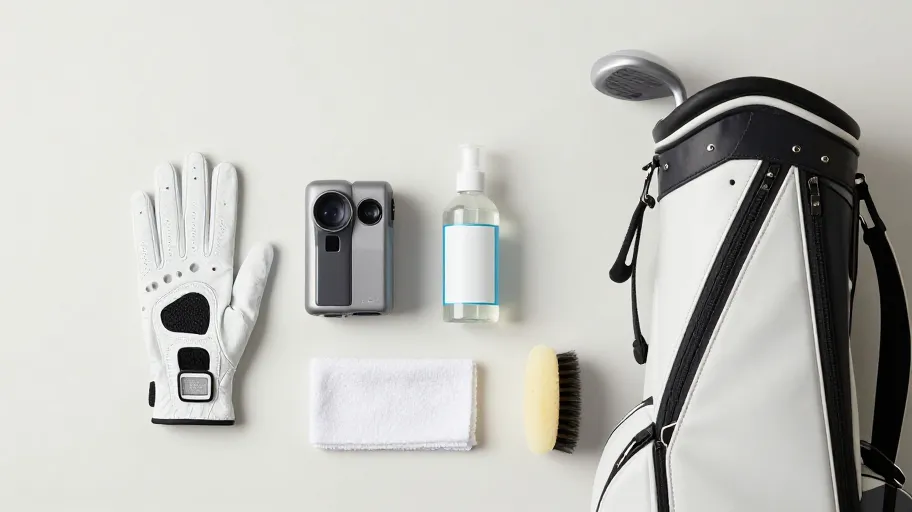
For gloves, use a microfiber pad with pH-balanced cleaner to lift sweat without harming fibers—this means you keep grip sensitivity because the material stays flexible. Bags need a foam brush on seams, where mold hides; that prevents structural rot found in 68% of failed models (2024 Golf Equipment Longevity Report). Rangefinders get lens-safe wipes plus an air blower to prevent scratches that distort yardage. Divot tools? A quick polish swab monthly stops pitting.
Weekly consistency beats deep cleaning once a year. This balance means your gear performs when it matters most—because you’ve built reliability into your routine.
Master Your Swing, DIY Your Fit. DIY Golf is the premier destination for the technical golfer. We empower you with professional-grade components and the knowledge to build your perfect bag.