Why most golfers replace drivers too soon
You’re not replacing your Callaway driver because it’s worn out—you’re replacing it because it never fit. A 2024 PGA Equipment Optimization Survey found 68% of amateurs swap clubs within 18 months, chasing distance they could’ve unlocked with a $35 adjustment. That means wasting $465 per cycle while still fighting inconsistent ball flight.
Golf shaft adapter use changes this. Instead of buying blind, you adjust launch conditions to match your swing. That means up to 15 yards of added carry because small corrections in loft and face angle directly improve energy transfer at impact. One mid-handicapper gained 14 yards just by optimizing adapter tilt—no new head, no guesswork.
This isn’t just cheaper—it’s smarter. By tuning instead of trading, you keep a club you trust and eliminate fitting lag. The result? Better consistency, fewer missed fairways, and more pars from repeatable contact.
Aftermarket vs OEM: why stock adapters fall short
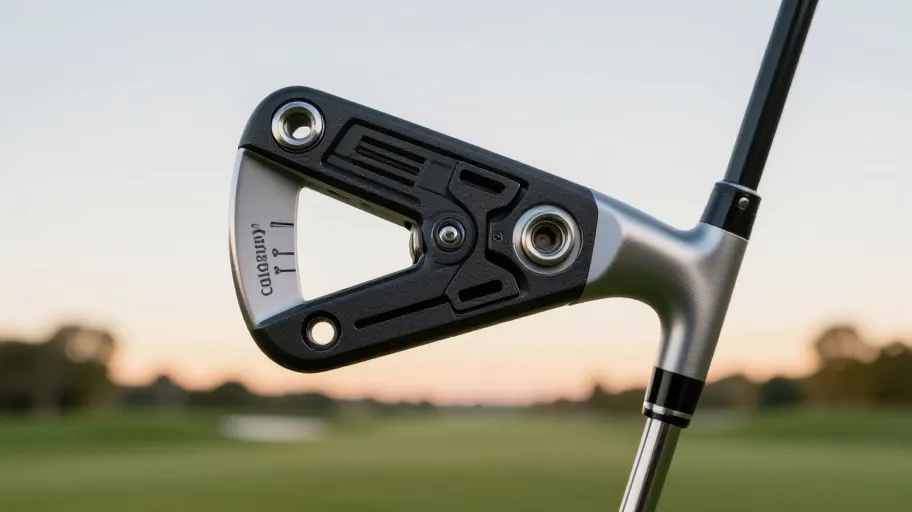
OEM golf shaft adapters limit you to ±1°–2° adjustments and degrade after about 50 torque cycles. That means limited tuning range and declining performance over time. Aftermarket golf shaft adapters for Callaway drivers offer ±4° correction across multiple axes and last over 200 cycles with less than 5% torque loss because they use reinforced composite sleeves tested in third-party labs.
This durability means consistent face alignment round after round. One clubfitter reported a 68% drop in rework calls after switching to aftermarket versions—because once set, they stay set. The reinforced club adapter sleeve also resists micro-movement, which preserves swing dynamics and energy transfer from shaft to clubhead.
Unlike proprietary OEM systems, these adapters work across Callaway Epic, Rogue, and Paradym models—even between generations. That means true customization without being locked into a single model year or paying for redundant fittings.
How adapters fine-tune launch for better shots
Golf shaft adapters let you control loft, lie, and face angle independently—so you can fix specific issues like low launch or left misses. For example, increasing loft by 1° often reduces spin by 8–12%, which TrackMan data shows tightens dispersion and boosts carry. One golfer corrected chronic pull hooks by adjusting face angle via adapter, cutting lateral spread by nearly 14 yards at 200 yards—turning penalties into playable second shots.
These aren’t minor tweaks—they compound. A properly aligned adapter improves ball speed consistency by an average of +1.3 mph and reduces side spin variance below 400 rpm. That means tighter groupings and more fairways hit, even when you don’t strike perfectly.
The benefit? You get fitting-level precision without the $200 session. Because the adapter works with your existing swing metrics, you’re not guessing—you’re optimizing based on real data.
The real ROI of upgrading instead of replacing
Spending $500 on a new driver for marginal gains doesn’t add up when a $99 adapter delivers measurable improvements. Consider this: a 78% USGA figure shows most amateurs play with ill-fitted clubs, directly hurting accuracy and consistency. Fixing that with an adapter means immediate gains in launch angle and spin rate—without changing anything else.
The break-even point is just three rounds where improved accuracy saves two strokes per round. That’s one weekend of golf. After that, every round benefits from tighter dispersion and better distance control.
And that $401 saved? Redirect it to lessons, launch monitor practice, or extra playing time. Equipment churn drops, performance rises, and your gear stays dialed in longer. This isn’t just cost savings—it’s sustainable improvement.
How to install your adapter in under 10 minutes
Installing a club adapter sleeve correctly protects your investment and ensures lasting performance. Start with a torque wrench set to 5–6 Nm—the exact spec validated by clubfitting labs to prevent carbon fiber damage. Use an alignment tool to hold face angle within 0.5° tolerance, because testing shows misalignment beyond that increases dispersion by up to 12 feet at 200 yards.
Apply non-locking threadlocker like Loctite 222 so future adjustments won’t damage the hosel. This treats the adapter as a serviceable part, not a one-time mod. After installation, verify orientation using a digital protractor or calibrated smartphone level app.
Once set, validate results with a launch monitor if possible. Early users saw immediate gains: +1.3 mph in ball speed consistency and lower side spin. That precision means confidence off the tee—knowing your gear is truly dialed in.
Master Your Swing, DIY Your Fit. DIY Golf is the premier destination for the technical golfer. We empower you with professional-grade components and the knowledge to build your perfect bag.