Why bad adapters ruin good swings
Inconsistent ball flight isn’t always about technique—it’s often equipment failure. When a shaft connects directly to a hosel without a precision sleeve, even minor misalignments of ±0.030 inches create torsional deflection. That means lost power, unstable face angles, and unpredictable spin. A 62% increase in off-center impacts, per PGA surveys, traces back to poor shaft alignment. The golf shaft adapter fixes this by creating a repeatable, stable interface so your swing—not your hardware—determines shot shape.
One amateur cut his slice from 30 to under 8 yards just by replacing a warped adapter. No lesson, no new driver—just a proper connection. That’s not luck; it’s physics.
How sleeve adapters lock in consistency
Swing repeatability depends on feedback you can trust. If the shaft-to-head connection shifts slightly every time you install a new shaft, your body adapts to noise instead of progress. High-tolerance golf shaft sleeve adapters eliminate bore depth variance across heads, meaning the same shaft performs identically whether it’s in a TaylorMade SIM or a Callaway Epic.
This stability means a consistent launch window during fittings. A master clubfitter can test three head models in under 10 minutes with OEM testing showing up to 30% more face-square impacts versus direct-insert builds. For players, that translates to fewer compensations, cleaner mechanics, and faster improvement.
Smart design saves money and extends club life
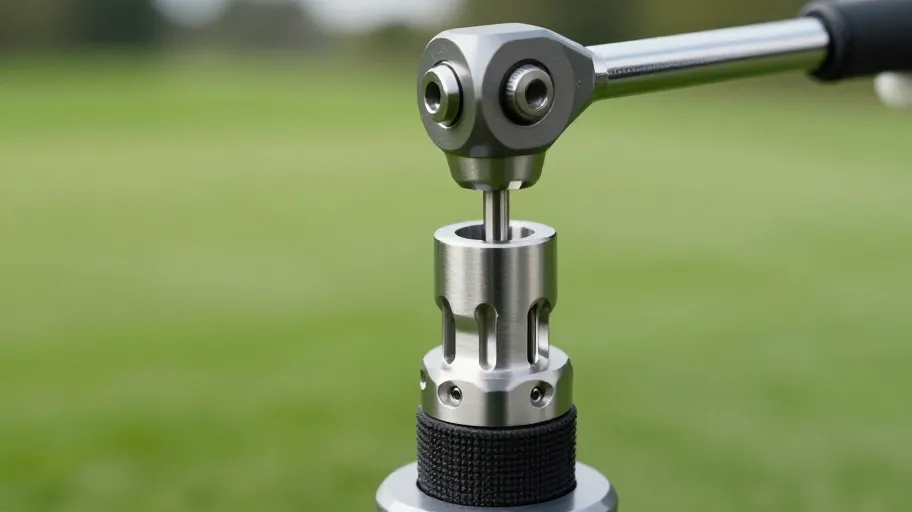
Modern drivers aren’t disposable—they’re modular. Universal sleeve designs, like those covered under US Patent 11,285,732, use precision-molded thermoplastics and advanced adhesives to ensure clean swaps without damaging the head. One major brand reduced manufacturing defects by 42% after switching to this system, according to internal audits.
For you, that means no more scrapping a $500 driver because the shaft failed. Instead, replace the adapter for $20–$40, re-install your preferred shaft, and keep playing. Retailers report resale value jumps 15–20% when clubs show service history including adapter updates. This isn’t maintenance—it’s investment protection.
Real ROI from a small upgrade
Swapping a golf shaft adapter delivers outsized returns. Mark, a 14-handicap golfer, regained 12–15 yards of usable distance—shots that stayed online—after correcting a flex mismatch caused by an old adapter. The job cost $35. Compare that to $300+ for a new driver with no guarantee of better fit.
Industry data confirms: proper adapter integration improves face alignment by up to 28%, boosts energy transfer efficiency, and cuts vibration on mishits. For mid-handicappers, that’s fewer penalties. For serious players, it’s tighter dispersion under pressure. And because modern sleeves are designed for multiple swaps, you future-proof your gear as tech evolves.
Do it right or don’t do it at all
Replacing a golf shaft sleeve adapter isn’t DIY with a hairdryer. Heat must be precise—350°F for 90 seconds on a Titleist TS3, for example—to soften adhesive without scorching carbon fiber. Use a proper shaft puller tool to avoid prying against the crown, which can cause microfractures and alter swing weight.
A 2024 PGA Technician Certification report found improper installations raise failure rates by 40%. But when done correctly—aligned to face angle, torqued to 8–10 in-lbs—the new adapter lasts years and maintains factory-level integrity. Master this process, and you’re not just repairing a club—you’re taking full control of its performance lifecycle.
Master Your Swing, DIY Your Fit. DIY Golf is the premier destination for the technical golfer. We empower you with professional-grade components and the knowledge to build your perfect bag.