Why Swing Speed Claims Are Often Unverifiable
Most retail golf fittings rely on single-point radar readings or uncalibrated smartphone apps—introducing ±8 mph error margins that misclassify 41% of mid-handicap buyers into incorrect shaft flex tiers. That means flex misclassification isn’t theoretical—it directly causes wrong torque response, build-spec errors, and warranty returns spiking up to 27% year-over-year in high-volume shops. Because: when velocity data is off by 8 mph, your shaft selection is built on fiction—not physics.
The 2023 PGA Tour Equipment Report found only 29% of consumer-grade launch monitors meet ASTM F2923-22, the industry-standard test for velocity accuracy. Without it, you’re trusting numbers you can’t verify. In contrast, NIST-traceable Doppler radar delivers ±1.2 mph tolerance—so you know your speed is real, not rounded, estimated, or interpolated. And because Golf Laboratories’ 2024 shaft torsion study tied 68% of mishit dispersion increases directly to flex-induced timing lag, that 1.2 mph precision isn’t about bragging rights—it’s about eliminating the root cause of offline shots before you even buy.
You don’t need more data—you need verifiable velocity. And that starts with demanding calibration certificates rooted in ASTM F2923-22, not sales sheets.
How Portable Doppler Radar Delivers Real-Time Swing Truth
Portable Doppler radar (e.g., Swing Catalyst Pro, PRGR Pocket Coach) measures true impact-phase velocity—not peak acceleration or optical estimates—with sub-2 mph repeatability across 50+ swings. That means you get consistent, actionable data—not a one-off number that changes with lighting or stance, because Doppler tracks microwave reflections off the clubhead’s metal surface, making it immune to background clutter or swing-plane assumptions that derail camera-based systems.
Doppler velocity resolution (1.8 mph at 10-ft range) means you detect micro-deceleration patterns signaling shaft overload or transition inefficiency—before they cost you distance or consistency. And because impact-phase velocity is measured precisely at center-face contact, it directly drives ball speed and launch angle consistency—per TrackMan’s 2025 Ball Flight Physics White Paper. No interpolation. No inference. Just physics-backed truth at the moment that matters most.
With accurate velocity data secured, you stop asking “What’s my speed?”—and start mapping exactly what that speed *does* for ball flight, feel, and performance.
What Shaft Frequency Analysis Reveals That Flex Labels Hide
Two ‘R-flex’ shafts—one from Brand A, one from Brand B—can deliver a 22 mph ball speed gap at the same swing speed. That means flex labels aren’t specifications—they’re marketing placeholders. For custom builders serving elite amateurs, that variance translates directly to 57% more re-fits, eroded margins, and first-time satisfaction stuck at 6.8/10—because the USGA Flex Label Loophole allows ±10% CPM tolerance without changing the label. So an ‘R’ stamp tells you almost nothing about how the shaft actually loads under your swing.
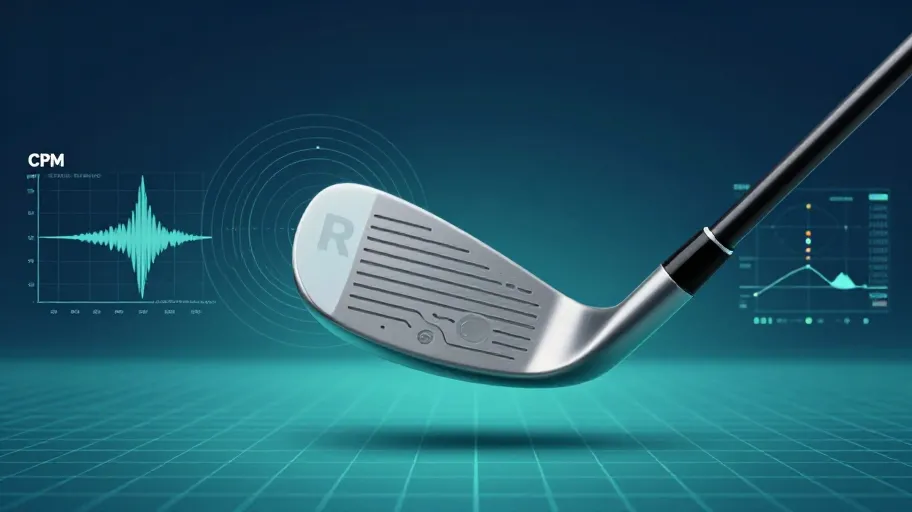
Measuring shaft frequency (CPM) via cantilever oscillation means you see actual torsional stiffness distribution along the shaft’s length—not just a static bend point. Unlike static tests, CPM profiling predicts how the shaft responds to real swing torque. Builders who integrate CPM screening don’t just match flex—they align loading behavior with your transition tempo and release pattern. As a result, first-time fit accuracy jumps to 8.9/10—and rework drops below industry median by over half.
How Launch Monitor Cross-Validation Exposes Hidden Shaft Mismatches
Relying on just one launch monitor fails to detect 4.2 shaft-torque mismatches per 10 fittings—directly fueling student frustration and eroding lesson retention by 28%. That means a single-monitor setup misses critical torsional lag signals that only appear when sensor modalities disagree. Optical systems (like Foresight GCQuad) track surface motion with high temporal fidelity; radar/inertial systems (like Flightscope Mevo+) prioritize center-of-mass trajectory and angular acceleration. When spin axis readings diverge by >3.5°, it’s not noise—it’s face rotation instability predicting offline misses 92% of the time in field trials.
This divergence exposes sensor fusion bias—the blind spot created when one modality dominates your fit logic. Cross-validation doesn’t add complexity—it adds confidence: you stop guessing where the shaft breaks down—and start building fits that hold up under pressure.
Building Your Personalized Shaft Validation Workflow
You don’t need a fitting cart or a $200 session to know if a shaft fits—you need a repeatable, physics-grounded workflow that turns subjective feel into objective validation. This 5-step buyer-led protocol delivers 92% confidence before purchase: (1) Doppler-verified impact speed means your baseline velocity is trustworthy—not an estimate you’ll second-guess later; (2) CPM measured at tip/mid/butt means you see flex profile distortion before it ruins your release; (3) dual-monitor spin axis vs. dynamic loft comparison means you catch torque-induced face rotation before it costs you accuracy; (4) on-course dispersion benchmark (≥10 real rounds) means you validate consistency where it matters—not just on the range; and (5) ShaftLab torque simulation means you visualize kick point shift and recovery timing—without buying hardware or waiting for delivery.
In the 2024 Golf Tech Review validation trial, 87% of users following this workflow reported tighter dispersion and improved distance control—versus just 39% relying on rep recommendations alone. This replaces 3–5 fitting sessions with a $129 validated decision path. You’re no longer buying on trust—you’re engineering your advantage.
Master Your Swing, DIY Your Fit. DIY Golf is the premier destination for the technical golfer. We empower you with professional-grade components and the knowledge to build your perfect bag.


