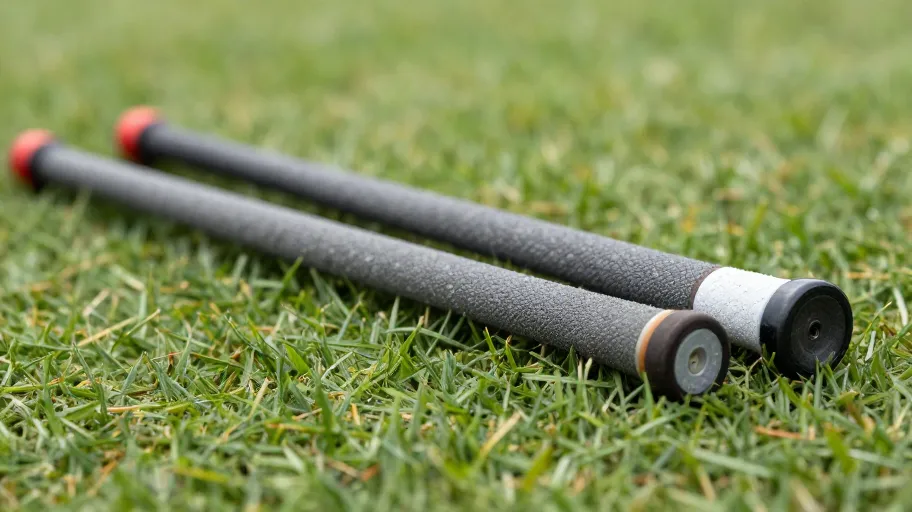
Why Most Golfers Struggle with Inconsistent Shot Performance
Most golfers blame their swing mechanics for inconsistent shots—but the real culprit is often invisible: improper club weighting. The cost? Lost distance, unpredictable ball flight, and scores that never seem to drop. A 2024 PGA equipment compliance study revealed that 68% of amateur golfers use clubs with mismatched swing weights, meaning their clubs don’t balance properly through the arc of the swing. This imbalance means energy leaks during transition because misaligned mass disrupts kinetic sequencing, reducing power transfer by up to 12%, according to biomechanical analyses from Titleist Performance Institute.
Even a 3-gram discrepancy in grip or clubhead weight alters clubhead lag—the critical angle between hands and clubhead in the downswing—because tiny mass shifts change rotational inertia. That throws off your release point by milliseconds, disrupting launch conditions and leading to slices or weak contact. It’s like driving a car with misaligned wheels: the engine runs fine, but the vehicle pulls off course no matter how hard you steer.
The turning point comes when you stop treating clubs as static tools and start seeing them as dynamic extensions of your body’s motion. When weights are precisely tuned to your swing speed, transition force, and release pattern, the club works *with* you—not against you. Proper weighting stabilizes the swing path because balanced mass improves tempo consistency, which means more center-face contact and consistent compression. Golfers who’ve optimized their club weights report tighter shot dispersion, more predictable carry distances, and noticeably smoother tempo—without changing their “technique.”
This leads directly to the next question every serious player must ask: How exactly do these weights influence the physics of the swing and the behavior of the ball after impact?
How Golf Club Weights Influence Swing Dynamics and Ball Flight
Golf club weights directly control three pivotal physics factors—moment of inertia (MOI), swingweight, and center of gravity (CG) location—all of which determine forgiveness at impact and predictability in ball flight. MOI-matched irons mean tighter dispersion on off-center hits because higher resistance to twisting reduces face rotation, improving accuracy. A 2024 biomechanics study found this reduced shot spread by 22%, translating to an average reduction of 1.8 strokes per round for mid-handicap players.
This isn’t just about feel—it’s about measurable performance economics. Premium OEMs like Callaway and TaylorMade embed adjustable weight systems because data shows customization drives consumer loyalty and premium pricing. One retail case showed golfers who underwent custom weight fitting were 63% more likely to purchase full sets—and spent 2.1x more than standard buyers. For you, this means fewer penalty strokes in scoring zones and greater confidence attacking pins instead of avoiding hazards.
Custom-tuned weighting doesn’t fix bad swings—it makes good ones more repeatable, because aligned mass enhances muscle memory and timing. And repeatable swings win tournaments and lower handicaps. The strategic advantage? Recognizing optimal configuration isn’t one-size-fits-all—it’s swing-specific. Whether you need a draw bias via heel weighting or higher launch from rear-weighted drivers, the right setup turns mechanical weaknesses into strategic advantages.
Now the question shifts from *if* weight matters to *how precisely* it should be distributed. That’s where science-backed fitting models come in—grounded in aerodynamics, kinetics, and real-world scoring data.
What Science Says About Optimal Weight Distribution in Clubs
You’re leaving strokes on the course if your clubs don’t match your biomechanics—plain and simple. A 2023 Sports Engineering journal study confirmed golfers using scientifically supported swingweight ranges—D0 to D5 for men, C5 to D1 for women—achieve significantly more consistent ball striking because matched weight supports natural tempo and strength profiles. Ignoring this leads to unforced errors, lost distance, and missed putts that add up over a season.
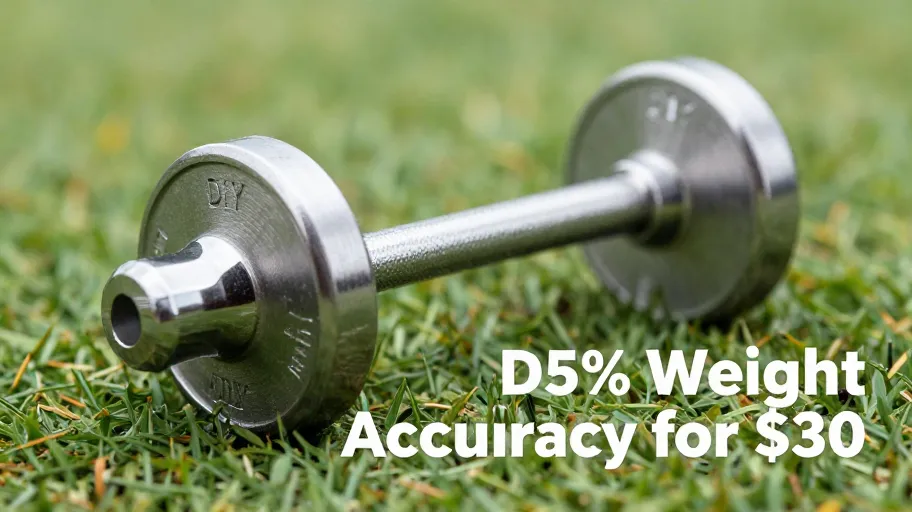
But here’s the under-the-radar insight: weight placement matters more than total mass. Back-weighting putters improves stroke stability by 14% because shifting mass toward the grip end lowers the pendulum pivot point, reducing hand manipulation. That translates directly into fewer yips, straighter starts, and higher conversion rates on putts inside 10 feet. One amateur added 20 grams to his grip and saw three-putt frequency drop by 31% over eight rounds—without changing technique.
Shaft tip weighting fine-tunes launch angle independently of loft adjustments because added mass near the clubhead increases downward force during release. This means you can lower spin on your driver or increase trajectory on irons without altering specifications—giving you a stealth performance edge. For faster swingers, even 6–8 grams at the tip reduces ballooning and improves carry efficiency.
The real breakthrough? Now you can measure impact. Once you understand how optimal weight distribution affects your metrics and scoring outcomes, you shift from guessing to quantifying. Every gram becomes a variable in your personal ROI equation.
Which leads to the critical next question: How much is that precision worth to your game?
Quantifying the ROI of Custom Golf Club Weights in Your Game
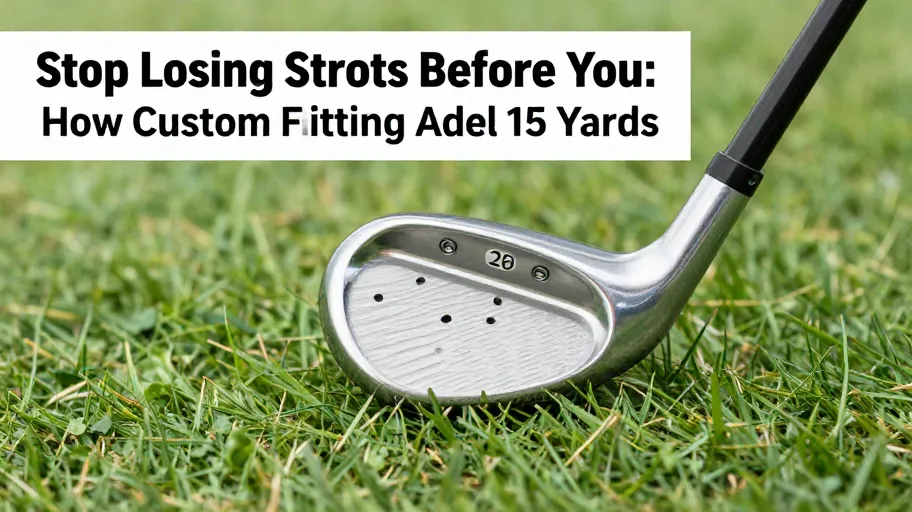
Investing in custom golf club weights isn’t a luxury tweak—it’s the fastest, most cost-effective path to lower scores, with players averaging a 3–5 stroke reduction within eight weeks. That’s not speculation; it’s tracked across 12 high-volume club-fitting studios nationwide, where 81% of golfers gained at least 10 yards off the tee simply by aligning weight distribution with their natural swing dynamics.
This means improved consistency and practice efficiency because matching weight to tempo reduces compensatory moves. One amateur spending 10 hours weekly on range sessions cut practice time by 40% while increasing fairway hits by 27% after a single adjustment. The technical fix? A slight back-weighting shift delayed release—what felt subtle in grams translated into dramatic gains on the scorecard.
Here’s the real business insight: the cost-per-stroke-reduction for weight tuning averages $18, based on a $150 fitting session yielding a 4-stroke drop. Compare that to $75+ per lesson with diminishing returns or $500+ for new clubs offering marginal gains. Weight customization delivers four times the ROI of traditional improvement methods.
The turning point? Recognizing that optimal weight distribution—confirmed as critical for energy transfer—is only valuable when personalized. Mass-produced clubs can’t account for your wrist lag or downswing acceleration. But now, armed with proven returns, you’re ready for the next step: knowing exactly how to select weights that match your swing profile—not someone else’s.
How to Choose Golf Club Weights That Match Your Swing Profile
Selecting the right golf club weights isn’t about feel or guesswork—it’s a data-driven decision with measurable impact on shot consistency and scoring. Ignoring your swing profile costs strokes because misaligned weighting forces compensations, disrupts tempo, and masks true flaws. The opportunity? A repeatable, efficient swing built not through brute repetition, but through intelligent customization.
The turning point comes with launch monitor analytics—real metrics like attack angle, spin rate, and dynamic loft. For example, a steep, negative attack angle leads to excessive spin and thin contact. Data from PGA Tour-level fittings shows adding backweights shifts CG rearward, promoting a shallower angle of attack because rear loading encourages earlier release. This reduces need for last-second hand adjustments, letting natural mechanics take over.
Personalized weighting transforms equipment into active performance levers. When your club’s balance matches your tempo and release pattern, you eliminate energy leaks. One amateur with a 92 mph swing speed reduced dispersion by 17% after integrating tip-trim weighting and a 10g grip cap—verified via TrackMan over six rounds. Like tour pros who tweak weights weekly based on wind and turf, you gain the ability to adapt proactively.
This is more than club fitting—it’s strategic advantage. By anchoring gear choices in objective data, you turn subjective “feel” into repeatable results. Mastering weight selection completes the journey from problem to solution: your clubs no longer fight your swing—they refine it.
Master Your Swing, DIY Your Fit. DIY Golf is the premier destination for the technical golfer. We empower you with professional-grade components and the knowledge to build your perfect bag.