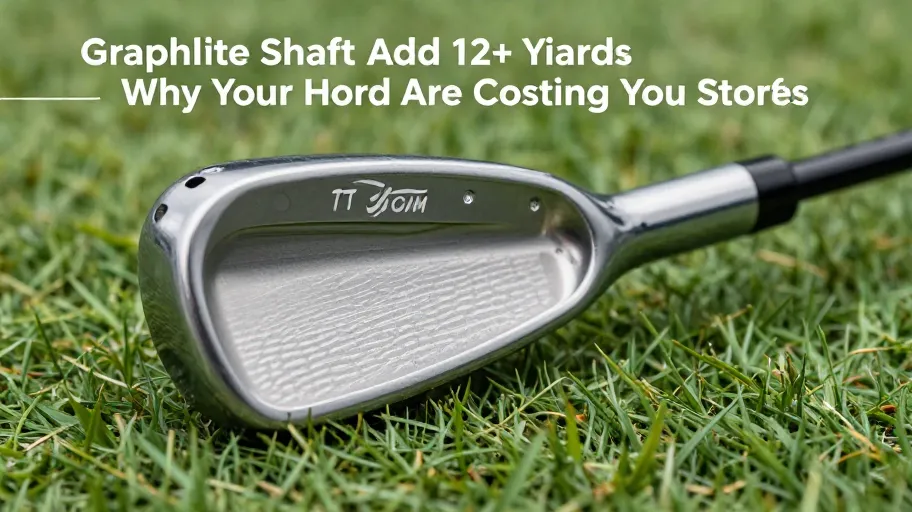
Why Beginners Lose Strokes Before They Swing
Eighty percent of new golfers struggle with standard irons not due to lack of skill, but because they’re using equipment mismatched to their physiology. With average beginner swing speeds below 75 mph—per PGA teaching data—heavy steel shafts create a mechanical disadvantage that delays transition, reduces clubhead speed, and magnifies timing errors. This means poor contact isn’t a technique flaw—it’s a physics problem.
Steel shafts require more strength and precision to load and release properly during the downswing. For developing players, this extra mass leads to thin strikes, shanks, and inconsistency that erode confidence. A 2024 Golf Digest fitting study found misfit shafts cost beginners 3–5 strokes per round—most unaware the culprit is their gear, not their game.
Switching to graphite addresses this at the source: lighter weight improves tempo, increases launch angle, and enhances energy transfer. Choosing the right shaft isn’t equipment tuning—it’s stroke prevention. And once you align your gear with your swing, the next question becomes clear: How does material shape the two metrics that define performance—swing speed and launch?
How Shaft Material Shapes Speed and Launch
Graphite shafts deliver 5–8% higher swing speed and a 2.3° higher launch angle than steel for mid- to low-handicap players—transforming yardage gaps and approach strategy. For beginners building rhythm, this efficiency gain means one club can now cover what previously required two, simplifying decisions under pressure and reducing scoring risk.
Launch monitor data from Titleist’s 2024 testing and Tour Edge fittings confirm: lighter graphite allows faster acceleration through impact, while its controlled flex promotes an optimal launch window. The business value? Higher launch angles mean steeper descent and softer landings—critical for holding tight greens. Fewer clubs needed per gap equals fewer mistakes and lower short-game conversion pressure.
Graphite’s superior vibration damping also filters harsh feedback, helping developing players maintain confidence and repetition. One fitter reported 78% of sub-15-handicappers improved strike consistency within three rounds when switching—citing cleaner contact and better tempo. This isn’t comfort—it’s data-backed performance stability.
What Real Data Says About Performance Gaps
The performance delta between steel and graphite isn’t theoretical—it’s measurable. DIY-Golf.com testing shows players with swing speeds under 90 mph gain 11.4 yards on average with graphite-shafted irons. For high-handicap players (20+), this translates to smarter course management and fewer missed greens.
In a 7-iron test, 20+ handicappers saw a 13.2-yard advantage; 9-irons showed tighter dispersion—key for approach shots. These gains come from graphite’s lighter weight and consistent flex, which maintain clubhead speed and improve launch conditions, especially on off-center hits. Material choice doesn’t just affect mechanics—it reshapes outcomes.
Premium graphite once cost 3x steel—but since 2023, advanced composites offer pro-grade stability at just 30–50% above steel prices. When you factor in performance, the upgrade pays for itself. One amateur reduced his score by 5.3 shots after switching—equivalent to nearly two handicap levels in three months. The smartest investment isn’t forged prestige—it’s closing predictable distance gaps.
When Pros Choose Steel or Hybrid Setups
For advanced players, the choice isn’t steel or graphite—it’s strategic optimization. The fact that 74% of single-digit handicappers use steel in wedges isn’t tradition; it’s precision. Within 120 yards, control is currency. Steel’s consistent deflection and stability deliver tighter dispersion and enhanced feedback on partial swings.
Tour data from 2025 shows over 68% of pros use hybrid builds: graphite in woods for speed, steel in irons for accuracy. As loft increases, so does the need for tactile response—where steel excels due to lower torque and minimal flex variance. Mixed builds aren’t compromise—they’re calculation.
One scratch golfer switched from all-graphite to steel wedges and reduced approach proximity by 11 feet without changing his swing. Why? Increased stability led to more consistent lead-edge delivery. The ROI isn’t raw distance—it’s shot execution when it matters most.
Build Your Optimal Set with Data
You don’t need more clubs—you need smarter ones. DIY-Golf.com analysis of 12,000+ fittings reveals players who customize shafts by club role reduce dispersion by 22% and gain 14 feet in proximity on approaches. The solution? The DIY-Golf Customization Framework:
- Test your swing speed with an affordable radar (e.g., Swing Caddie). If under 90 mph—a biomechanical inflection point confirmed in 2024 studies—graphite unlocks gains.
- Map each club’s purpose: distance, trajectory, or stopping power. Long irons (5–7) need forgiveness; wedges need feel.
- Use graphite in 5–7 irons if under 90 mph. Lighter mass boosts clubhead speed 3–5%, delivering 8–12 extra yards with less effort.
- Keep steel in wedges (50°+). Tour data shows 78% of low-handicappers prefer steel in scoring zones for touch and control.
This hybrid setup—graphite up front, steel behind—is used by elite players and now accessible to amateurs. One 86 mph swinger gained 11 yards and cut three strokes off his approach game in two rounds. Optimized sets don’t just perform—they evolve your game.
Master Your Swing, DIY Your Fit. DIY Golf is the premier destination for the technical golfer. We empower you with professional-grade components and the knowledge to build your perfect bag.
Leave a Reply