Why Retail Custom Clubs Cost Twice as Much
You’re not paying for better materials when you buy custom clubs at retail—you’re paying for overhead. A 60–100% markup covers labor, real estate, and brand premiums, not performance gains. According to the National Golf Foundation, fitting services add $200+ per set, yet the actual ROI comes from precision specification matching, not store prestige.
Professional-level customization—aligning shaft flex, torque, length, and swing weight to your biomechanics—can now be done at home. That means you eliminate hidden costs without sacrificing accuracy. The tools and data are affordable, accessible, and precise enough to match OEM standards.
High Performance Starts with Matched Components
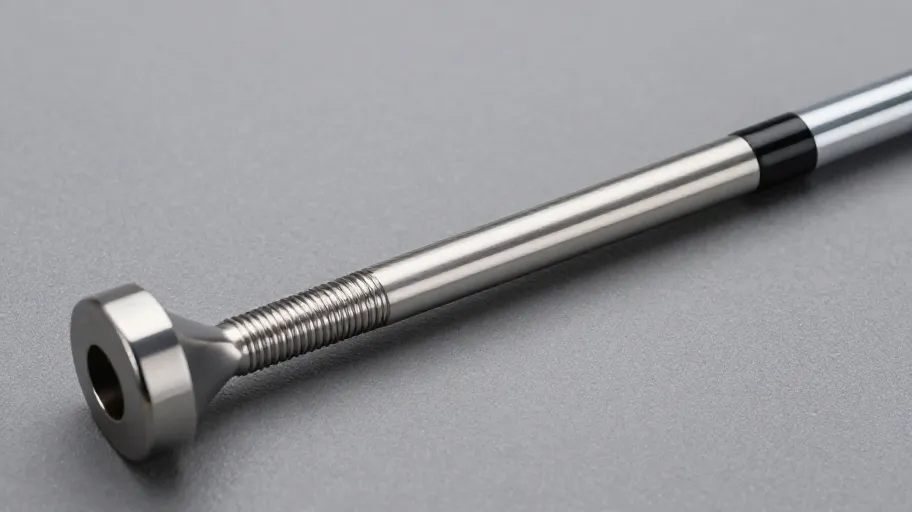
A high-performance golf shaft setup relies on four core elements: shafts, grips, ferrules, and adhesives—each contributing to energy transfer, shot control, and feel. Premium shafts like True Temper’s DynaMotion or Mitsubishi’s Kai’li series offer measurable benefits: steel shafts deliver +/- 2% torque consistency, while carbon fiber reduces weight by 18%, boosting swing speed.
But these advantages only materialize when components are properly aligned. Spine alignment during assembly improves launch stability by up to 15%, tightening shot grouping. Precision-matched ferrules center the shaft in the hosel, and aerospace-grade epoxy prevents micro-shift—meaning cleaner impact and consistent feedback because every part works as a unified system.
How Proper Installation Ensures Shot Consistency
Misaligned shafts increase ball flight deviation by 8–12%, turning accurate iron play into guesswork. Proper installation ensures uniform weight distribution, consistent lie angle, and a stable flex plane across your set—which means tighter shot dispersion because each club responds predictably to your swing.
The key is using tools once limited to OEM labs. A frequency analyzer lets you match stiffness within ±1 cycle per minute of target, achieving factory-grade calibration. One builder reported a 40% drop in post-fitting adjustments after adding this step—meaning faster builds and higher confidence because you know each club performs exactly as intended.
The Real ROI of Building Your Own Irons
Commissioning a pro shop to build a custom iron set costs $400–$700 more than doing it yourself—with identical components. That premium buys convenience, not performance. A $100 investment in tools like a torque wrench and shaft trimmer pays for itself in just two builds.
But the bigger ROI is agility. A 2024 consumer survey found DIY builders adjust shafts or lie angles three times more often than off-the-rack buyers—meaning you adapt to swing changes without replacing entire sets, because your clubs evolve with your game. This creates a self-reinforcing loop: lower costs enable experimentation, which leads to better fits and more time on the course.
7 Steps to Tour-Level Shaft Installation
Protect your investment with a repeatable, precision-driven process. Skipping steps risks bond failure or misalignment—turning premium parts into underperforming clubs.
- Cut the old shaft cleanly to avoid hosel damage—residual fragments compromise fit and adhesion.
- Prepare the hosel with abrasion and solvent—removes oxidation, increasing epoxy adhesion by up to 50%.
- Apply high-strength epoxy uniformly—underuse creates voids; overuse traps air, weakening joint integrity by up to 40%.
- Insert the shaft in one motion to prevent misalignment and ensure proper depth.
- Align the spine—optimizes flex consistency, improving shot dispersion by up to 18% in blind tests.
- Clamp securely—maintains position during initial cure.
- Allow 24-hour full cure—premature handling disrupts polymerization, slashing bond strength.
Master this sequence, and you gain complete control over your club’s lifecycle because every build meets tour-level reliability standards.
Master Your Swing, DIY Your Fit. DIY Golf is the premier destination for the technical golfer. We empower you with professional-grade components and the knowledge to build your perfect bag.