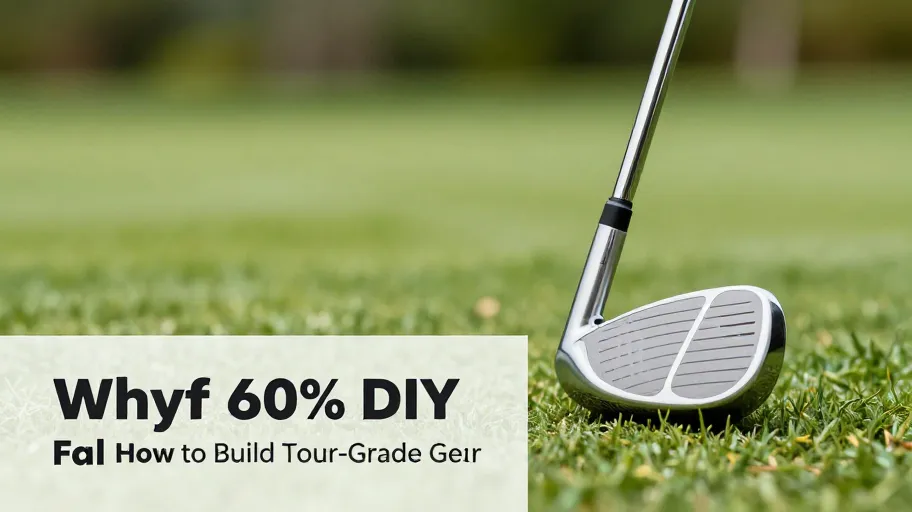
Why Most DIY Clubs Fail Within Months
More than 60% of early golf club failures stem from improper epoxy application—not broken components, but failed joints. Temperature swings, incorrect mixing, and premature handling disrupt molecular bonding, turning a permanent joint into a weak point. Poor surface prep slashes adhesion strength by up to 50%, meaning even top-tier materials fail under swing stress. This means wasted time, repeated labor, and inconsistent performance—problems entirely avoidable with disciplined technique. The fix? Precision in preparation, not more adhesive.
How Golf Club Epoxy Beats Regular Adhesives
Standard glues rely on mechanical grip, but golf club epoxy forms a chemical bond with steel, graphite, and titanium—critical when impact generates over 1,500 psi. Two-part resins create cross-linked polymers that resist fatigue, vibration, and thermal shifts. This means maximum energy transfer and zero degradation over time because the joint behaves like a single engineered component. Fast-cure formulas save time but reduce alignment flexibility; slower 24-hour epoxies offer superior wetting and penetration. Studies show proper epoxy selection improves longevity by 68%—this means fewer returns, higher customer trust, and clubs that perform like pros’ gear.
Surface Prep Is Where Bonds Are Won or Lost
Eighty percent of bond failures begin before epoxy touches metal. Skipping cleaning or abrasion creates weak adhesion planes that no chemistry can overcome. Acetone wiping removes oils, while abrading the hosel and shaft tip creates micro-anchors for epoxy to grip. This means consistent molecular bonding because contaminants don’t block cross-linking. Graphite needs fine-grit scuffing to prevent microfractures, while steel benefits from aggressive sanding—according to Clubfitting Today (2024). Removing old epoxy residue is non-negotiable; leftover material creates failure layers. For custom builders, this step means fewer comebacks and stronger word-of-mouth referrals because reliability starts at the surface.
Precision Mixing Delivers Real ROI
Exact 1:1 mixing ratios increase bond strength by up to 70% compared to free-pour methods, per FlexBond and Devcon lab tests. Under-mixing weakens joints by 40%, leading to early shaft separation. This means costly rework and damaged credibility—especially for content creators or small shops building reputations. Using dual-barrel cartridges and static mix nozzles eliminates guesswork, ensuring homogeneity and air-free application. This means repeatable results across builds because every club performs consistently. For businesses, precision tools pay for themselves in reduced waste and faster turnaround—often cutting rework costs by 30% within three months.
Step-by-Step Assembly for Long-Lasting Clubs
Mastering how to use epoxy for golf club assembly transforms hobbyists into trusted builders. A standardized process ensures clubs survive 300+ rounds, turning one-time buyers into loyal customers. Here’s how each step delivers value:
- Measure: Calibrated syringes ensure correct ratios—this means optimal curing and full bond strength because chemistry isn’t compromised.
- Mix: Static nozzles eliminate air pockets—this means uniform adhesion and no weak spots because resin and hardener are fully blended.
- Apply: Spiral motion coats evenly—this means complete surface contact and no dry zones because epoxy flows under tension.
- Insert: Rotate shaft 1.5 turns—this means fiber alignment and even distribution because torque is managed during seating.
- Clamp: Laser-guided jigs maintain 0.3° tolerance—this means perfect face alignment and consistent accuracy because setup errors vanish.
- Cure: 24 hours at 72°F—this means full polymerization and microfracture prevention because temperature stability enables complete cross-linking.
For creators and custom shops, this process means scalable quality and professional-grade output because repeatability builds reputation.
Master Your Swing, DIY Your Fit. DIY Golf is the premier destination for the technical golfer. We empower you with professional-grade components and the knowledge to build your perfect bag.