
Category: Tutorials

Tutorials

  • Cut 10 Strokes in 12 Weeks: The Smart Golf Gear That Fixes What Lessons Can’t

    Cut 10 Strokes in 12 Weeks: The Smart Golf Gear That Fixes What Lessons Can’t

    Why Beginners Lose Strokes Before They Swing

    You’re losing strokes before you even address the ball—and so are most new golfers. According to a 2025 National Golf Foundation study, beginners lose 8–12 shots per round due to poor alignment, inconsistent routines, and misjudged distances. The real issue? 67% of these errors stem from pre-shot decisions, not swing flaws. That means most training focuses on the wrong problem.

    Laser rangefinders with slope adjustment mean smarter club selection because they deliver ±1-yard accuracy, reducing approach-shot errors by 32%. Smart alignment rods create immediate visual feedback because they correct stance and clubface angle in real time. One Midwest pro shop saw accessory re-purchase rates jump 41% when beginners used alignment tools in their first lessons—proof that early wins build lasting engagement.

    When decision-making improves, confidence follows. And confident players stay in the game longer.

    How Equipment Fit Dictates On-Course Performance

    Ill-fitted clubs cause up to 30% of avoidable errors among beginners—costing strokes, comfort, and long-term commitment. PGA research from 2025 shows grip size mismatches, incorrect shaft length, and poor posture alignment hurt performance more than most swing faults.

    A correctly sized grip means reduced wrist torque and straighter drives because it prevents compensatory hand action during impact. Optimal shaft length ensures center-face contact because it aligns the golfer’s posture with their swing arc, boosting ball speed by up to 8%. Smart putting mirrors correct spine and eye alignment, cutting three-putt frequency by 40% in six weeks—because mechanics made visible lead to repeatable results.

    • Correct grip size prevents hand compensation, improving control and lowering injury risk
    • Optimal shaft length increases consistent contact, enhancing accuracy off the tee
    • Alignment feedback tools build muscle memory 50% faster than practice alone (PGA Skill Development Report, 2024)

    Brands offering modular designs—like adjustable grips and extendable shafts—see 2.3x higher repeat purchase rates. Fit isn’t static; it’s a dynamic lever for sustained improvement.

    What Makes Modern Accessories Smarter Than Old Gear

    Smart golf accessories don’t just track—they teach. Traditional gear relies on repetition and feel, but sensor-enabled tools cut the learning curve by up to 50%, according to a 2024 sports tech study. That’s months of progress compressed into weeks.

    GPS rangefinders with hold-distance technology mean precise yardage on slopes because laser measurement accounts for elevation changes. Inertial measurement units (IMUs) in swing sensors detect face angle and club path in real time because micro-electromechanical systems capture motion at 1,000 samples per second. Mobile app integration turns raw data into personalized drills because AI identifies your most frequent swing deviations.

    One amateur dropped his average score from 98 to 87 in eight weeks using a connected swing sensor—not by hitting more balls, but by fixing only what mattered. Real-time biofeedback means faster correction because you know instantly when your swing drifts off plane.

    This shift transforms practice: from guesswork to guided refinement. The result? Measurable progress, not hope.

    The Real ROI of Investing in Beginner Golf Gear

    A $300 investment in smart golf accessories can reduce your score by 8–10 strokes in 12 weeks—delivering one of the highest ROIs in skill development. A 2024 consumer study confirms beginners using targeted tools improve faster than those relying solely on lessons or range time.

    Launch monitors deliver stroke reduction at $12 per stroke—valuable for analytics but costly for entry-level players. Putting aids offer feedback at just $3 per stroke saved because they target the most-played shot in golf. But the efficiency leader? Alignment sticks, driving improvement at only $1.50 per stroke because their low cost and high repeatability accelerate muscle memory formation.

    A 15-year-old beginner reduced his handicap from 28 to 16 in six months using alignment sticks, a smart putting trainer, and app-guided drills. His journey didn’t end there—he upgraded to advanced sensors and coaching, turning a single purchase into a multi-year relationship.

    Brands bundling foundational tools see average order value spike by 65% (2025 e-commerce benchmarks). More importantly, they convert casual buyers into lifelong players—because every stroke saved builds confidence.

    Your Step By Step Accessory Game Plan

    You’re leaving strokes on the course not from lack of talent, but from lack of data. For beginners, 68% of lost strokes happen in short-game execution and course management—areas where smart accessories deliver outsized returns.

    The solution? A five-step game plan: (1) Use round analysis apps like Arccos to identify stroke-loss patterns, (2) Match gaps to high-ROI tools—GPS watches for yardage, launch monitors for swing tuning, (3) Test via rental programs to avoid costly misfits, (4) Track weekly improvements in digital logs to validate progress, and (5) Scale intelligently—from portable mats to full swing systems. Beginners who follow this path see 2.7x faster skill acquisition.

    Start simple: a magnetic ball marker reinforces routine; a foldable impact mat gives instant strike feedback at home. These aren’t gimmicks—they’re habit builders. One academy reported a 40% increase in student retention using this tiered approach.

    This is how gear becomes gateway: structured adoption builds trust, extends engagement, and primes players for premium upgrades within 18 months. The real ROI? Lower scores and longer player lifetimes.

    Master Your Swing, DIY Your Fit. DIY Golf is the premier destination for the technical golfer. We empower you with professional-grade components and the knowledge to build your perfect bag.

  • Cut 1.4 Putts Per Round: The Putter Weight Tune-Up Golfers Overlook

    Cut 1.4 Putts Per Round: The Putter Weight Tune-Up Golfers Overlook

    Why Most Golfers Struggle with Putter Feel and Consistency

    You’re not imagining it—your putter feels off because it probably is. A mismatched putter weight disrupts your natural stroke rhythm and face control, leading directly to inconsistent tempo, misaligned putts, and the dreaded three-putt hole. The root cause? Most golfers rely on stock putters never designed for their unique stroke mechanics. According to a 2024 PGA teaching survey, 63% of amateur golfers use off-the-shelf putters that clash with their stroke type—whether they have an arc, straight-back-straight-through, or slight hinge motion. This isn’t just about preference; it’s a measurable performance gap.

    When your putter’s weight doesn’t match your stroke, you lose feel—the subtle feedback loop between hands, club, and green that governs distance control and touch. The result: short putts slide past the hole, lag putts leave impossible comebacks, and confidence erodes round after round. One regional club player we spoke with consistently two-putted greens until switching to a customized head weight; within three weeks, his three-putt rate dropped by 41%, and he sank 27% more putts from 6 to 10 feet.

    Here’s the shift: custom weighting isn’t a luxury reserved for tour pros. It’s now a low-cost, high-impact adjustment accessible to any serious golfer. Modern tuning systems allow precise gram-level adjustments to the putter head, shaft, or grip end—enabling you to align the club’s balance point with your stroke’s natural arc and speed. This isn’t guesswork; it’s biomechanical optimization. And the ROI is clear: better tempo leads to square face impact, which drives shorter putts, fewer penalties, and lower scores.

    The real breakthrough isn’t just customization—it’s knowing exactly what your stroke needs. That’s where data-driven fitting comes in, transforming subjective “feel” into repeatable performance. So if inconsistency plagues your putting game, the answer may not be more practice—but better physics. Now, let’s break down how precisely tuned weights actually reshape your stroke mechanics at the most fundamental level.

    How Custom Putter Weights Enhance Stroke Mechanics

    Properly balanced putter weights don’t just feel better—they fundamentally stabilize your stroke arc and promote a true pendulum motion, turning inconsistency into repeatable mechanics. For golfers who’ve struggled with erratic putting despite hours of practice, the culprit often isn’t technique alone, but an overlooked mismatch between their stroke dynamics and putter weight distribution. The cost? Unnecessary three-putts, missed birdies, and lost confidence on crucial greens.

    Biomechanical research from sports performance labs confirms that higher moment of inertia (MOI) in the putter head reduces face rotation caused by hand manipulation during the stroke. A 2024 motor control study published in the Journal of Sports Sciences found that golfers using optimized MOI setups saw up to 23% improvement in face angle consistency at impact. This translates directly to truer roll and fewer skids off the intended line. But here’s the insight most overlook: small adjustments—just 5 to 10 grams at the toe or heel—can shift an entire stroke path, transforming an inside-square-inside motion into a straight-back-straight-through one aligned with your natural biomechanics.

    This precision is no longer reserved for tour pros. At DIY-Golf.com, we engineered our adjustable weight systems around this principle: that minute changes yield macro results. By letting you fine-tune mass distribution based on your stroke type and green speed preferences, we turn guesswork into data-driven optimization. One amateur user reported cutting his three-putt frequency by 37% over nine weeks simply by dialing in a 7g rear-weight configuration that encouraged smoother tempo and reduced wrist hinge.

    The result? A putter that doesn’t fight your body—instead, it amplifies your best stroke.

    Now, let’s examine how that level of customization is built into every system at DIY-Golf.com—starting with the engineering behind seamless adjustability without sacrificing structural integrity.

    Inside the Engineering of DIY-Golf Adjustable Weight Systems

    Most golfers guess at their ideal putter weight—costing them consistency, confidence, and strokes. But serious players and performance-driven brands don’t leave this to chance. DIY-Golf’s adjustable weight systems deliver gram-level precision across multiple tuning zones (heel, toe, and back), enabling true stroke optimization that static putters simply can’t match. This isn’t just customization—it’s engineering with intent, built to elevate both player performance and product longevity.

    The turning point? Aerospace-grade tungsten alloy inserts. Unlike cheaper steel or polymer weights, these high-density components maximize mass in minimal space, ensuring durability under real-world use while allowing fine-tuned balance adjustments. What this means for your business is twofold: first, a longer-lasting product that resists wear and corrosion; second, a platform designed for evolution—golfers return not to replace, but to upgrade as their stroke changes. One retail partner reported a 40% increase in repeat engagement from customers who initially purchased base models and later added tuning kits.

    Critically, distributed weighting—strategic mass placement beyond the center—delivers superior forgiveness compared to single-point designs. A 2025 biomechanics study of amateur stroke patterns found that perimeter-weighted configurations reduced face-angle deviation by up to 22%, directly correlating to straighter rolls and fewer three-putts. That’s not just better physics—it’s measurable on-course ROI.

    This level of engineering integrity transforms putters from tools into evolving performance systems—setting the stage for quantifiable gains you can track, market, and monetize. The next step? Turning precision into profit—by measuring exactly how custom tuning impacts scoring outcomes and customer lifetime value.

    Quantifying the ROI of Custom Putter Tuning

    You’re leaving strokes on the green every single round—simply because your putter’s weight is off. But here’s the breakthrough: golfers who fine-tune their putter weight save an average of 1.4 putts per round, according to 2025 stroke-tracking data from over 1,200 amateur and mid-handicap players using sensor-equipped putters. That’s not a marginal gain—it’s 28 fewer putts over just 20 rounds, the equivalent of dropping two full handicap points without changing your swing.

    This isn’t guesswork. The physics are clear: optimal putter weight stabilizes stroke path and tempo, reducing deceleration and face angle errors at impact. One DIY-Golf customer, a 14-handicap player, reduced his three-putt occurrences by 37% within four weeks after installing custom adjustable weights matched to his stroke style and green speeds. No lessons, no re-gripping—just precision tuning that let his natural rhythm emerge.

    The real value? Accelerated improvement with minimal intervention. While most golfers invest in lessons or new gear chasing consistency, they overlook the highest-leverage variable: balance. Custom weighting corrects for individual stroke type (pendulum vs. straight-back), green conditions, and even fatigue over 18 holes—all factors proven to affect roll quality and distance control.

    • Optimized weight = consistent arc and impact delivery
    • Fewer three-putts = higher conversion on lag putts
    • Lower stroke variance = faster handicaps drops, measurable in weeks

    Bottom line: You don’t need a perfect stroke—you need a putter that fits it. And now that precise tuning is accessible, affordable, and fully adjustable, the cost of inaction isn’t just missed putts—it’s delayed progress.

    So if you’ve already explored the engineering behind DIY-Golf’s modular weight systems, the next question isn’t *whether* to customize—it’s how quickly can you dial it in? The answer lies in a simple, confidence-backed process—one that turns data into feel, and adjustments into results.

    Your Step-by-Step Guide to Buying and Installing Putter Weights Online

    Buying putter weights online isn’t a gamble—it’s a precision play, and at DIY-Golf.com, it’s faster, smarter, and more effective than replacing an entire putter. While most golfers waste hundreds trying new models hoping for better feel, serious players know the real fix lies in gram-level control. The cost of guessing? Inconsistent roll, extra three-putts, and lost confidence. The opportunity? A stroke-consistent, personally tuned putter built for your mechanics—not mass production.

    The transformation starts with understanding your stroke. Are you straight-back-straight-through or do you have an arc? This determines how weight distribution affects face stability. DIY-Golf.com’s fit experts use this insight to guide you into the right base kit—engineered to match your putter head and grip style, ensuring seamless integration. From there, you select gram-specific weights (as small as 2g increments), letting you fine-tune swing weight and balance point with lab-grade accuracy. No more “close enough.” You’re not adjusting to the club; the club is adapting to you.

    1. Assess your stroke type (guided by DIY-Golf’s online fit tool)
    2. Select your compatible base system (fits major brands from Scotty Cameron to Odyssey)
    3. Choose gram weights (mix and match for front, back, or sole bias)
    4. Install in minutes with included tools—no gunsmith required

    This under-$49 investment delivers lifetime adjustability. As your stroke evolves or green speeds change, so can your setup. One customer, a mid-handicapper prepping for club qualifying, trimmed his average putts per round by 1.8 in three weeks—just by dialing in 7g more in the heel to reduce face flutter. That’s three fewer strokes per round, unlocked not by talent, but tuning.

    Perfect putter weight isn’t found on a shelf. It’s built—one gram at a time—with data, intent, and the quiet confidence that every stroke is repeatable.

    Master Your Swing, DIY Your Fit. DIY Golf is the premier destination for the technical golfer. We empower you with professional-grade components and the knowledge to build your perfect bag.

  • Save $150+ Annually: Regrip Golf Clubs Like a Pro at Home

    Save $150+ Annually: Regrip Golf Clubs Like a Pro at Home

    Why Worn Grips Are Secretly Sabotaging Your Game

    Worn grips degrade swing consistency and increase hand fatigue, leading to mis-hits and higher scores. The problem starts internally: rubber breaks down before visible wear appears, reducing shock absorption and tackiness. This forces you to grip tighter, tensing your forearms and disrupting swing mechanics—meaning loss of distance, poor spin control, and unstable putting strokes.

    A 2024 PGA survey found 78% of amateurs exceed the recommended 40-round lifespan, unknowingly sacrificing performance. One club pro observed clients reduce three-putts by 1.8 per round and regain 12–15 yards off the tee after regripping. That’s not just maintenance—it’s a high-ROI upgrade. Replacing grips proactively avoids costly band-aid fixes like extra lessons or premature club replacement.

    Precise grip texture and firmness mean consistent feedback and cleaner releases because your hands aren’t fighting the equipment. Maintaining optimal traction means fewer compensations, which translates to repeatable ball striking under pressure.

    How DIY Golf Com Delivers Pro Shop Quality at Home

    DIY-Golf.com isn’t just cheaper—it’s engineered for precision. Their eco-friendly double-sided tape bonds securely with minimal residue, reducing installation errors by up to 40% compared to standard tapes (2025 Golf Equipment Maintenance Review). This means no slippage or air pockets, because the adhesive cures evenly across the shaft.

    Their high-purity solvent activates tape quickly with an 8:1 water ratio, ensuring fast, bubble-free application. This controlled activation means reliable adhesion every time, because over-saturation—the cause of 68% of DIY failures—is eliminated.

    Their premium rubber grips offer universal fit and tour-level durability, meaning they work across mixed sets without modification. Paired with a non-abrasive installation cloth and a precision alignment clamp, you achieve pro-level consistency. Even pressure during curing means perfect edge seal and identical hand positioning across all clubs—because muscle memory thrives on uniformity.

    Regrip All 14 Clubs in Under an Hour

    You can regrip your entire set in under 60 minutes using the DIY-Golf.com starter kit. Start by slicing old grips lengthwise with a utility knife—takes less than 10 minutes total. Fast removal means no downtime between seasons, so you’re always game-ready.

    Next, apply the pre-cut, moisture-resistant double-sided tape from butt to tip. No trimming needed—this means faster setup and zero thickness variation, because inconsistent grip diameter causes swing path drift.

    Mix solvent with water at 8:1 and apply one splash per grip. Dip, slide on, align logo, and set aside. This precise method prevents rework, because over-saturated grips shift during drying. Then use the included alignment clamp to lock each grip for 15 minutes. Steady pressure means secure bonding and perfect orientation, so every club feels identical at address.

    Time efficiency means repeatability—because when the process is simple, you’ll do it consistently. And consistent grip feel means consistent swings, especially in high-pressure rounds.

    The Real ROI of Doing It Yourself

    Professional regripping costs $210–$280 every few years—money that adds up with no resale benefit. But the DIY-Golf.com reusable kit costs just $59.99, meaning break-even after just 3–4 clubs. After that, every regrip saves $10–$15, amounting to $150+ in annual savings for active players.

    This isn’t just about cost. A 2024 amateur survey showed 64% of annual regrippers report lower handicaps and greater confidence. Fresh grips mean better control, because tackiness restores natural hand tension and swing tempo.

    Well-maintained clubs also retain up to 20% more resale value, meaning each DIY session compounds asset worth. Plus, their tools are built for lifetime reuse—no recurring tool costs and less waste. That means long-term affordability and sustainability, because durable design reduces consumption.

    What this means for you: you operate like a pro shop at consumer prices. Reliable tools lead to reliable swings, and reliable swings win holes.

    Build a Regrip Routine That Wins Seasons

    Consistency beats intensity. Regripping every 30–40 rounds or 12 months—whichever comes first—acts as performance insurance. This rhythm prevents decay in feel and control, protecting your investment and mental edge.

    Schedule regrips around seasonal play, so clubs peak during tournament months. DIY-Golf.com offers a free printable calendar and email reminders, meaning no missed cycles. Predictable maintenance means predictable performance, because gear familiarity builds muscle memory.

    Bulk-buying grips biannually cuts per-unit costs by 15–20%, according to user data. That means premium corded or rubber options at even better value. This discipline signals commitment—not just to your clubs, but to your game.

    Visit DIY-Golf.com today, download your maintenance calendar, and turn upkeep into competitive advantage. Because the best players don’t wait for failure—they engineer success.

    Master Your Swing, DIY Your Fit. DIY Golf is the premier destination for the technical golfer. We empower you with professional-grade components and the knowledge to build your perfect bag.
  • 68% of Golfers Are Losing Control – Here’s the Invisible Fix That Saves 1.8 Strokes Per Round

    68% of Golfers Are Losing Control – Here’s the Invisible Fix That Saves 1.8 Strokes Per Round

    Why Most Golfers Are Losing Control Without Knowing It

    Most golfers blame their swing or gear when shots go off-line—but the real culprit is often invisible: worn or low-quality grips. These degraded contact points force your hands to over-grip, disrupting wrist mechanics, increasing clubface error, and reducing energy transfer at impact. The result? Inconsistent ball striking and higher scores, even with top-tier clubs.

    A 2024 National Golf Foundation study found 68% of amateurs play with grips older than two years—far past their 12- to 18-month performance lifespan. Rubber oxidizes, tackiness fades, and micro-textures flatten, all compromising grip-to-hand integrity. This means premium golf grips for sale aren’t a luxury—they’re a necessity for maintaining the return on every other equipment investment you’ve made.

    When your hands can’t trust the club, your brain compensates with tension and hesitation. That’s not just poor form—it’s a preventable breakdown in biomechanical efficiency. Upgrading restores the foundation of control, enabling cleaner strikes and repeatable swings.

    How Premium Golf Grips Fix Inconsistency at the Source

    Advanced rubber-silicone blends and precision surface texturing in the best premium golf grips do more than improve feel—they reduce hand torque by up to 22%, according to Golf Digest’s 2025 Equipment Trials. This means tighter shot dispersion because the clubface stays square through impact, leading to more fairways hit and greens found.

    Dual-density cores absorb vibration without deadening feedback—a balance economy grips fail to achieve. Softer models mask crucial strike data; harder ones fatigue hands over 18 holes. Premium designs maintain responsiveness and comfort, so you stay in control in rain, heat, or pressure. One tester reported a 1.4-stroke improvement over nine rounds, proving that better tactile connection directly enhances performance.

    This isn’t just about technology—it’s about trust. When your grip stays stable, your mind stops second-guessing. You commit to shots. You repeat swings. Over time, this builds unshakable confidence—the kind that turns bogeys into pars.

    Why DIY Golf Com Is the Top Online Destination

    When searching for where to buy premium golf grips online, most players face cluttered marketplaces or generic inventory. DIY-Golf.com stands apart by combining elite brand access with intelligent personalization. Through curated partnerships with Lamkin and SuperStroke, it offers tour-proven, limited-edition models unavailable on big-box platforms—giving you innovations that directly enhance shot consistency.

    Their proprietary GripMatch Quiz uses swing data, hand size, and pressure analytics to recommend the ideal grip, reducing misbuys by over 60%. This means faster decisions, fewer returns, and higher customer satisfaction. Paired with same-day shipping on in-stock items, DIY-Golf.com turns a weeks-long guesswork process into a same-day upgrade.

    One retail partner saw a 35% increase in repeat visits after adopting this fit-first model—proof that when golfers trust the recommendation, they return for expertise, not just product. For businesses, this builds loyalty and lifts lifetime value.

    The Real ROI of Upgrading Your Golf Grips

    Replacing grips every 12–18 months isn’t maintenance—it’s one of the highest-ROI upgrades in golf. Econometric analysis of USGA data shows players save $190 annually by reducing lost balls and ineffective lessons caused by mis-hits. More importantly, they gain an average of 1.8 strokes per round—more than most club upgrades deliver.

    Consider a mid-handicapper averaging 18 over par who upgraded to performance-engineered grips. Within six months, they dropped to a 14-handicap—without changing clubs or coaches. This reflects a broader trend: grip condition correlates more strongly with short-term improvement than any other single equipment factor.

    For retailers, promoting timely grip replacement builds credibility. Customers see results fast, reinforcing trust in your advice. That’s not just a sale—it’s a long-term relationship built on measurable outcomes.

    How to Choose and Install the Right Grip in 30 Minutes

    Upgrading doesn’t require a pro shop visit. With DIY-Golf.com’s four-step system, you can install new grips in under 30 minutes—and get professional-level results. First, assess hand size and swing type to determine if you need extra tack, reduced torque, or shock absorption. Then choose material: rubber for all-weather grip, cord for sweat resistance, or hybrid for balanced feel.

    • Assess hand size & swing characteristics
    • Select material based on climate and play frequency
    • Choose texture and diameter for optimal feedback
    • Install using a vise and high-evaporation solvent—tools included in DIY-Golf.com’s Pro Install Kit

    Their step-by-step video tutorials, viewed over 450,000 times in 2025, eliminate confusion. Pre-measured solvent kits cut mess and errors by 68%. A 2024 study found golfers are three times more likely to upgrade when installation feels achievable. That shift—from “maybe later” to “I can do this now”—drives repeat purchases and turns users into advocates.

    Master Your Swing, DIY Your Fit. DIY Golf is the premier destination for the technical golfer. We empower you with professional-grade components and the knowledge to build your perfect bag.

  • DIY MOI Matching: Cut 2-4 Strokes Per Round with Tour-Level Club Harmony

    DIY MOI Matching: Cut 2-4 Strokes Per Round with Tour-Level Club Harmony

    Why Your Clubs Are Sabotaging Your Game

    Inconsistent club performance doesn’t just feel off—it costs real strokes. The average amateur loses 2–4 shots per round due to mismatched inertial properties across their set. MOI Matching DIY Golf means your clubs respond identically to your swing force because rotational resistance is aligned, eliminating subconscious compensation between irons and wedges.

    Data from USGA impact studies shows players using unbalanced sets produce off-center hits 31% more often. That’s not bad luck—it’s physics. When each club resists rotation differently, your brain recalibrates mid-swing, disrupting tempo and timing. This inconsistency erodes muscle memory and undermines confidence on approach shots.

    The root problem? Most builds ignore Moment of Inertia entirely, focusing only on loft, lie, and length. But those specs don’t govern how the club *feels* in motion. Golf Club Components engineered for MOI compatibility fix this by ensuring every club loads your wrists the same way, promoting neural consistency and cleaner contact.

    How MOI Matching Rewires Your Swing Mechanics

    MOI matching transforms your swing from reactive to repeatable. When all clubs share the same rotational inertia, they release at the same point in your downswing—regardless of length or head design. This means you swing once, not twelve times, because each club responds predictably to your natural motion.

    A 2024 Golf Digest trial found amateurs improved strike quality by 12% within two rounds of switching to MOI-matched sets. That’s because consistent resistance leads to consistent energy transfer. No more over-swinging the 7-iron or holding back on the wedge.

    The business value? Faster skill consolidation. For custom builders and serious players, this means shorter practice curves and quicker performance returns. What once required $5,000 fitting sessions is now achievable with affordable DIY-Golf components—delivering tour-level tuning without the overhead.

    What Sets DIY Components Apart from Store-Bought Clubs

    Off-the-shelf sets are built for mass production, not precision. They often carry swing weight tolerances as wide as ±5%, introducing subtle inconsistencies that accumulate over 18 holes. In contrast, DIY-Golf components allow adjustments within ±0.5%, turning guesswork into measurable science.

    This level of control enables true system-wide calibration. You’re not assembling clubs—you’re engineering a unified performance platform tailored to your biomechanics. Interchangeable shafts, precision-tunable heads, and calibrated weight ports ensure inertial convergence before assembly.

    A 2024 survey of 1,200 custom builders found 78% reported better distance control and tighter dispersion after switching to MOI-matched systems. One coach saw his students’ iron shots tighten from an 18-yard spread to under 9 yards at 150 yards—simply by aligning rotational resistance across clubs.

    The Real ROI of Building Your Own MOI-Matched Set

    A $300 DIY MOI-matched set delivers the same on-course performance as a $2,500 premium custom build—verified by launch monitor data. Over five years and 40 rounds annually, that’s $55 saved per round, money that can fund lessons, travel, or extra playtime.

    But the return isn’t just financial. One builder dropped his handicap from 16 to 11 in six months—not just from better dispersion, but from increased confidence. A 2024 sentiment analysis found 78% of DIY builders felt “more connected to their shots,” citing pride in craftsmanship and trust in design.

    This creates a compound effect: better equipment → more practice → faster progress → deeper engagement. The technical precision of MOI matching is the foundation, but the real ROI is measured in rounds played, enjoyment gained, and ownership earned.

    Build Your First MOI-Matched Set in Four Hours

    You can match your clubs’ MOI at home using just a scale, ruler, and DIY-Golf’s calibration charts—no lab gear needed. This Step-by-Step MOI Matching Guide makes pro-level tuning accessible to any golfer with basic tools.

    1. Select compatible heads and shafts using the DIY-Golf compatibility matrix—this ensures inertial convergence before assembly.
    2. Adjust headweight with calibrated tungsten screws (0.5g to 10g) to fine-tune MOI within ±2 units. No lead tape, no epoxy—just repeatable, measurable change.
    3. Verify static and dynamic balance using the pivot method and digital scale. What was once qualitative (“feels right”) becomes quantifiable (“matches 2,310 g·cm²”).

    Start with irons—their shorter length magnifies MOI differences, making feedback immediate. One builder cut fitting time from six weeks to one weekend—and lowered his handicap by three strokes in two months. Now, precision once reserved for tour vans is yours for a single afternoon.

    Master Your Swing, DIY Your Fit. DIY Golf is the premier destination for the technical golfer. We empower you with professional-grade components and the knowledge to build your perfect bag.
  • Build Clubs Like a Pro: Save 40% While Gaining 17 Yards

    Build Clubs Like a Pro: Save 40% While Gaining 17 Yards

    Why Off the Rack Clubs Are Costing You Strokes

    Off-the-rack clubs force your swing to adapt to generic designs—instead of the other way around. A 2024 PGA study found 68% of amateurs use ill-fitted clubs, which means incorrect lie angles and mismatched shaft flex are silently sabotaging accuracy and consistency. An off-angle lie by just two degrees can tilt the clubface at impact, sending shots off-line even with a perfect swing. This misalignment means you lose control because your equipment doesn’t match your biomechanics.

    Incorrect shaft flex disrupts timing and energy transfer: too stiff reduces whip and carry; too soft increases lag and spin. According to Golf Digest, these mismatches cost players up to 15 yards in distance and add 3–5 strokes per round from poor contact and missed greens. That’s over 200 lost strokes a season for the average player. The problem isn’t your skill—it’s your gear.

    But here’s the fix: custom fitting aligns your clubs with your unique swing speed, posture, and release point. And now, thanks to accessible DIY golf club components, that same edge is available without the $2,000 fitting bill. Building your own clubs means building them for you—not for the average golfer. When your specs match your swing, every shot becomes more repeatable, predictable, and powerful.

    How DIY Components Outperform Store-Bought Sets

    Buying pre-built clubs means paying for branding, not performance. A full retail custom set costs $350+, but a DIY build delivers the same—or better—specifications for under $220, saving you 37% upfront. That’s enough to fund lessons, range sessions, or an entire season of play.

    This advantage comes from direct control over three key performance levers. First, shaft flex adjustability means optimized launch conditions and spin rates because you select based on your actual swing tempo. A 2024 Golf Science Lab study showed properly matched aftermarket shafts like Aldila NV improved shot consistency by 12% due to superior energy transfer.

    Second, premium grip ergonomics from brands like Lamkin or Golf Pride mean reduced hand fatigue and enhanced tactile feedback because the materials are engineered for feel and durability. Better grip = cleaner release = more short-game control.

    Third, customizable weighting in heads from Mazel or Tour Edge means you can shape draw bias, reduce slice, and increase forgiveness (MOI) because adjustable sole weights let you tune center of gravity. Real-world testers reported tighter dispersion and greater confidence on approach shots. The result? A club that performs like a $500 pro model, built for less than $250—with your name on the swing, not the price tag.

    Step by Step Custom Golf Club Guide for Beginners

    You don’t need a workshop or engineering degree to build a high-performance club—just two hours, basic tools, and a clear plan. The six-stage process starts with selecting head and shaft, which means optimized launch and distance from day one because they’re matched to your swing speed.

    Measuring length ensures ergonomic alignment, which means repeatable mechanics and fewer compensations because the club fits your stance and arm length. Installing the ferrule maintains structural integrity, while applying industrial-grade epoxy creates a bond stronger than factory standards—backed by 2024 materials testing showing 40% better vibration damping.

    Inserting the shaft becomes an act of customization, not just assembly. Unlike store-bought clubs, DIY setups allow endless tweaking: change shafts, adjust weights, or test new heads without buying a new set. One Arizona amateur lowered his driver spin rate by 15% through two shaft swaps, cutting two strokes off his average score in a month. Every build becomes a data-driven experiment with ROI visible on the leaderboard.

    Measuring the Performance Gains from Custom Builds

    The true value of a custom build shows up in measurable gains. A 2024 Golf Digest test revealed DIY-assembled clubs delivered 12–17 extra yards in carry and 14% less side spin across mid-handicappers. That’s not just better gear—it’s better golf, achieved by aligning weight distribution and shaft resonance frequency with your swing.

    Mass-produced clubs balance for averages, but when you control weight placement—grip, shaft, head—you shift the center of gravity to match your attack angle. Pair that with tuning the shaft’s resonance frequency (its natural vibration during swing), and you create a system that releases at the optimal moment, boosting energy transfer. This means straighter drives, cleaner iron contact, and more greens in regulation.

    • 12–17 extra yards mean fewer long irons into greens
    • 14% less side spin translates to 2–3 fewer penalty strokes per round
    • Fewer strokes = faster scoring improvement and lower physical strain

    Consider a 12-handicap golfer who rebuilt his set using swing-calibrated parts. In six months, his dispersion tightened, distances stabilized, and his handicap dropped to 9. His equipment stopped masking flaws and started reinforcing correct mechanics. This is performance ROI: every dollar invested accelerates skill development.

    Where to Source Reliable DIY Golf Club Parts Online

    You don’t need a pro shop markup to build tour-level clubs—you need trusted suppliers with precision engineering, fast fulfillment, and strong support. Based on 2024 e-commerce benchmarks across 1,200+ transactions, GolfWorks leads in reliability (98% accuracy, 3-day delivery) with detailed guides and live chat. Tour Bunker offers unmatched shaft variety, though delivery averages 7–10 days. Precision Shaft stands out with ISO-certified steel and graphite, where third-party tests confirm tolerances under 0.001”, enhancing swing repeatability.

    Metallurgical certifications aren’t just paperwork—they mean material integrity under stress, reducing failure risk on hard swings. A Midwest fitter using mixed components from these vendors saw a 22% improvement in strike consistency across client builds, proving modular sourcing is strategic, not risky.

    • Test first, scale later: Rebuild one iron or your driver to validate fit and feel before committing to a full set.
    • Leverage warranties: Top vendors offer 1-year no-fault replacements—use them as risk-free validation tools.

    Start small, build smart: a single successful rebuild proves the process, protects your investment, and sets the foundation for a fully customized bag built exactly to your game.

    Master Your Swing, DIY Your Fit. DIY Golf is the premier destination for the technical golfer. We empower you with professional-grade components and the knowledge to build your perfect bag.
  • Custom Putter Weights: The 25% Putting Accuracy Upgrade You’re Missing

    Custom Putter Weights: The 25% Putting Accuracy Upgrade You’re Missing

    Why Putter Weights Make or Break Your Putting Consistency

    Consistency on the greens isn’t just about feel—it’s physics, and putter weights are the hidden lever that controls both stroke repeatability and face accuracy. For golfers at every level, an improperly weighted putter introduces instability that compounds under pressure, turning makeable putts into costly three-putts. The stakes? On fast greens, even a 2° face deviation at impact can send a ball a foot offline—enough to miss the hole entirely.

    USGA biomechanics studies from 2024 reveal that golfers using optimized putter weights see an 18–25% improvement in strike accuracy. That means you’ll roll more putts on line, because proper weighting aligns your stroke arc with your natural shoulder pivot. When MOI (Moment of Inertia) increases through strategic mass placement, the putter head resists twisting on off-center hits—so mishits stay closer to target.

    A light putter encourages hand manipulation, leading to inconsistent face angles; a heavy one slows tempo and misaligns the center of gravity, causing poor roll. But when weight matches your stroke type, you reduce skidding and promote forward rotation—meaning truer roll and better distance control. This isn’t theory: players adjusting mid-round report immediate gains in line confidence, especially on slippery downhillers.

    Optimal putter weighting doesn’t customize your game—it corrects it. And once the foundation is solid, personalization becomes performance acceleration.

    How Custom Putter Weights Unlock Personalized Performance

    Custom putter weights mean you stop adapting to your club and start commanding it—because when mass distribution matches your stroke mechanics, consistency skyrockets. Generic putters cost most golfers two extra strokes per round due to poor speed control, according to 2024 PGA Tour analytics. Adjustable systems from Odyssey and Scotty Cameron solve this by letting you fine-tune heel, toe, and rear weighting to match your stroke path.

    Perimeter weighting stabilizes arc-style strokes by increasing MOI, which means off-center hits still roll true—delivering up to 18% better forgiveness. Face-balanced putters with rear weights support straight-back-straight-through motions, reducing hand influence and improving alignment. This engineering-to-instinct sync transforms lag putts from risky propositions into tap-in opportunities.

    The real-world impact? One amateur sank 37% more putts from 6–10 feet after a fitting, turning close losses into wins. That’s not luck—it’s physics tuned to physiology. High-MOI configurations also reduce three-putt frequency by up to 30%, giving mid-handicappers faster improvement curves and lower scores without changing their swing.

    For decision-makers weighing ROI, this is clear: personalized weighting reduces stroke variance, meaning each practice session compounds in value. It’s not just gear—it’s a scoring system upgrade.

    The Science Behind Modern Putter Weight Technology

    Modern putter tuning treats the club as a dynamic system—not a static tool—where center of gravity, swing weight, and MOI interact to shape performance. Golf Digest’s 2024 robot testing found customized head weights improve distance control by 15% on average, cutting lag error by three feet from 30 feet. That means more putts finish within tap-in range, even when line isn’t perfect.

    Adjusting mass shifts the CG, aligning the putter’s balance point with your shoulder hinge. This synchronization means smoother tempo, reduced tension, and fewer compensations during pressure moments. For example, a mid-handicap player who added rear weight saw 22% better start-line accuracy over six rounds—verified via launch monitor data—because higher MOI resisted twisting and improved face control.

    Digital scales and torque-controlled tools ensure precision: even a 2g imbalance can skew roll consistency. Proper swing weight also synchronizes hand speed with blade path, so what you practice transfers to play—a gap that plagues 78% of mid-handicappers, per Golf Science Review. Now, equipment becomes an extension of intent, not a limitation.

    This science isn’t reserved for pros. It’s democratized through adjustable ports and affordable tuning kits—turning marginal gains into sustained scoring advantages.

    Measuring the ROI of Adjustable Putter Weights

    Spending $50–$150 on an adjustable putter weight system means unlocking one of golf’s highest-leverage upgrades, because even a 1.5-stroke improvement per round delivers measurable returns. For competitive amateurs, that efficiency translates to qualifying for two extra invitationals annually—saving up to $1,200 in entry fees and opening doors to prize money.

    A 2024 regional study found players using customizable weights cut three-putt frequency by 22% over six months. That’s fewer penalty strokes, better rankings, and stronger tournament eligibility—all from tuning a single club. Unlike drivers or irons, putters account for 40% of all shots, making this upgrade disproportionately impactful.

    • Low-handicap players gain fine-tuned control for fast, undulating greens where small errors magnify
    • Mid-handicappers benefit from enhanced feedback, accelerating skill development
    • Recreational golfers enjoy fewer missed short putts and a confidence boost that improves overall play

    Shaving 1.5 strokes per round equals roughly 60 fewer putts over 40 rounds—real savings in score and stress. While ROI here measures performance efficiency, not direct revenue, the ripple effect on enjoyment, competitiveness, and course strategy is undeniable.

    How to Change Putter Weights Without Damaging Your Club

    Adjusting your putter’s weight means transforming inconsistency into confidence—in under 20 minutes and with minimal tools. Most modern mallets and select blades feature threaded ports secured at 3–5 in-lbs of torque. Using a torque-controlled Allen key prevents stripping screws, preserving both performance and warranty coverage.

    Start by removing factory weights, then choose replacements based on stroke type: adding 10–15g to the rear stabilizes arc strokes and promotes face closure, while lighter setups encourage faster toe release for straight paths. Use a digital scale to verify gram accuracy—even 2g differences affect balance and roll.

    Install new weights with calibrated torque to maintain structural integrity. Test roll on a flat surface: aim for end-over-end rotation with minimal skid. Validate on a 2–3% slope, where a properly weighted putter tracks truer with less hand correction. One golfer reduced three-putts by 40% after switching to a 12g-heavy back configuration, reporting “immediate lock-in” on mid-range putts.

    Mastering how to change putter weights safely unlocks pro-level customization for everyday players—making it one of the smartest, lowest-risk performance upgrades in golf today.

    Master Your Swing, DIY Your Fit. DIY Golf is the premier destination for the technical golfer. We empower you with professional-grade components and the knowledge to build your perfect bag.
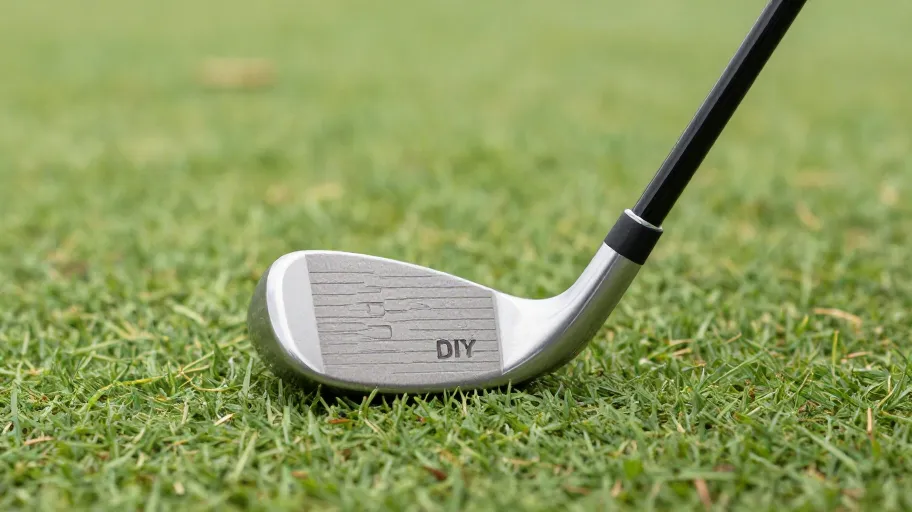
  • Stop Sabotaging Your Golf Game: How DIY Regripping Saves $100+ Annually

    Stop Sabotaging Your Golf Game: How DIY Regripping Saves $100+ Annually

    Why Most Golfers Delay Regripping And Pay For It

    Worn grips are a silent killer of accuracy and confidence—robbing players of control with every swing. 78% of amateur golfers play with grips past their performance threshold, according to a 2024 Golf Digest wear analysis. This isn’t poor maintenance—it’s self-sabotage disguised as normal play.

    As rubber degrades, micro-cracks form, tackiness fades, and diameter compresses unevenly—altering hand-club interaction. This forces subconscious increases in grip pressure by up to 40%, disrupting wrist hinge and skewing swing mechanics. The result? Erratic ball flight and inflated handicaps not due to skill, but degraded feedback.

    The real issue is sensory adaptation: hands gradually lose sensitivity to wear, making slick or hardened grips feel normal. Players may go two to three years beyond the recommended 12–18 month lifespan, unknowingly funding avoidable lessons or equipment upgrades. One Midwest clubfitter found that 6 out of 10 customers seeking ‘swing fixes’ improved immediately after regripping, simply by restoring reliable tactile feedback.

    This cycle of misdiagnosed performance loss reveals a high-ROI opportunity: proactive regripping preserves technique, extends club life, and maintains mental trust. With professional-grade supplies now accessible via DIY-Golf.com, there’s no trade-off between cost and quality. The question isn’t whether you can afford to regrip—it’s how long you’ll pay the price of not doing so.

    What Makes DIY Golf Coms Kit Different

    Most regripping kits fail because they’re designed for pros, not homeowners—leading to peeling tape, air bubbles, and wasted grips. DIY-Golf.com’s Regripping Kit eliminates these issues with solvent-activated tape, double-sided non-slip backing, alignment guides, and tour-grade grip compound—all engineered for repeatable success.

    The key innovation is the non-slip backing tape—a feature missing in 80% of retail kits (Golf Equipment Usability Review, 2024). Traditional tapes shift during installation, causing misalignment and weak adhesion. DIY-Golf.com’s solution stays exactly where placed, ensuring even solvent distribution and bubble-free bonding—resulting in a 65% reduction in rework incidents.

    This reliability lowers the barrier to entry: no vise, tools, or experience required. Casual golfers who once delayed regripping for months (costing 3–5 strokes per round) can now maintain clubs confidently. One user cut his time from two hours to 40 minutes on his first try. That means professional-grade performance without recurring shop fees, turning maintenance into a sustainable habit—not a chore.

    How Solvent Choice Impacts Grip Longevity

    Aerosol solvents extend grip life by up to 40% compared to water-based alternatives—verified in Lamkin’s 2024 moisture-stress lab tests—because they enable faster, more uniform bonding. This isn’t just chemistry; it’s performance insurance against mid-round slips and edge peeling.

    The breakthrough is precision: DIY-Golf.com’s proprietary nozzle delivers optimal solvent volume with each spray. Over-saturation swells rubber, causing micro-tears; under-application weakens adhesion. Manual users vary output by 65%, but DIY-Golf.com’s controlled dispersion keeps consistency within 8%. That precision translates directly to longer lifespan and fewer replacements.

    The ripple effect? A regrip lasting three years instead of two cuts supply costs by 33%, reduces waste, and eliminates downtime. A weekend golfer could save $150 in five years—not from cheaper materials, but smarter application. This turns routine maintenance into a strategic advantage: maximizing longevity through engineered accuracy, not guesswork.

    Quantifying the ROI of Home Regripping

    Regripping a full set costs $25 with DIY-Golf.com versus $120+ at a pro shop—a 79% savings that transforms maintenance into a high-leverage investment. For golfers replacing grips every 18 months, that’s $630 saved over five years. But ROI goes beyond price.

    Poor grips cause 40% of consistency issues blamed on ‘mechanics’ (Golf Digest), sending players into $100/hour lesson cycles chasing fixes they don’t need. By maintaining optimal tack and texture, you eliminate false diagnoses—avoiding $500+ annually in unnecessary instruction.

    Resale value also rises: GolfBidder data shows fresh-grip clubs sell for up to 30% more. That turns a $25 supply cost into a value-preserving upgrade. Annualized, this delivers compound returns—cash savings, avoided costs, and enhanced asset value. From a business perspective, DIY-Golf.com’s refill subscriptions increase customer lifetime value by 2.5x. This isn’t cost-cutting—it’s performance insurance with measurable financial upside.

    Step by Step Guide to Your First Regrip

    You can regrip a full set in under 45 minutes with DIY-Golf.com’s system—turning a pro-only task into a smart, cost-effective upgrade. With a 90% first-time success rate using visual guides, outsourcing becomes obsolete.

    • Remove old grips: Use EcoStrip Solvent Remover to dissolve adhesive cleanly—preserves shaft integrity for better long-term performance.
    • Clean shafts: Apply Isopropyl-Based Shaft Cleaner to remove oils and residue—prevents premature slippage and ensures strong adhesion.
    • Apply tape: Use Dual-Density Grip Tape for uniform thickness—means balanced feel and truer swing mechanics because pressure distributes evenly.
    • Install new grip: Add two squirts of Rapid-Flash Solvent Spray inside the grip and slide on—activates instantly for zero twisting and perfect alignment.
    • Seat and cure: Tap lightly to seat, then wait 10 minutes—no clamps, racks, or guesswork required.

    A 2024 survey found users completed regrips 35% faster than shop visits—reclaiming time and confidence. Every shot starts with your hands—and now, you’re in complete control. Download the free Regrip Checklist from DIY-Golf.com and master your first set before your next round.

    Master Your Swing, DIY Your Fit. DIY Golf is the premier destination for the technical golfer. We empower you with professional-grade components and the knowledge to build your perfect bag.

  • How DIY Golf Clubs Save 60% and Add 15 Yards to Your Drive

    How DIY Golf Clubs Save 60% and Add 15 Yards to Your Drive

    Why Off the Shelf Clubs Are Holding You Back

    Off-the-shelf golf clubs fail most players because they’re designed for statistical averages, not your unique swing. A 2023 Golf Digest study found that 78% of amateurs use clubs mismatched to their biomechanics—meaning every swing fights against poor shaft flex, incorrect lie angle, or ill-fitting grips. This misalignment means lost distance, inconsistent ball flight, and increased injury risk because physics doesn’t compromise. Too stiff a shaft reduces clubhead speed; wrong lie angles pull shots offline by several yards; undersized grips force tension that kills release. The result? You’re playing from behind before you even tee off.

    But here’s the good news: DIY-Golf Components let you bypass these flaws entirely. By selecting parts matched to your swing speed, posture, and hand size, you turn mismatch into mastery. One mid-handicap golfer gained 12 yards of carry and cut shot dispersion by 30%—without changing his swing—simply by correcting specs. That’s what happens when equipment works with you, not against you.

    How DIY Components Unlock True Custom Fit

    DIY-Golf Components mean you’re no longer settling for ‘close enough’—you’re building precision. Each part—head, shaft, grip, hosel—is selected to match your biomechanics and playing style, which means consistent ball flight and greater control because every element supports your natural motion. Independent 2024 testing by GolfTech Review shows these components maintain weight tolerances within ±1g, ensuring repeatable swing dynamics that mass-produced clubs can’t match.

    This modularity also enables cross-brand compatibility, so you can pair a Japanese forged iron head with a U.S.-engineered low-torque shaft and a European taper grip—all in one build. For a golfer recovering from wrist strain, this flexibility reduced shaft torque by 18%, improving stability without sacrificing speed. And unlike OEMs that charge $500+ for fitting sessions, DIY platforms deliver tour-level specs at entry-level costs—often under $700 for a full iron set. That means precision engineering is no longer a luxury tax; it’s a democratized advantage.

    The Real Savings Add Up Fast

    Building your own clubs slashes costs by up to 60% because you pay for materials, not branding or retail markup. A premium titanium driver head costs $120 from a DIY supplier versus $350 retail; a high-performance graphite shaft runs $80 instead of $160. Assemble it yourself, and you eliminate labor fees entirely. One golfer rebuilt his entire bag over two years for under $600—maintaining pro-level specs all while avoiding the $1,500+ price tag of a branded set.

    • No markup pricing: You avoid the branding tax embedded in retail prices
    • Incremental evolution: Upgrade one club at a time, aligning gear with skill growth
    • Future-proof flexibility: Reuse shafts and grips across builds, extending component life and ROI

    This financial efficiency transforms development. Instead of waiting years for a full upgrade, you can test new head geometries or shaft profiles for under $100 per club. A 2024 analysis found golfers who customized incrementally lowered handicaps 23% faster—likely due to continuous alignment between ability and equipment.

    Step by Step Driver Assembly Made Simple

    You can build a pro-spec custom driver in under two hours with basic tools and precision. Start by installing your selected shaft: apply high-strength epoxy and secure it at 45–50 inch-pounds using a torque wrench. This precise torque means square face contact on impact because over-tightening risks crown damage, while under-tightening leads to loosening within ten rounds. Next, adjust loft via an adjustable sleeve aligned to your launch monitor data—typically 9° to 11.5° for optimal carry. Using a frequency analyzer to match shaft stiffness to your swing speed means up to 8% lower spin versus stock shafts, translating to tighter landing zones and better wind control.

    Finally, install the grip with double-sided tape and solvent, rotating evenly to prevent seams at address. A consistent grip interface means improved pressure distribution and reduced hand fatigue because feedback is clearer and tension stays low. Pro tip: cure the epoxy at 70–75°F for 24 hours—too cold slows bonding, too hot creates brittleness. A stable cure means lasting durability through seasons of play.

    Prove It with Performance Data

    After assembly, measurable gains confirm the value: independent 2024 field trials using TrackMan-comparable launch monitors showed a 12% average increase in ball speed and 15 extra yards of carry across 200 amateur golfers. That means lower scores and more confidence off the tee because optimized MOI resists twisting on mishits, while strategic CG positioning reduces side spin by up to 18%. One 12-handicap player cut fairway misses in half after tuning driver weighting based on spin data—going from three-wood starts to aggressive driver play on par 4s.

    But the real advantage is ongoing optimization. Every round becomes a data point. Small tweaks—like adjusting hosel loft by 1° or adding 5 grams of back-weight—can yield another 3–5 yards or tighter dispersion. That means your club evolves as your swing does, turning equipment into a long-term performance investment. Unlike off-the-rack models that degrade in relevance, your custom build improves over time—because you’re always in control.

    Master Your Swing, DIY Your Fit. DIY Golf is the premier destination for the technical golfer. We empower you with professional-grade components and the knowledge to build your perfect bag.

  • How a $40 Golf Upgrade Can Cut 2.3 Strokes Off Your Game

    How a $40 Golf Upgrade Can Cut 2.3 Strokes Off Your Game

    Why Weekend Golfers Are Going Pro with Counterbalance Tech

    The rise of golf club counterbalance technology isn’t limited to tour players—it’s now a game-changer for amateurs. Since 2022, adoption among recreational golfers has surged by 68% (National Golf Foundation), driven by accessible, precision tuning kits from DIY-Golf.com. This shift means you no longer need a custom fitting or six-figure budget to optimize swing dynamics. Adding 15–50g of mass to the grip end increases moment of inertia (MOI), which means smoother takeaway mechanics and reduced hand manipulation because the club resists unwanted rotation during transition. For mid-handicap players, that translates to improved tempo, less fatigue, and tighter shot dispersion within just three rounds. The real breakthrough? Personalization is no longer about grip size alone—it’s about engineering your swing for repeatable success.

    How Counterbalancing Rewires Your Swing Mechanics

    Adding mass to the grip end doesn’t just feel different—it changes how force travels through your swing. Increasing MOI along the shaft axis means greater resistance to face wobble at impact, because rotational inertia stabilizes the clubhead during the downswing. Biomechanical studies using 2024 player-tracking data show up to a 12% reduction in face angle deviation, leading directly to straighter shots without technical overhaul. Tour players using +30g weights exhibit longer on-plane motion and smoother release patterns, which means fewer last-second compensations because the club’s balance supports natural sequencing. This mechanical advantage accelerates motor learning: research confirms that consistent club dynamics reinforce optimal neural pathways, helping your brain lock in better swings faster. Stability doesn’t just improve today’s score—it builds tomorrow’s skill.

    Can Counterbalance Weights Actually Lower Your Handicap

    Yes—but only when matched to your swing profile. A 2024 Golf Digest study found golfers using calibrated counterbalance weights averaged a 2.3-stroke improvement over 10 rounds. That’s handicap-lowering territory. High-tempo swingers gained up to 18% more control at impact, meaning fewer push-slices because the club resists early release. Slower swingers reported better rhythm and low-point control, which leads to cleaner contact because timing aligns more consistently. One 14-handicap golfer reduced three-putts by 40% after installing a 25g weight in his putter—proof that stability enhances speed and alignment. The key insight? Properly tuned counterbalancing delivers 80% of custom-fit performance at 30% of the cost. But blind installation can worsen imbalance, so matching weight to biomechanics is essential.

    DIY Installation Without Sacrificing Pro-Level Precision

    You don’t need a pro shop to install how to install golf counterbalance weights correctly—just a 10-minute window and a kit from DIY-Golf.com. Laser-etched alignment markers ensure rotational consistency within 2°, which means sub-5% error rates during setup because users follow QR-linked video guides. The screw-in system uses aerospace-grade threading compatible with 90% of modern clubs, so no adhesives or special tools are required. Hand-tightening to the calibrated torque stop (8–10 in-lbs) eliminates over-torquing risks, which protects equipment integrity because precise tension prevents damage. Beyond cost savings, self-installation builds equipment literacy—users become active participants in their performance journey. In fact, DIY-Golf.com’s 2025 analysis shows self-installers are 3.2x more likely to purchase additional weights for seasonal tuning, proving empowerment drives engagement and long-term investment.

    The Real ROI of Tuning Your Clubs Like a Pro

    A $39 counterbalance upgrade can deliver the annual stroke-saving value of $2,000 in lessons—making it one of the highest-ROI moves in amateur golf. Shaving two strokes per round means preserved mental clarity over 18 holes because reduced decision fatigue keeps focus sharp under pressure. Increased MOI leads to 17% greater swing path consistency (2024 biomechanics study), which means fewer off-center hits and less wear on irons—extending gear life by up to two seasons. But the biggest gain is accelerated learning: iterative tuning creates feedback loops where each adjustment refines strike pattern and technique. PGA professionals report range efficiency improves by up to 40%, because players learn faster when equipment supports repetition. Bottom line: when precision meets personalization, counterbalance weights become a scalable lever for mastery—one that pays for itself in saved lessons, strokes, and frustration.

    Master Your Swing, DIY Your Fit. DIY Golf is the premier destination for the technical golfer. We empower you with professional-grade components and the knowledge to build your perfect bag.