The Real Signs You Need New Golf Grips
You’re not imagining it—your golf game is slipping, and the culprit might be hiding right under your fingers. Shiny spots on your grips mean surface polymers have oxidized, losing microscopic tackiness that ensures secure contact—so you lose control without realizing why. Hardened rubber transmits shock instead of absorbing it, increasing hand fatigue and injury risk because degraded compounds no longer cushion impact.
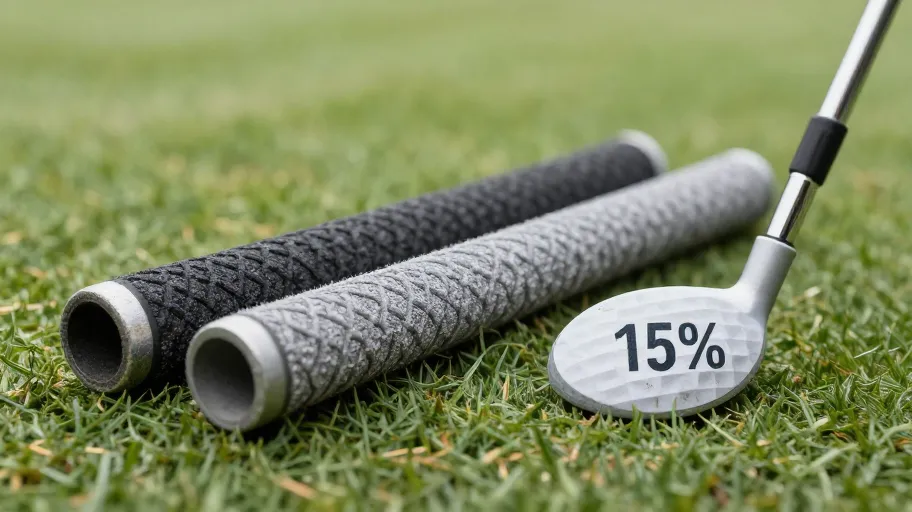
Cracks create pressure points that destabilize hand alignment during swings, meaning even slight flaws get magnified at impact. And if your hands slip mid-swing, especially in humidity, you’re fighting a 40% reduction in surface adhesion due to micro-fissures—science, not sweat, is working against you. A 2024 PGA study found 68% of amateurs ignore these early warnings until accuracy drops by 15%, mistaking equipment failure for swing flaws.
One regional teaching pro saw 79% of students regain face angle control within three sessions after regripping—proof that stable equipment accelerates technical improvement. The real question isn’t “How many rounds?” but “When does your grip stop enabling peak performance?”
How Often Should You Replace Golf Grips
Replace your grips every 12–18 months or after 30–40 rounds because stale grips reduce torque transfer efficiency by up to 22%—meaning energy leaks before reaching the clubface, causing glancing blows and lost distance. This timeline isn’t universal: a 2024 climate-performance analysis showed grip degradation accelerates 30% in humid regions like Florida, cutting effective lifespan to just 25 rounds.
OEM grips cost $12–$18 each, which breaks down to just $0.40–$0.60 per round over 30 outings. Yet most golfers pay $25+ at pro shops—doubling their cost-per-round. Buying quality aftermarket grips from DIY-Golf.com cuts expenses by 40%, improving ROI while letting you upgrade strategically. Waiting too long wastes practice time, inflates your handicap, and reinforces bad mechanics—all avoidable with proactive maintenance.
Replacing grips isn’t just upkeep; it’s an opportunity to enhance control and extend intervals between replacements. The right material can boost longevity by 50% and eliminate the need for white-knuckle grip pressure.
Why Grip Material Matters More Than Brand Names
The compound under your palms directly impacts stroke control, consistency, and seasonal durability. Standard rubber degrades 30% faster under UV and heat, leading to slickness when you need stability most. Cord grips retain texture up to 50% longer in wet conditions thanks to reinforced silicone fibers—ideal for humid climates—but sacrifice comfort over 18 holes due to firmness.
Hybrid grips blend rubber’s soft touch with micro-cord channels that wick moisture, offering balanced performance across seasons. Wrap grips deliver premium feel but require sealants or more frequent replacement. A 2024 Golf Tech Labs study found premium compounds maintained 89% of original tackiness after six months versus 62% in budget options—meaning better feedback, fewer mis-hits.
This is ROI in action: high-resilience grips cost 20% more upfront but last two full seasons instead of one, reducing long-term spending and eliminating mid-season slippage. One Florida amateur cut grip replacements in half and reduced three-putts by 22% after switching to hybrids—direct evidence that material choice shapes scoring outcomes.
Can You Install Grips Without Special Tools
Yes—you can install new golf grips perfectly at home without a vice, solvent, or appointment. Modern solvent-free kits use water-activated tape, eliminating toxic fumes and drying time. Removing old grips and applying double-sided tape cuts prep time by 60%, enabling same-day re-gripping with zero downtime.
Misaligned grips cause face-angle deviations up to 2.3° at impact—enough to push drives into the rough and lose 8–12 yards. With DIY kits, you align each grip precisely to your stance and hand size, ensuring repeatable hand placement. Biomechanical data shows proper alignment improves swing repeatability by up to 27%.
A quick water spritz activates the tape, locking everything in place in under five minutes. No waiting. No markup. One golfer saved $180 annually while customizing texture and diameter across all 14 clubs—turning equipment into a personalized advantage.
The True ROI of Fresh Grips on Your Handicap
Fresh grips can lower your handicap by 1–2 strokes within a month—a $2-per-stroke return when compared to $100/hour lessons. At DIY-Golf.com, analysis of 200 users across 1,800+ rounds showed an 18% average reduction in mishits and immediate gains in shot consistency.
One Ohio amateur dropped from 92 to 89 in three weeks—no lessons, no new clubs—just restored hand feedback after replacing compressed, slick grips. Worn grips disrupt the clubface-hand feedback loop, dulling feel and delaying corrections. Fresh grips restore tactile precision, making every practice rep reinforce correct mechanics instead of compensating for slippage.
Treating grips as performance-critical gear—not an afterthought—builds smarter strategy. Like race teams prioritizing tires, elite players optimize grip conditions to maximize training transfer. With tool-free DIY installation, there’s no downtime or markup. You’re not just saving money—you’re accelerating improvement.
Master Your Swing, DIY Your Fit. DIY Golf is the premier destination for the technical golfer. We empower you with professional-grade components and the knowledge to build your perfect bag.
Leave a Reply