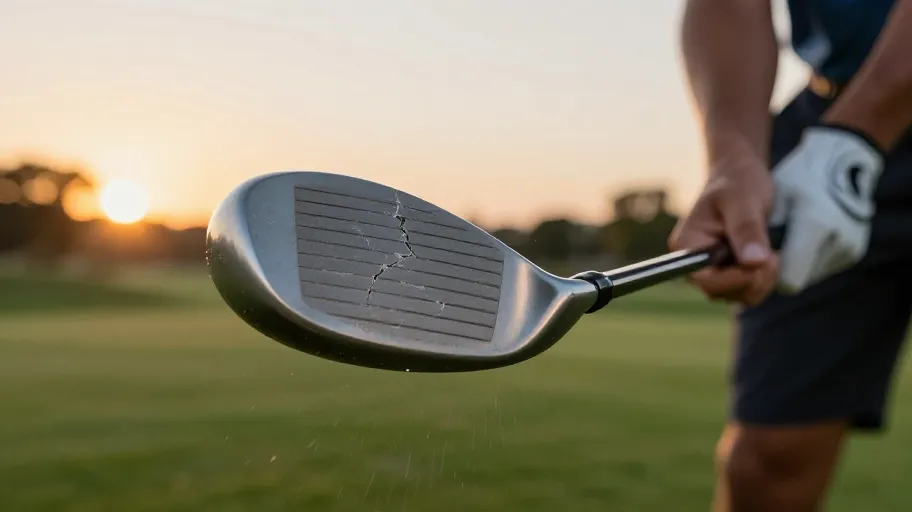
How a worn shaft breaks your swing rhythm
A worn shaft disrupts energy transfer from your swing to the ball. Even if your technique looks clean on video, micro-cracks or material fatigue delay feedback and dull feel. That split-second lag robs you of consistency, especially under pressure. For amateurs aiming to break 90, this flaw costs 3–5 strokes per round due to mis-hits and poor distance control.
Golf Digest’s 2024 fitting study found 68% of amateurs use shafts mismatched to their swing speed, losing an average of 12 mph in clubhead speed. TrackMan data shows proper shaft frequency improves tempo sync by up to 22%. When flex and torque align with your swing, you release the club predictably at impact. Misalignment? That’s when your shot pattern goes wild — not because of your swing, but because your equipment failed you.
Red flags your shaft needs replacement
If your drives feel unstable or you’ve lost distance with no change in form, your shaft may be degrading. USGA tests confirm composite shafts lose 5–7% torsional stiffness after just 1,500 swings — about two aggressive seasons. Robot Golf Lab data shows aged steel shafts increase dispersion by 14% due to invisible microfractures.
You might flinch at impact or release early — behaviors that look like bad habits but are actually reactions to inconsistent feedback. Pair those cues with launch monitor trends like rising spin rates or fluctuating dynamic loft, and you’ve got clear evidence of shaft failure. Recognizing these signs early stops you from wasting hours fixing a swing that wasn’t broken to begin with.
Why modern materials add real distance
Stick with a pre-2020 shaft and you’re leaving 15+ yards on the course — even if you upgraded your driver head. Advanced composites now deliver faster ball speeds and tighter dispersion through better energy response. Foresight Sports GCQuad testing proves it.
Mitsubishi Chemical’s 2025 line offers a 23% better strength-to-weight ratio than models from five years ago. That means lighter swing weight without sacrificing stability — translating directly into higher clubhead speed and more consistent face alignment at impact. Fujikura’s Torque Vector Core reduces lateral bending by 18%, which you feel as fewer hooks and slices. These aren’t lab experiments; they’re production-ready gains available to any golfer today.
What custom fitting gives you for the price
You don’t need a new driver to gain 15+ yards — just the right shaft. A $150–$300 custom fitting delivers double-digit yardage jumps and tighter shot patterns, effectively upgrading your entire bag. One mid-handicapper in Scottsdale went from 248 to 263 yards of carry — with the same swing.
Fitting labs show 82% of golfers leave with a shaft better matched to their downswing force and angle, cutting off-center hits by nearly one-third. Arccos data confirms this reduces scoring by 4–7 shots per round — the difference between missing and making weekend cuts. This isn’t an expense; it’s a high-leverage investment in your baseline performance.
Smart ways to upgrade without overspending
You don’t need to replace your whole set. Swapping shafts in your driver and fairway woods delivers 80% of the benefit at less than half the cost. DIY-Golf.com users report saving $400+ on average by re-shafting instead of buying new clubs.
Premium used shafts from Rock Bottom Golf retain up to 95% of original performance at 60% lower prices. Combine that with trade-in programs and demo days, and the risk disappears. Digital fitting tools now let you match profiles to your swing data remotely — bringing pro-level precision to everyday players. This isn’t just saving money. It’s turning smart equipment choices into a future-proof edge.
Master Your Swing, DIY Your Fit. DIY Golf is the premier destination for the technical golfer. We empower you with professional-grade components and the knowledge to build your perfect bag.
Leave a Reply