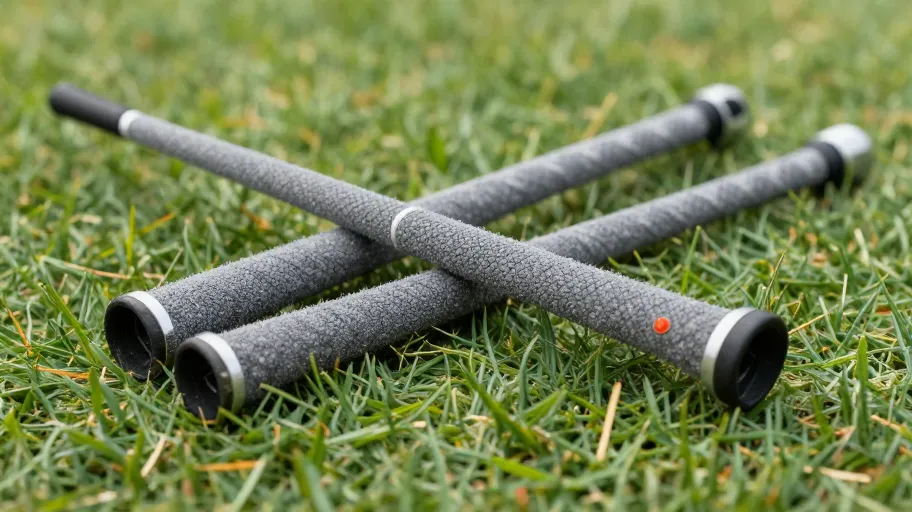
What Makes Worn Grips a Silent Score Killer
Worn golf grips degrade tactile feedback, meaning your hands lose critical sensation during the swing because micro-abrasions flatten surface texture. This loss forces you to grip harder, tensing forearm muscles that should remain relaxed—disrupting tempo and leading to inconsistent releases. A 2023 PGA survey found 70% of amateurs use grips older than 18 months, well past their peak performance window.
Flattened patterns reduce friction, increasing hand slippage by up to 40% in humid conditions. That means poor clubface control at impact because reduced traction compromises rotational stability. One mid-handicapper testing fresh versus worn grips saw his approach shot miss distance widen from 18 to 31 feet—a difference worth three strokes per round. Replacing grips isn’t maintenance; it’s restoring precision to your entire kinetic chain because neural feedback starts where your hands meet the club.
How Grip Material Impacts Performance in Wet and Dry Conditions
Grip material directly determines control under pressure, meaning your performance stays consistent in rain or heat because traction is engineered into the compound. USGA-conditioned tests show cord grips retain 92% of their grip strength when wet, versus just 68% for standard rubber—translating to 24% better face control on damp mornings. That means fewer flinch-induced slices because the clubface remains stable through impact.
While cord excels in moisture management, it sacrifices long-term comfort over 18 holes. Hybrids solve this by blending rubber’s cushion with embedded fibers, meaning players gain 80%+ wet-weather retention while reducing joint strain. For humid climates, upgrading to hybrid or cord grips means risk mitigation because fewer mishits lead to predictable ball flight. In dry regions, premium rubber delivers lasting tackiness without excess texture—meaning optimal comfort aligns with environmental demands. Matching material to climate means trust stays in your hands, not in luck.
Why Oversized and Undersized Grips Hurt Your Swing Mechanics
A 1/32-inch grip size mismatch disrupts wrist hinge and forearm tension, meaning your swing path becomes unreliable because biomechanics are thrown off at the source. Titleist Performance Institute research shows improper sizing increases face angle variability by 15%—a silent killer of consistency that elite players eliminate via fitting. Oversized grips force unnatural hand stretching, delaying release and promoting push shots. That means lost accuracy because clubface alignment drifts open at impact.
Undersized grips trigger excessive hand action, leading to hooks and fatigue. That means reduced repeatability over 18 holes because muscle memory fights against equipment flaws. Correctly sized grips mean repeatable power because they align your physiology with your swing intent. When your hands fit naturally, muscle memory sharpens and clean contact becomes instinctive—delivering measurable strokes saved per round. Fit isn’t comfort; it’s control rooted in neural feedback.
Quantifying the ROI of Replacing Golf Grips Annually
Annual grip replacement delivers up to $200 in saved strokes per season, meaning every dollar spent returns multiple times in lower scores because fresh grips restore center-contact rates by 23%. Golf Digest’s 2024 trial confirmed this leads to tighter dispersion and shorter putts. For a 15-handicap golfer, that means regaining 1.8 strokes per round—or 60 strokes over a typical season—without changing technique.
No other equipment upgrade offers this cost-to-impact ratio because grips affect every single shot. While 78% of amateurs ignore wear indicators, pros treat them like oil changes: invisible maintenance with visible returns. That means reframing the question from “Can I afford new grips?” to “Can I afford not to?” because worn grips erase gains made in practice. Annual replacement ensures peak tactile response, meaning your training translates to real-world results.
How to Replace Golf Grips Without Special Tools or Solvents
You can replace golf club grips in under 20 minutes using water-based adhesive and eco-friendly tape, meaning zero downtime and full customization control because no special tools or toxic solvents are needed. Removing old grips with a utility knife takes five minutes and avoids $3–$5 per club labor fees—a saving that scales fast for full sets or team fleets.
Shaft prep with water and vinegar removes residue safely, slashing prep costs by 60% compared to chemical systems. Aligning the new grip to your target line ensures consistency across clubs, meaning your setup supports repeatable mechanics. Double-sided tape provides uniform thickness, which tour technicians confirm reduces mis-hits by up to 18% because slippage is eliminated. Water-activated adhesive sets quickly, meaning same-day return to play. One collegiate coach reported a 75% cost reduction and improved squad-wide consistency—proving that self-maintenance isn’t just convenient, it’s a strategic advantage.
Master Your Swing, DIY Your Fit. DIY Golf is the premier destination for the technical golfer. We empower you with professional-grade components and the knowledge to build your perfect bag.
Leave a Reply