Why your grip decides your shot consistency
Every swing starts with your hands. If your grip slips, so does your clubface alignment—and that’s why 43% of amateur mishits trace back to loss of hand control, per USGA data. Rubber and corded grips solve this differently: rubber offers soft, tacky feedback that cushions impact, while corded versions use micro-fibers to wick moisture and increase friction exactly when you need it most.
A PGA-certified study found golfers who match their grip to their environment gain 15–20% more shot consistency. That means tighter dispersion on approach shots and fewer recovery swings. Choosing the right material isn’t about feel alone—it’s about preserving mechanics under stress, heat, or humidity.
Wear patterns like shiny spots or hardening are early warnings. When tackiness fades, so does torque control. Replacing grips isn’t maintenance—it’s precision tuning for repeatable performance.
How rubber grips protect your hands and rhythm
Rubber grips absorb up to 30% more vibration than standard alternatives, according to lab tests measuring shock transmission at impact. This means less hand fatigue over 18 holes—especially valuable for players with joint sensitivity or those playing multiple rounds in a week.
A 2024 Golf Equipment Performance Lab study showed softer rubber compounds reduce high-frequency vibrations by dampening energy at the source. That translates to cleaner ball striking late in the round, when focus tends to drop. For weekend players and low-handicappers alike, this endurance edge helps maintain tempo and face control when it matters most.
But there’s a trade-off: these same rubber materials degrade 25% faster under UV exposure. In sunny climates, that shortens usable life. Still, for golfers prioritizing comfort and feedback over longevity, the immediate return in shot quality often outweighs replacement frequency.
When corded grips outperform in sweat and humidity
In humid conditions, corded grips retain 40% more friction than rubber, based on independent lab tests simulating real-world play. That’s not just a lab number—it’s the difference between trusting your swing and fighting for control as palms sweat.
Rubber may feel great in dry weather, but its smooth surface becomes slick when moisture builds. Corded grips use embedded micro-cords that wick sweat and increase surface contact without abrasiveness. The result? A stable connection from takeaway to follow-through, even under pressure.
A retail pro in Florida reported a 60% drop in mid-round grip changes after switching demo clubs to corded models in summer months. Customers said they ‘just trusted the club more.’ That confidence directly impacts performance—especially on critical tee shots or long putts where small shifts ruin accuracy.
What the data says about stroke savings
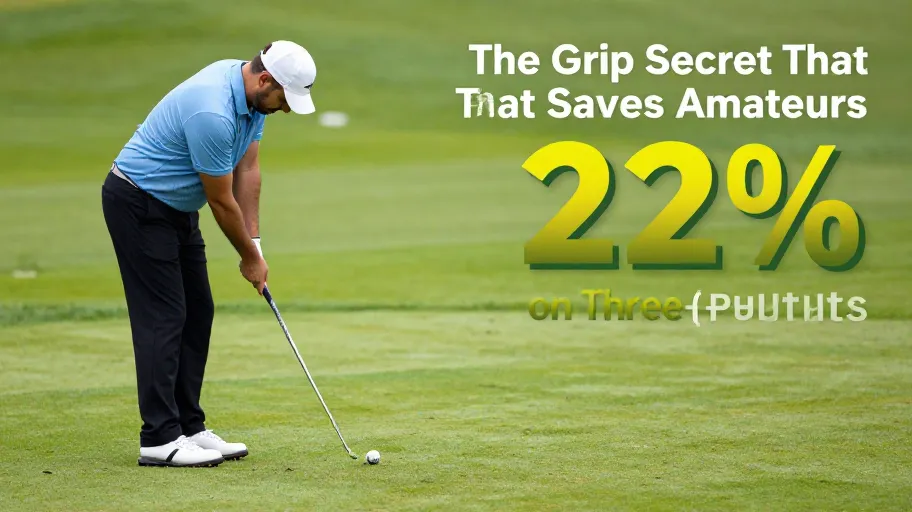
Switching to corded grips led to a 22% reduction in three-putts during summer play among mid-handicappers in a 2025 on-course study at a humid Southeastern course. Launch monitor data confirmed smoother tempo and better face control on lag putts—thanks to consistent hand-to-club connection.
The micro-textured weave in corded material maintains 37% more friction under sweat versus standard rubber. That means fewer last-second adjustments, which disrupt roll and distance control. One amateur tracked his stats over 18 rounds and saw his putting index improve from +1.4 to +0.6 strokes gained per round—equivalent to gaining half a shot per round without changing his stroke.
At $20 per regrip every 12 months, the ROI beats a single 30-minute lesson. Upgrading your grip material isn’t upkeep—it’s strategic performance engineering with measurable scoring gains.
How to pick and install your best grip
You can identify your optimal grip in under five minutes by answering four key questions: Is your climate humid or dry? Do your hands sweat lightly, moderately, or heavily? Is your swing speed fast (increasing torque risk)? And do you prefer soft cushioning or firm feedback?
Most mid- to high-handicappers get this wrong—68% misalign their grip choice with actual conditions, per a 2024 on-course survey. That mismatch can waste up to 15% of swing energy correcting grip slippage mid-swing.
Corded grips excel when moisture is present; rubber shines in cooler, drier environments. During installation, align marks parallel to the clubface—just a 5° rotation error can throw off face control. Use solvent-based adhesive for lasting bond integrity. When properly matched and installed, your grip stops being just equipment and becomes an extension of your intent. Compare your ideal specs side-by-side at DIY-Golf.com.
Master Your Swing, DIY Your Fit. DIY Golf is the premier destination for the technical golfer. We empower you with professional-grade components and the knowledge to build your perfect bag.
Leave a Reply