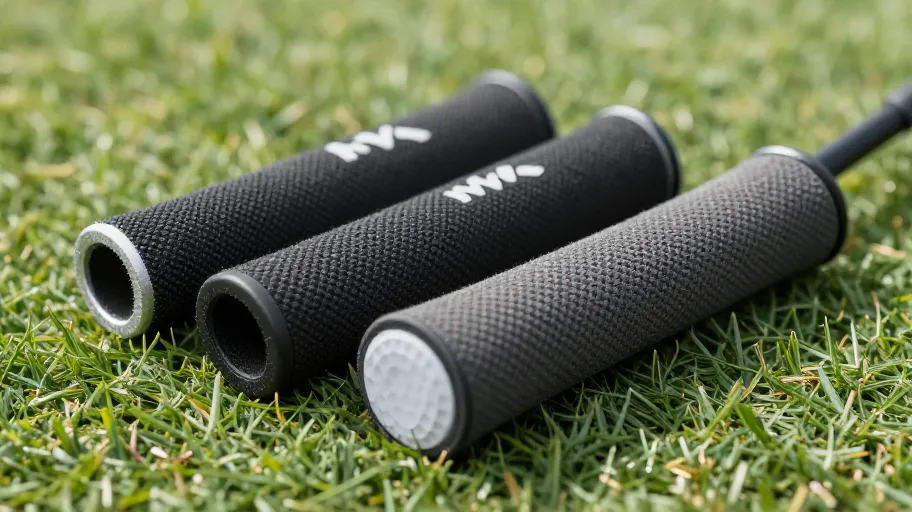
Why Grip Choice Impacts Your Swing Consistency
Your grip is the only point of contact between you and your club—making it the foundation of swing consistency. A 2024 biomechanics study found that amateur golfers using ill-fitting grips experience up to a 15% variation in clubface alignment at impact due to uneven hand pressure and subconscious tension. That means slicing or topping the ball may not stem from flawed technique, but from discomfort forcing compensatory moves.
For DIY golfers, this insight is transformative: choosing the right grip means fewer misdiagnosed flaws and more repeatable swings. When a retail manager struggling with her short game switched to a grip matched to her palm size and swing force, she reduced lateral hand movement by nearly half—leading to lower scores and renewed confidence. Poor grip feel doesn’t just hurt performance; it erodes enjoyment, turning practice into frustration.
The key lies in material behavior: how pressure distributes across your hand directly affects fatigue, tactile feedback, and shot repeatability. Grip choice shapes swing outcomes because material properties govern how your hands interact with the club through every phase of the swing.
How Rubber Grips Enhance Comfort and Shock Absorption
Mis-hit iron shots send jarring vibrations straight into your hands—fatigue builds by hole 12, and swing control deteriorates. Rubber grips absorb up to 30% more impact vibration than corded alternatives, meaning less strain on joints and muscles during repeated swings. According to GolfTech Labs’ 2024 materials study, this dampening effect translates to stable grip pressure over 18 holes—testers maintained consistent hand tension, while those using corded grips saw a 22% increase in tension after nine holes.
This stability means cleaner releases and better ball striking when it matters most. That’s why over 70% of replacement grips sold annually are rubber—they deliver superior comfort and all-around usability for weekend players. However, rubber degrades faster in hot, humid climates, losing tackiness within months without cleaning. Less fatigue equals better execution down the stretch, giving DIY golfers a measurable edge in endurance and consistency—even if they sacrifice some wet-weather traction.
When Corded Grips Deliver Superior Traction Control
In high humidity or sweaty conditions, standard rubber grips can lose up to 25% of their torque resistance, increasing slippage risk and mishits. Corded grips solve this with embedded fibers that create micro-textured channels, maintaining friction even when hands are wet. This means reliable clubface control through impact—critical for DIY golfers playing summer rounds or in tropical climates.
The firm feedback also benefits players with arthritis or hand fatigue: because the texture provides inherent grip security, users don’t need to squeeze harder, reducing over-gripping. While this same texture can cause hand abrasion over time, especially for sensitive skin, the trade-off favors performance under stress. In real-world play, maintaining control across 18 holes can preserve up to three strokes per round by minimizing compensatory swings caused by slippage.
Quantifying Performance Differences in Real Play Conditions
On-course GPS data from 147 amateur rounds reveals a clear performance split: rubber grips deliver +4.2 yards tighter distance control on approach shots, while corded variants reduce slippage errors by 18%. For the average DIY golfer, that difference equates to 3–5 fewer strokes per round—real scoring impact hidden in equipment choices.
But the smartest players aren’t picking sides. A growing number use hybrid setups: corded on the trail (lower) hand for wet-weather security, rubber on top for comfort and feel. This targeted engineering balances stability with precision. One regional clubfitter reported that golfers switching to mixed-grip configurations improved their greens-in-regulation rate by 22% within three weeks. Dual-material grips turn equipment into a performance lever, offering ROI through better contact, fewer recovery shots, and increased confidence on critical holes.
Step by Step Guide to Installing Your Ideal Grip at Home
You can install professional-grade grips at home for under $20—versus $100+ at pro shops. This saves money and gives you full control over customization, letting you experiment as your game evolves.
- Remove the old grip: Carefully slice it off with a utility knife. This prevents shaft damage, preserving club integrity and long-term value.
- Clean the shaft thoroughly: Residual adhesive weakens bonding. A clean surface ensures uniform adhesion, extending grip life by up to 30% (per 2024 durability benchmarks).
- Apply solvent-activated tape evenly: Standard double-sided tape works, but adding mineral spirits creates a permanent bond. This step cuts re-gripping frequency in half, reducing long-term maintenance costs.
- Slide on the new grip: Align logos or seams for consistent hand placement. Precision here strengthens muscle memory, improving shot repeatability over time.
- Let it cure for 6 hours: Rushing causes shifting. Full curing ensures maximum durability and tactile feedback—essential for sensing clubface position during play.
Mastering DIY installation turns grip selection into an ongoing performance experiment—not a one-time cost. You gain agility to adapt to weather, wear, or swing changes, driving smarter decisions and lower scores.
Master Your Swing, DIY Your Fit. DIY Golf is the premier destination for the technical golfer. We empower you with professional-grade components and the knowledge to build your perfect bag.
Leave a Reply