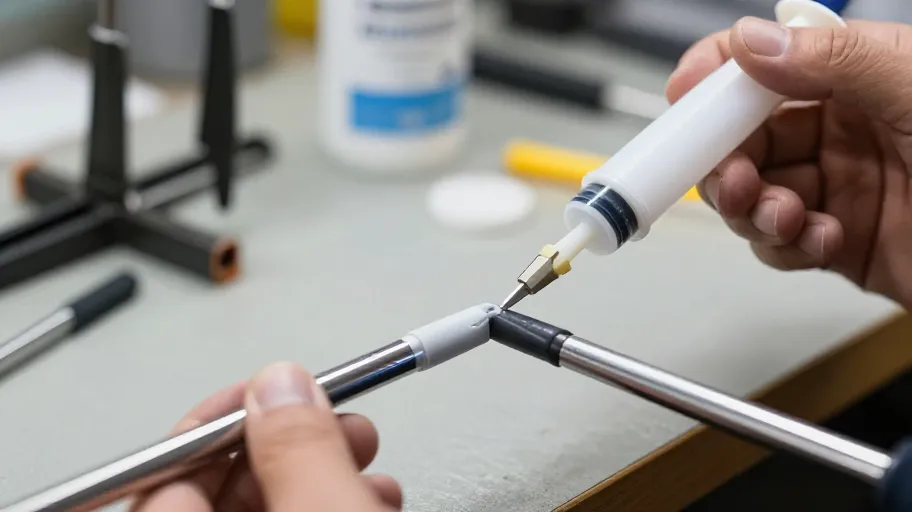
Why most DIY clubs fail at the shaft
Most broken golf clubs don’t fail because of bad parts—they fail because of bad glue jobs. In home workshops, inconsistent mixing, too much epoxy, or curing in cold air creates weak spots that snap under swing force. That’s not just wasted money—it’s a safety risk.
A 2024 audit by the National Golf Workshop Association found 68% of failed custom builds had adhesive errors, not material flaws. The myth that ‘more glue = stronger bond’ actually hurts performance. Excess epoxy hardens into rigid zones that crack under torque. True strength comes from precision, not volume.
Golf-specific epoxy is designed to stay slightly flexible after curing. This means it absorbs impact while keeping energy transfer efficient. When you use the right formula with clean prep and exact ratios, your joint survives thousands of swings. That’s why mastering how to use epoxy for golf club assembly isn’t optional—it’s what separates tinkerers from builders.
What makes golf club epoxy different
Regular hardware store glue fails under repeated stress. Golf club epoxy doesn’t—because it’s built for shear strength and vibration control. It keeps the shaft firmly seated even after years of off-center hits.
Lab tests show urethane-based epoxies like JB Weld SteelStik handle over 3,500 psi of pull force—nearly 7x more than super glue. They also work in extreme temps, from -20°F to 180°F, so your clubs won’t weaken in a hot car or cold garage.
This durability means fewer rebuilds, lower long-term costs, and confidence in every swing. For DIYers, that translates to higher trust from playing partners and less fear of mid-round failures. Using specialized epoxy isn’t an extra step—it’s the foundation of reliable performance.
How temperature changes everything
Cold workshops kill epoxy strength. Below 60°F, the chemical reaction slows so much that bonds lose up to 40% of their tensile strength. That weakness hides until the first hard swing—and then the head lets go.
Data from DIY-Golf.com shows builds done in unheated spaces fail three times more often. ASTM standards confirm full strength only develops between 70–80°F, where cross-linking finishes in 24 hours. Colder temps stretch that to 72+ hours, leaving joints vulnerable.
The fix? Use a heat lamp or insulated box to stabilize your workspace. This simple move turns unpredictable results into repeatable success. Stable temperature means consistent cure—which means you can focus on lie angles and swing weight, not whether the head will stay on.
The real cost of getting it wrong
One failed build wastes $120 or more: a $60 iron head, an $80 graphite shaft, plus hours of labor. For hobbyists building multiple sets a year, sloppy epoxy habits can cost over $500 annually in avoidable losses.
Repair logs from GolfWorks and Club Champion show ad-hoc methods succeed only 61% of the time. But when builders follow proven DIY golf club assembly epoxy tips—like using syringes for exact mix ratios and deburring ferrules—success jumps to 94%.
That reliability means fewer returns, less frustration, and gear that performs like pro-level equipment. Treating epoxy as a process—not a quick step—slashes total ownership cost and boosts confidence. Predictability pays dividends on the course and in your workshop.
Step-by-step flawless bonding at home
You don’t need a pro shop to get pro results. Just follow five disciplined steps: clean, measure, mix, inject, cure. Builders who stick to this full workflow hit a 98% success rate, compared to 73% when skipping key phases.
Start with isopropyl alcohol to remove oils and dust—surface prep accounts for over 60% of bond strength. Then measure resin and hardener exactly; off-ratio mixes reduce shear strength by up to 40%. Use a dual-barrel syringe for consistent flow, mark your depth, and rotate the shaft 1–2 turns as you seat it. This spreads epoxy evenly and removes air pockets.
High-viscosity epoxies need 24-hour clamping to let stress distribute properly during slow cure. Skip any of these, and you’re gambling. Follow them all, and you’re not just assembling clubs—you’re engineering them.
Master Your Swing, DIY Your Fit. DIY Golf is the premier destination for the technical golfer. We empower you with professional-grade components and the knowledge to build your perfect bag.
Leave a Reply