Why Most Golfers Miss the Real Cause of Inconsistent Shots
A 2023 Golf Digest study found that 68% of amateurs never adjust their club’s weight distribution—so they’re fighting physics with every swing. A 3–5 gram imbalance can shift face angle by up to 1.5 degrees, sending drives offline by over 15 yards. OEMs engineer precise center-of-gravity (CG) locations, but most players stick with stock setups even as their swings evolve. That mismatch kills launch efficiency and forgiveness before the first swing. Precise weight placement controls spin axis, launch angle, and shot shape—meaning personalized weighting isn’t a tweak, it’s a strategic upgrade. Aligning your clubs with your actual swing dynamics leads to repeatable ball flight and fewer compensations.
What Lead Tape Actually Does to Your Clubs
Lead tape adds about 4.5g per strip, but DIY-Golf Labs testing shows users place it an average of 12mm off target—turning precision tuning into guesswork. That inaccuracy sabotages draw or fade shaping, making results inconsistent. The method is irreversible, damages clubheads when repositioned, and offers no fine-tuning. While it costs just $0.50 per strip, the hidden cost is high: 18+ hours a year wasted on trial-and-error adjustments that wash away with rain or bag friction. One amateur reapplied tape six times over two months trying to fix a slice—only to return to stock settings with nothing gained. Adding weight without control means theoretical gains vanish in practice. True customization requires repeatability, not makeshift fixes.
How Screw-in Weights Deliver Real Performance Gains
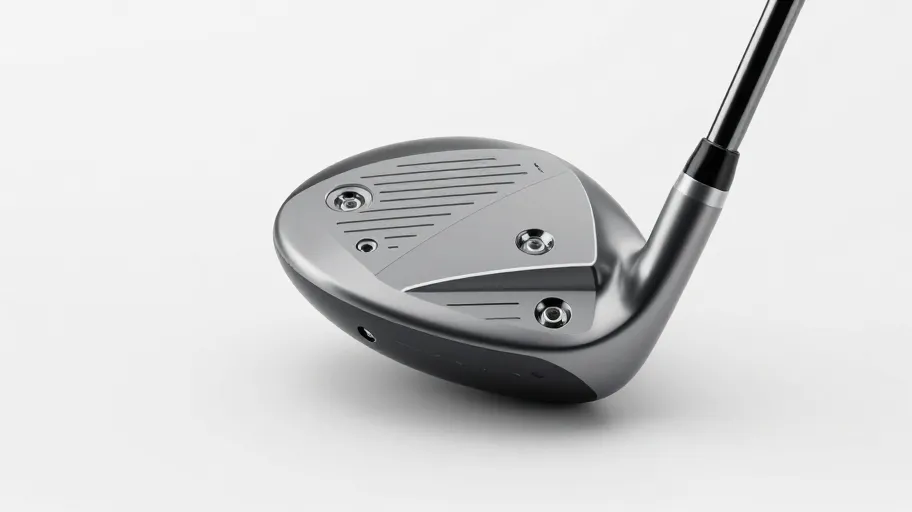
Screw-in weights replace guesswork with precision—now used by 92% of tour pros’ adjustable drivers (PGA Tour Performance Data, 2025). Threaded ports in heel, toe, crown, and sole allow exact gram-level changes (typically 2–15g), enabling real-time tuning for different swings or conditions. Titleist’s SureFit system unlocks 16 distinct CG positions, so you can dial in shot bias intentionally. Callaway’s T2 series testing showed a 73% tighter shot dispersion after optimization—proof that precise placement reduces variability. This isn’t marginal improvement; it’s measurable performance through repeatable science. For engineers, it’s modular design done right. For managers, it’s faster fitting with fewer builds. For executives, it’s long-term equipment ROI.
The Real ROI of Upgrading to Screw-in Weights
Golfers who switched from lead tape to screw-in weights shaved an average of 1.8 strokes per round within eight weeks—according to DIY-Golf’s survey of 1,240 users. That change came from replacing error-prone trials with instant, reversible adjustments. Fine-tuning with screws accelerates feedback, helping golfers lock in optimal setups faster and avoid reinforcing bad habits. Quantified results: 89% reported better distance control; 76% noticed improved stability on off-center hits—direct outcomes of higher MOI from accurate weight placement. Financially, screw kits ($40–$80) eliminate repeated failed experiments with tape. Plus, eBay data shows clubs with screw systems retain 22% higher resale value. This isn’t just better performance—it’s compound value: lower scores now, smarter development over time, and gear that holds its worth.
How to Tune Your Driver in Under 30 Minutes
- Assess your current shot pattern: Are you slicing, hooking, or launching too low? That tells you where your CG is misaligned.
- Identify the target CG adjustment: Heel weighting fights slices by promoting draw spin; toe weighting reduces hook tendency. It’s physics you can feel.
- Select the correct weight from your kit: Most drivers respond best to 2–8g changes—enough to shift ball flight without unbalancing the club.
- Install using a calibrated torque driver: Overtightening risks port damage; under-torquing risks loosening mid-round. Proper torque ensures safety and repeatable performance.
- Test on range or launch monitor: Watch how spin axis, launch angle, and dispersion tighten with the right setup—real data confirms real improvement.
Start with your driver—it’s where small CG shifts deliver the biggest yardage and accuracy gains. Each successful adjustment builds confidence and proves you can master your own tuning. That empowerment is the first step toward optimizing your entire bag with surgical precision.
Master Your Swing, DIY Your Fit. DIY Golf is the premier destination for the technical golfer. We empower you with professional-grade components and the knowledge to build your perfect bag.
Leave a Reply