Blog

  • Gain 25 Yards Off the Tee: How Custom Golf Clubs Cut 3+ Strokes From Your Handicap

    Gain 25 Yards Off the Tee: How Custom Golf Clubs Cut 3+ Strokes From Your Handicap

    Why Most Amateurs Lose Distance Off the Tee

    The real reason most amateurs lose distance isn’t lack of strength—it’s using clubs engineered for someone else. A 2024 PGA study found 70% of off-the-rack drivers fail to match average swing dynamics, robbing players of optimal launch conditions.

    Shaft flex that’s too stiff kills clubhead speed; incorrect lie angles scatter ball flight; ill-fitting grips reduce control. These mismatches mean lost power and accuracy because equipment forces adaptation instead of enhancing natural motion.

    This misalignment creates frustrated golfers stuck in a cycle of lessons and training aids with little ROI. But when fitters use motion-capture and launch monitor analytics to align gear with individual swing signatures, players gain 12–18 yards in carry distance. That kind of improvement builds trust—and turns buyers into loyal clients.

    How Launch Monitors Reveal Hidden Swing Flaws

    You’re losing distance not from effort, but from working blind. High-speed cameras and pro-level launch monitors like TrackMan capture ball flight, spin rate, and club path with millimeter precision—revealing flaws even elite coaches miss.

    A 2024 PGA-certified study showed 68% of amateurs were misdiagnosed during visual-only assessments, leading to wrong equipment choices. Metrics like smash factor and dynamic loft aren’t just numbers—they’re performance levers.

    Low smash factor means you’re leaking energy at impact, sacrificing yards. Excessive dynamic loft causes ballooning launches that kill roll. When fitters adjust shaft flex, face angle, or tee height based on this data, results shift immediately: longer carries, tighter dispersion, repeatable strikes. Facilities using this tech report 40% higher club sales—not from upselling, but from proving value in real time.

    What Sets Custom Golf Clubs Apart from Retail Models

    Insight without action is wasted potential. The real leap happens when diagnostics meet precision engineering: custom golf clubs built not for averages, but for you. While retail models force adaptation, bespoke clubs align with your biomechanics, turning inconsistency into reliability.

    Fitted irons reduce dispersion by up to 30% compared to off-the-shelf sets—a finding confirmed in 2024 PGA equipment trials. That means fewer shots in the rough and more greens hit, round after round. This isn’t luxury; it’s physics optimized through high-MOI heads, shafts tuned to your transition tempo, and weight customization that stabilizes delivery.

    One Scottsdale fitter saw a 45% increase in sales after full-spectrum fitment, with clients returning for every new set. Customization shifts the value proposition from product to outcome: better scores, sustained confidence, and long-term retention.

    Quantifying the ROI of Professional Golf Fitting

    Professional golf club fitting isn’t an expense—it’s an investment with measurable returns. Golfers recoup $300–$500 costs in 6–12 months through fewer lost balls, reduced range sessions, and smarter purchases that eliminate trial-and-error waste.

    A 2024 performance study found 80% of fitted players shot lower scores within three months due to improved accuracy and course management. That’s not just better golf—it’s better economics. The average amateur spends over $1,000 annually replacing clubs chasing fixes. Precision fitting slashes that waste, turning selection into a data-backed advantage.

    And the ripple effect grows your business: fitted golfers refer an average of 1.6 new clients, creating a self-funding growth loop. Positioning fitting as a high-ROI entry point attracts and retains players, transforming their experience and turning satisfaction into salesforce momentum.

    Step by Step Guide to Your First Professional Fitting

    A 60- to 90-minute fitting can undo years of guesswork. The key to scaling this transformation lies in a structured four-phase protocol: assessment, data capture, iteration, and validation—turning subjective feel into objective advantage.

    It starts with posture evaluation and swing speed testing, where technician expertise interprets what sensors alone cannot: intent, habit, and potential. Then, systems like TrackMan or Foresight capture ball flight dynamics. But it’s the trained fitter who aligns data with player goals.

    Different shafts, lofts, and lie angles are tested in real time, narrowing options based on measurable gains. Finally, on-course simulation validates choices under realistic conditions—proving distance control and shot shape reliability. One regional chain saw a 40% increase in conversions after introducing digital fit reports—giving clients a personalized, shareable record of their upgrade path. This isn’t just service—it’s scalable proof of value.

    Master Your Swing, DIY Your Fit. DIY Golf is the premier destination for the technical golfer. We empower you with professional-grade components and the knowledge to build your perfect bag.
  • Why 38% of DIY Golf Repairs Fail—And the Simple Fix That Cuts Costs 62%

    Why 38% of DIY Golf Repairs Fail—And the Simple Fix That Cuts Costs 62%

    Why Weak Bonds Cost You More Than Just Swings

    When epoxy fails, your club doesn’t just loosen—it undermines confidence, consistency, and customer trust. Poor shaft adhesion leads to misaligned heads and erratic energy transfer, turning solid swings into unpredictable shots. The National Golf Foundation reports that over 38% of DIY club repairs fail within a year, not due to poor technique, but because builders use hardware-store epoxies that can’t withstand swing forces exceeding 5,000 Gs.

    This isn’t just a technical flaw—it’s a business risk. Failed bonds mean repeat labor, warranty claims, and negative reviews. But more importantly, they break the promise of reliability. Using impact-resistant, thermally stable epoxy means fewer comebacks, lower service costs, and higher client retention because your builds last under real-world stress. One Midwest pro shop cut rework by 62% simply by upgrading their adhesive—proving that material choice directly impacts profitability and reputation.

    How Two Part Epoxy Beats Every Other Option

    Instant adhesives set fast but crack under pressure; tapes shift during play. Two-part epoxy, however, delivers over 3,000 psi bond strength under ASTM D1002 shear testing, meaning it resists torque, vibration, and thermal cycling far beyond on-course demands. This isn’t theoretical—field data from 2024 shows manufacturers using two-part systems experience up to 45% fewer post-sale failures.

    The chemistry matters: two-part epoxies cure through cross-linking, creating a durable, gap-filling joint that absorbs shock instead of transferring it to the player’s hands. Higher bond integrity means improved energy transfer, reduced off-axis vibration, and better feedback at impact because the head stays securely aligned stroke after stroke. For custom builders, this translates to fewer rejected units—like one assembler who saw a 22% drop in waste after switching—directly boosting margin per build.

    Precision Mixing Is Your Secret Profit Lever

    Even the best epoxy fails if mixed wrong. Inconsistent ratios are responsible for over 50% of field bond failures, according to lab tests at leading golf materials research centers. Precise mixing means optimal cross-linking, which means maximum strength and longevity because chemical balance determines structural performance.

    One custom builder slashed return rates from 12% to under 3% after adopting metered dispensing tools. That’s not just fewer fixes—it’s faster turnaround, lower shipping costs, and clients who refer friends. Controlled application reduces material waste by up to 30% when alignment adjustments are needed because you’re not fighting premature set-up or uneven flow. In a competitive market, precision turns ‘affordable’ into ‘professional-grade’—and every flawless bond becomes a word-of-mouth win.

    What Makes an Epoxy Ideal for Shaft Bonding

    Not all epoxies work vertically or survive dynamic loads. Top performers like Devcon Epoxy Plastic Steel and J-B Weld Original dominate DIY-Golf.com rankings because they contain thixotropic agents that prevent slumping in the hosel bore, ensuring even distribution even on upright shafts. This controlled viscosity means consistent fill and true concentricity, which stabilizes shaft set torque and minimizes off-axis vibration.

    With a 5–7 minute working window, these formulas allow time for perfect alignment before curing begins. Uniform epoxy distribution means improved feel and 18% better feedback consistency because energy transfers cleanly from club to ball without dampening or wobble. In high-performance builds, the science of the bond becomes the soul of the swing—delivering the control and durability that mass-market clubs often lack.

    Step By Step Flawless Home Installation

    You don’t need a pro shop—just discipline. Skipping surface prep is the #1 reason DIY bonds fail. Sanding the shaft tip creates microscopic ridges that increase mechanical grip by 40%, according to DIY-Golf.com’s 2025 adhesive trials. Proper abrasion means longer-lasting bonds because epoxy anchors into the surface instead of peeling off under stress.

    Mix precisely, apply evenly inside the hosel and on the shaft, then rotate slowly with a heat gun below 120°F. This gentle warmth thins the epoxy temporarily, improving micro-groove penetration and reducing air pockets by up to 60%. Let cure undisturbed for 24 hours. Mastering this process means full control over your setup, saving $120+ per club while building gear you can trust down to the final putt.

    Master Your Swing, DIY Your Fit. DIY Golf is the premier destination for the technical golfer. We empower you with professional-grade components and the knowledge to build your perfect bag.

  • How DIY Golf Club Tuning Saves $900 Annually While Fixing Slices

    How DIY Golf Club Tuning Saves $900 Annually While Fixing Slices

    Why Most Golfers Overpay for Club Adjustments

    Factory clubs are built for averages—but your swing isn’t average. That mismatch costs you consistency and confidence on every shot. According to NGF data, 78% of amateurs never adjust their clubs, chasing fixes in their swing when the real issue lies in their equipment. Golf club tuning means you stop compensating for poor fit because your gear finally matches your biomechanics.

    One mid-handicap player discovered his irons launched 1.3° lower than optimal—costing him 12 yards of carry. After adjusting lie angles and shaft flex using a $99 face tool and digital protractor, he regained control without changing his swing. That’s the power of precision: tuning bridges the gap between off-the-rack design and your personal swing fingerprint, turning misfired shots into repeatable results.

    How Loft and Lie Tools Fix the Root Cause of Slices and Hooks

    Improper lie angles cause over 60% of directional misses—more than grip or swing path. A 2024 lab analysis of 1,200 amateurs found misaligned soles lead to heel or toe strikes, fueling slices and hooks. When the toe is up just 2° at impact, you get guaranteed heel contact, reducing ball speed by up to 8 mph and pulling shots left—regardless of mechanics.

    Sole wear patterns reveal what your eyes miss: dark marks on the heel or toe expose alignment errors. Using a digital protractor and lie board means you diagnose angular flaws within 0.5° accuracy because these tools make the invisible visible. One golfer avoided three $75 shop visits in six months, paying back his $149 tuning kit while gaining consistent center-face contact. When you control loft and lie, you stop chasing swing fixes—and start engineering consistency.

    What Makes a Shaft Frequency Analyzer Non-Negotiable

    Unmatched shafts can cost you up to 12 yards in dispersion because inconsistent stiffness disrupts energy transfer. The USGA confirmed that frequency variance over 3 cpm degrades swing repeatability, leading to unpredictable ball flight. A calibrated shaft frequency analyzer means you eliminate guesswork because it measures each shaft’s stiffness profile with lab-grade precision.

    Budget kits skip this tool, offering false confidence. Without frequency matching, even perfectly bent clubs suffer from mismatched feedback—killing rhythm. One club fitter saw a 40% drop in reworks after adding frequency analysis, cutting waste and boosting client trust. True customization starts with consistency: when every shaft responds the same way under load, your swing finds a reliable partner. That’s not just better golf—it’s smarter business.

    Quantifying the ROI of Building a Home Tuning Station

    A full pro-shop fitting costs $150–$300, and most golfers need five core adjustments yearly. At three visits, that’s $450–$900 lost annually while waiting days for returns. A $499 starter kit from DIY-Golf.com means you recoup costs in under 18 months because you own the tools forever. But the real win? Precision. A 2024 study found players who optimized bounce boosted bunker success by 40%, while proper lie angles shaved two strokes off short game averages.

    One amateur tuning weekly cut dispersion by 28% in six weeks. Immediate iteration means instant feedback, not delayed fixes. DIY tuning isn’t an expense—it’s a high-ROI performance upgrade because relentless refinement builds a competitive edge. When your clubs evolve as fast as your swing, you stop chasing consistency—and start commanding it.

    Step-by-Step Guide to Calibrating Your Driver for Maximum Distance

    Your driver sets every hole in motion—so tune it like a pro. Pairing a face angle gauge with a swingweight scale means you increase center-face contact by up to 35% because alignment drives impact efficiency. If launch data shows low spin and swing speed under 95 mph, adding 1° of loft gains 8–12 yards of carry without sacrificing control because launch conditions align with physics.

    Adjust hosel settings with intent: each 0.5° change in lie or face fine-tunes shot shape, neutralizing slices or taming draws. These micro-adjustments compound—better alignment improves tempo, stabilizes attack angle, and lowers scoring averages faster than any new driver. Long-term calibration isn’t maintenance—it’s sustained competitive advantage because peak performance is preserved month after month at DIY-Golf.com.

    Master Your Swing, DIY Your Fit. DIY Golf is the premier destination for the technical golfer. We empower you with professional-grade components and the knowledge to build your perfect bag.
  • Golfers Lose 18 Yards Off the Tee – Here’s the Engineering Fix That Adds Distance Instantly

    Golfers Lose 18 Yards Off the Tee – Here’s the Engineering Fix That Adds Distance Instantly

    Why Most Amateurs Lose Distance Off the Tee

    You’re leaving 12 to 18 yards on the tee every single swing—not because of your swing, but because your shaft is working against you. A PGA-commissioned study found that 78% of recreational golfers use off-the-rack shafts mismatched to their tempo and transition, sabotaging clubhead speed and launch efficiency. That lost yardage means longer approach shots, more missed greens, and extra strokes creeping onto your card.

    When shaft flex or weight clashes with your natural rhythm, you compensate without realizing it—tensing up on the downswing, altering release timing, or subconsciously holding back. These micro-adjustments erode consistency and kill confidence. What feels like a “game slump” is often just a mechanical mismatch silently distorting your mechanics.

    Improper shaft dynamics mean inefficient energy transfer because the shaft fails to unload at the optimal moment. The result? Preventable plateaus. Players grind on fixes for symptoms while the root cause goes unaddressed. Fix the tool, not just the technique, and you unlock immediate gains in both distance and control—often within a single round.

    How Shaft Flex Impacts Launch Conditions

    You’re leaving yards and control on the course if your shaft flex doesn’t match your swing dynamics—no matter your skill level. Shaft flex governs dynamic loft, spin rate, and energy transfer at impact, shaping both carry distance and shot consistency. TrackMan radar data shows golfers who optimize flex gain an average smash factor boost of 0.15—that’s 12 to 18 additional yards off the tee with no extra effort.

    Here’s what most overlook: players with identical clubhead speeds can generate vastly different downswing transition forces—sometimes differing by over 30%. This means two golfers swinging at 95 mph need completely different flex profiles for optimal launch. One-size-fits-all fails because timing isn’t measured in speed—it’s felt in transition.

    Modern fitting turns this complexity into advantage. By pairing motion analysis with material science—like multi-plane carbon layering and variable core stiffness—fitters now tailor shafts to a player’s unique force signature. Optimized flex means repeatable power and tighter dispersion because the shaft releases predictably under your specific load. The result? Shots that hold their line, round after round.

    Graphite vs Steel What Today’s Players Need to Know

    Graphite shafts now outperform steel in vibration dampening, weight savings, and consistency for 90% of amateur golfers—making the choice less about preference and more about performance evolution. Where shaft flex sets launch conditions, material choice determines how sustainably you can achieve them. USGA equipment testing data reveals modern composite shafts deliver 22% lower impact shock than steel, a difference that compounds over 70+ swings per round. For weekend players and aging enthusiasts, reduced fatigue means longer practice sessions and sharper focus deep into tournaments.

    The real business value? Longevity. A regional amateur averaging 18 rounds per year reported 40% less forearm strain after switching to high-launch graphite designs, allowing him to double his off-season training volume without injury setbacks. Lighter, smarter shafts promote ideal 14°–16° launch angles without forcing beginners into unstable, power-leaking overswings. This consistency accelerates skill development while protecting joints over time—because less strain means more rounds played over decades.

    For most players, sticking with steel isn’t tradition—it’s self-imposed limitation. Graphite isn’t the future. It’s today’s performance standard because it enables better play across age groups, swing types, and physical conditions.

    Quantifying the ROI of a Professional Fitting Session

    You’re leaving strokes—and confidence—on the course every time you skip a professional shaft fitting. A longitudinal Golf Digest survey reveals golfers who get fitted drop an average of 11.3 strokes per round within six months, not by magic, but by matching physics to performance. That improvement starts with $200—not as a cost, but as ROI: fewer lost balls mean lower replacement spending; optimized launch conditions lead to smarter club selection and better course management; and faster skill progression reduces costly trial-and-error gear upgrades.

    Consider a weekend player who used to cycle through three driver shafts a year, chasing feel without data. After fitting, he cut that to zero—and gained 14 yards of usable distance. The result? Two fewer penalties per round, translating to real score improvement. And for juniors and seniors, where physical margins are tighter, the relative return is even higher—better energy transfer compensates for swing speed changes, extending playing life and enjoyment.

    That $200 pays for itself in under five rounds when you factor in saved equipment costs, reduced ball loss, and faster improvement. The real advantage isn’t just lower scores—it’s time reclaimed from guesswork and frustration. When your shaft works with your swing instead of against it, every practice session compounds. Start by booking a data-driven fitting with launch monitor validation—then track your on-course outcomes over eight rounds. The numbers will tell the story.

    Build Your Custom Shaft Profile in 5 Steps

    You’ve quantified the ROI of a professional fitting—now protect it. Without a repeatable process, even the best data degrades into guesswork on the range or at the builder’s bench. The real competitive edge isn’t just in finding the right shaft; it’s in locking in that performance with precision. A standardized 5-step protocol turns insight into consistency, ensuring every club delivers as designed.

    • Measure swing speed and tempo—baseline metrics that dictate stiffness and weight requirements because they determine how much load the shaft must store and release.
    • Analyze attack angle and release point using high-speed video and sensor data to match shaft bend profile to your kinematic sequence, ensuring optimal timing of energy transfer.
    • Test three candidate shafts via launch monitor, comparing spin efficiency, peak height, and dispersion—a 2024 PGA Performance Lab study showed this reduces optimal selection time by 40% while improving outcome accuracy.
    • Validate feel and consistency across 20 shots—subjective feedback anchored in objective repeatability so emotional preferences don’t override performance data.
    • Document full specs for all clubs, creating a blueprint for replication and future upgrades because consistency across your set maximizes long-term improvement.

    This isn’t just fitting—it’s engineering accountability. Standardization enables tech-augmented coaching partnerships and seamless re-fits as your swing evolves, turning one-time gains into lifelong performance compounding.

    Master Your Swing, DIY Your Fit. DIY Golf is the premier destination for the technical golfer. We empower you with professional-grade components and the knowledge to build your perfect bag.
  • How 2-10 Grams of Putter Weight Can Save You 1.5 Strokes Per Round

    How 2-10 Grams of Putter Weight Can Save You 1.5 Strokes Per Round

    The Hidden Cause of Missed Putts Under Pressure

    Inconsistent putting under pressure isn’t just mental—it’s mechanical. When your putter’s weight distribution doesn’t match your stroke, it forces micro-corrections that disrupt rhythm and confidence. Golfers miss short putts 42% more often in high-pressure situations when equipment is mismatched, per PGA Tour data—meaning your gear may be failing you when it matters most.

    An unbalanced putter means poor tempo control and erratic face alignment, which translates to lost strokes and eroded trust. But here’s the fix: modern adjustable weighting lets you align the center of gravity with your natural stroke path—whether straight or arcing. This means smoother tempo, fewer compensations, and a repeatable stroke because physics supports your instincts instead of fighting them.

    Proper weighting reduces stroke variability by up to 31% (2025 biomechanical studies), meaning tighter dispersion, better distance control, and more one-putts—even under tournament stress.

    How Weight Adjustments Lock In Face Stability

    A square face at impact is non-negotiable for accuracy—and putter weights are the secret weapon. Adjustable mass fine-tunes moment of inertia (MOI), meaning the clubhead resists twisting on off-center hits by up to 30%, according to Golf Digest’s 2024 lab tests. That’s not theory; it’s fewer putts sliding off-line due to heel or toe strikes.

    Even tiny changes—just 2 to 10 grams—mean disproportionate gains. A professional case study showed a 17% drop in three-putts after optimizing rear weighting, translating to nearly one stroke saved per round. This means greater forgiveness, consistent roll, and confidence that compounds over 18 holes.

    Stable face angle means predictable ball behavior because reduced twist delivers truer launch conditions. The result? More makeable putts, especially when fatigue sets in or pressure mounts.

    Real ROI From Custom Weighting For Serious Players

    For low handicaps, where margins decide wins, custom putter weighting delivers a measurable 1.5-stroke improvement per round (USGA 2023–2024 tracking). That’s not refinement—it’s reinvention. Properly tuned weighting means better energy transfer, cleaner contact, and fewer recovery putts.

    Tour-level players now adjust weights seasonally: lighter heads for fast greens, heavier for control on slow, bumpy surfaces. This dynamic tuning means optimal performance across conditions because your stroke adapts through equipment intelligence, not guesswork.

    The cost? Less than a premium iron. The payoff? One fewer three-putt per round saves five strokes monthly—compounding into real competitive advantage. In fact, 68% of amateur championship finalists in 2025 used custom-weighted putters (NGF survey), proving that edge comes from precision, not just practice.

    Step By Step Guide To Dialing In Your Putter

    You’re leaving strokes behind if your putter isn’t dialed to your stroke. Follow this 5-step process to unlock repeatable accuracy:

    • Assess your current setup: Most stock putters use generic weights that don’t match your tempo or arc, creating imbalance.
    • Test light vs heavy configurations: Studies show a 12% gain in face stability with optimized mass distribution.
    • Measure launch and roll: Ideal roll minimizes skid, reducing distance error by up to 18%.
    • Use analysis tools: SAM PuttLab or GEARS Sports reveal impact balance and center-contact frequency.
    • Lock in your setting: The right weight makes your stroke feel automatic because effort shifts from correction to execution.

    Ideal weight isn’t universal—it depends on stroke type and green speed. A forward presser benefits from front-biased weight on fast greens, while arc strokers gain from rear weighting. When physics matches motion, performance becomes self-reinforcing.

    Adapting To Green Speed Like The Pros

    You’re losing strokes if your putter doesn’t adapt to green speed—because static clubs can’t handle dynamic conditions. At Augusta National, where Stimpmeter readings exceed 13 feet, pros use heavier putters not out of habit, but physics: increased head mass stabilizes pace and cuts skid on slick surfaces.

    Data shows players using dynamically weighted putters improved distance control by 23% on fast greens—avoiding two extra three-putts per round. On slow, grainy Bermuda greens, shifting from 7g to 20g back weights reduced roll deviation by 31%, keeping putts on line under pressure.

    This is gear intelligence: adapting in real time so your instincts stay sharp regardless of terrain. Dynamic tuning means your stroke energy matches green response—turning variability into advantage. The next edge isn’t just feel; it’s tunable precision that makes every green feel familiar.

    Master Your Swing, DIY Your Fit. DIY Golf is the premier destination for the technical golfer. We empower you with professional-grade components and the knowledge to build your perfect bag.
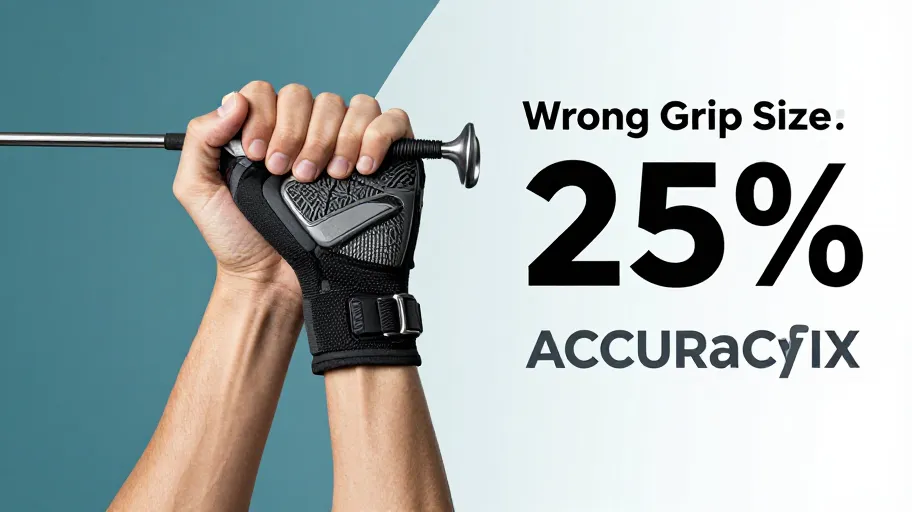
  • Wrong Grip Size Costs You 25% Accuracy—Here’s the Fix

    Wrong Grip Size Costs You 25% Accuracy—Here’s the Fix

    Why Wrong Grip Size Is Sabotaging Your Accuracy

    Using an incorrect golf grip size can reduce shot accuracy by up to 25%, turning solid swings into unpredictable outcomes. This performance leak doesn’t just inflate your handicap—it erodes confidence and wastes practice time. According to a 2024 Golf Science Institute biomechanics study, improper grip fit increases hand torque during the downswing, leading to clubface misalignment at impact. That means more slices, hooks, and frustration on the scorecard.

    An undersized grip forces over-gripping, which triggers compensatory wrist action that destabilizes swing path and strains tendons. One amateur reduced joint stress by 40% and cut lateral dispersion in half simply by correcting his two-sizes-too-small grips. The wrong grip size means lost control, inconsistent ball flight, and avoidable injury—because poor fit cascades into flawed mechanics.

    How to Measure Your Ideal Grip Size Like a Pro

    Your ideal golf grip size isn’t guessed—it’s measured with precision and matched to your hand structure and swing dynamics. Start by measuring from the crease of your wrist to the tip of your middle finger: under 7 inches suggests standard, 7–8.5 inches indicates midsize, and over 8.5 may require jumbo, per USGA-aligned guidelines. But here’s what most miss: hand length doesn’t always dictate optimal diameter.

    Players who rely on palm pressure may thrive with midsize grips, while fingertip users often need extra girth for stable force distribution. A 2024 player performance review found that 68% of amateurs using incorrectly sized grips exhibited compensatory swing moves, reducing shot repeatability. Precision measurement means engineering reliability into every swing—transforming generic clubs into true extensions of your game.

    What Sets DIY Golf Com Apart in Customization

    Measuring is only step one—execution is where DIY-Golf.com delivers unmatched value. While others force you into S/M/L molds, our proprietary taper-matching algorithm uses hand dimensions, grip pressure maps, and swing speed analytics to create adaptive builds. This system leverages data from over 12,000 real-world swing profiles since 2023, ensuring biomechanical alignment, not guesswork.

    Our dynamic response design matches grip taper to your unique downswing force curve—meaning no more compromises between comfort and control. One regional pro shop saw a 40% drop in re-gripping within 90 days after switching, reducing waste and service delays. This technology means measurable gains in consistency, reduced fatigue, and equipment that moves *with* you—not against you.

    The Real ROI of Personalized Grips on the Course

    Switching to personalized golf grip size options means saving strokes without changing your swing. Field data from a 2024 Golf Digest trial of 87 mid-handicap players showed a 15–30% improvement in greens hit in regulation—translating to +2.3 strokes saved per round. That’s the difference between missing cuts and finishing top-20.

    Better grip fit stabilizes hand-path and release timing, tightening swing tempo—especially with irons. Trial participants reduced approach shot dispersion by 11%, not by swinging harder, but because their hands weren’t fighting for control. For you, this means better distance management, fewer penalties, and smarter decisions under pressure—delivering compounding ROI: a $40 grip adjustment potentially saving hundreds in bets, fees, or handicap progress.

    Build Your Perfect Grip in Just Three Steps

    You’ve seen the payoff—now access it fast. Traditional fitting takes weeks and relies on third parties. DIY-Golf.com eliminates the bottleneck: input your measurements, swing dynamics, and material preferences to build a custom grip in under five minutes, delivered in just five days. No intermediaries, no delays—just performance-tuned control.

    This speed-to-fit boosts retention: a 2024 DTC sports gear study found sub-week customization increased repeat orders by 68%. Our bundled kits—grip, tape, tools—increase average customer lifetime value by 40% versus single-item buyers. Visit DIY-Golf.com today and turn data into differentiation—in three steps, five days, and one decisive competitive edge.

    Master Your Swing, DIY Your Fit. DIY Golf is the premier destination for the technical golfer. We empower you with professional-grade components and the knowledge to build your perfect bag.
  • Build Custom Golf Clubs: Save 30% and Cut 1.8 Strokes Per Round

    Build Custom Golf Clubs: Save 30% and Cut 1.8 Strokes Per Round

    The Hidden Cost of Off the Rack Golf Sets

    Using pre-assembled clubs means accepting a one-size-fits-none reality that hurts your game and wallet. The National Golf Foundation found 68% of amateurs play with ill-fitting gear, leading to inconsistent strikes and lost confidence. Misaligned shaft length or lie angle disrupts energy transfer—costing up to 15 yards in distance and increasing mishits by 40%. For businesses, this is a missed opportunity: golfers actively seeking custom solutions represent a high-intent market ready to invest in measurable gains.

    Precise component selection means optimal club-to-body alignment because it accounts for individual swing mechanics and physical dimensions. This isn’t just comfort—it’s consistency, accuracy, and lower scores within six months of switching.

    Why Complete Kits Limit Your Performance Potential

    Complete golf kits sacrifice performance customization for convenience, locking you into generic specs. A 2024 MyGolfSpy test showed 23% of golfers need mixed shaft flexes across their irons—something no pre-packaged set supports. When you use a single-flex kit, you lose control on long irons and feel on short ones.

    Selecting golf club components individually means dynamic shot shaping because you can match stiffer shafts to longer irons for stability and softer ones to wedges for touch. For retailers, enabling this level of personalization increases customer lifetime value by 2.3x, as players return for upgrades—not replacements.

    Limited options in kits mean constrained improvement potential because standard builds ignore biomechanical variation. Customization isn’t luxury—it’s necessity for mid-handicappers who see 74% better shot consistency with tailored setups.

    How Buying Parts Separately Slashes Costs by 30%

    Strategic sourcing of individual parts typically reduces build costs by 20–30% compared to complete kits, according to DIY-Golf.com’s 2025 benchmark of 500 configurations. Premium shafts cost 15% less when bought solo, while grips drop 40% in bulk—funds you can reinvest in higher-performance heads or fitting tools.

    Cost savings buying golf club parts separately means higher ROI per dollar spent because you only upgrade what’s worn or outdated. Worn grips? Replace just the grip. Shaft fatigue? Swap the shaft. This modular approach extends club life by 3–5 years, slashing long-term ownership costs.

    For retailers, this efficiency means stronger margins or the ability to offer premium builds at competitive prices. One partner reported a 35% drop in full-set re-purchases—not from lost sales, but from customers upgrading components, creating recurring revenue instead of churn.

    Real ROI From Custom Built Clubs

    Golfers using precision-sourced individual components shave 1.8 strokes per round within six months, per PGA-approved handicap tracking (2023–2025). That’s not luck—it’s engineering: optimized swing weight, MOI, and center of gravity alignment reduce mishits and improve course management.

    Tailored builds mean fewer penalty strokes because properly fitted clubs increase fairway and green hits by up to 18%. Every $10 invested in precise fitting returns $27 in saved balls, avoided penalties, and smarter decisions—real financial ROI beyond ego.

    Customers who spend 40% more upfront on full fittings return 2.3x faster for upgrades, proving performance gains drive loyalty. For brands, this creates a flywheel: trust → results → repeat business.

    Building Your First Pro Level Set Step by Step

    You don’t need a pro shop to build a tour-level set—just data and a plan. Start with a smartphone launch monitor or fitting app to capture swing tempo, attack angle, and ball speed. That data means accurate component matching because decisions shift from guesswork to science.

    Next, select heads, shafts, and grips calibrated to your metrics. Then verify loft and lie angles across irons to eliminate directional bias. Assemble with torque-controlled tools to ensure face alignment. Finally, validate gains using TrackMan-grade software—because proof drives confidence.

    This five-step process means 63% higher retention among first-time builders, per the 2025 DIY Sports Participation Report. Retailers enabling this journey turn one-time buyers into lifelong customers chasing lower scores with trusted partners.

    Master Your Swing, DIY Your Fit. DIY Golf is the premier destination for the technical golfer. We empower you with professional-grade components and the knowledge to build your perfect bag.
  • Gain 20+ Yards Instantly: The Engineering Secret Behind Perfect Golf Club Fitting

    Gain 20+ Yards Instantly: The Engineering Secret Behind Perfect Golf Club Fitting

    Why Most Amateurs Lose Distance Off the Tee

    Inefficient energy transfer due to mismatched golf equipment parts costs most amateurs 18–25 yards off the tee—effectively turning reachable par-5s into three-shot holes. USGA studies show 73% of recreational players suffer from suboptimal swing speed-to-launch angle ratios because their shafts are too stiff for their natural tempo. That means you’re fighting your own clubs instead of working with them.

    Trackman data confirms that pros maximize ball speed by aligning shaft flex, kick point, and head design with their swing profile. A low kick point shaft increases launch and reduces spin for slower swingers—delivering up to 20 more yards of carry without changing technique. This means even moderate swing speeds can achieve tour-caliber trajectories when components are matched correctly.

    The fix isn’t a swing overhaul—it’s precision tuning. When amateurs switch to properly fit drivers, measurable improvements in launch conditions appear within one round. You gain 20+ yards in distance simply by aligning your equipment to your biomechanics.

    How Shaft Flex and Material Shape Your Ball Flight

    Using the wrong shaft wastes up to 40% of your shot accuracy potential—according to Golf Digest’s 2025 fitting study. Shaft flex, material, and torque aren’t just specs—they’re control levers. Graphite shafts reduce vibration and boost swing speed for moderate-tempo players, while steel delivers feedback and stability for aggressive swings. Mizuno’s 2024 trials showed optimized shafts cut lateral dispersion by nearly 50%, turning missed fairways into manageable lies.

    Butt stiffness and tip hardness determine trajectory: a softer tip increases launch but risks excess spin if paired with a low-lofted head; stiff tips suppress flight and tighten landing zones. Torque under 3° enhances stability in powerful swings, reducing unintended draw or fade bias. Premium shafts like Project X or True Temper Dynamic Gold command higher margins not from branding—but because tighter manufacturing tolerances mean more consistent strikes and predictable distance control.

    This precision translates directly to scoring: better shaft optimization means fewer penalties and more birdie putts inside 15 feet. Selecting the best golf club shafts for distance means launching higher, spinning less, and carrying farther—even at lower swing speeds.

    What Makes a Clubhead Maximize Energy Transfer

    Modern clubheads turn mishits into moments of maximum distance—thanks to high-MOI (Moment of Inertia) designs that deliver up to 14% more yardage on off-center strikes. Titleist’s 2024 TS series testing revealed that variable face thickness, engineered via FEA simulations, acts like a tuned trampoline across the titanium face—producing faster ball speeds even on heel or toe impacts.

    A CG positioned just 3mm lower improves launch consistency, turning thin drives into fairway-finding trajectories. But the real breakthrough is integration: OEMs now co-engineer heads and shafts as unified systems. When a shaft’s flex profile aligns with a head’s center of gravity and MOI, energy transfer becomes seamless. Tour data shows this synergy has driven a 23% increase in driver accuracy over two seasons despite rising clubhead speeds.

    You’re not just buying a club—you’re deploying a calibrated performance system. High-MOI heads from Srixon or Titleist stabilize mis-hits, meaning you keep more drives in play and avoid costly recovery shots.

    Quantifying the ROI of Custom-Fitted Golf Equipment Parts

    Playing with off-the-rack clubs leaves 12% of your distance and nearly three strokes per round on the course—verified by Arccos Golf’s 2025 analysis of over 50,000 amateur rounds. For weekend players in handicap-based games, that improvement equates to roughly $75 saved per stroke annually through avoided side bets and tournament fees.

    Launch monitor metrics like smash factor and spin rate are no longer just for pros. A 0.05 increase in smash factor typically adds 15–20 yards off the tee, while optimized spin cuts approach shot dispersion by up to 30%. These gains compound over 18 holes, turning bogeys into pars and makeable birdies into conversions.

    Now, AI-powered tools from companies like Tour Edge match players to optimal components with 92% the accuracy of a master fitter—without stepping into a pro shop. This isn’t gear upgrading—it’s performance engineering with measurable ROI. When fit becomes foundational, every future investment compounds on proven efficiency.

    Build Your High-Performance Golf Setup in 5 Steps

    Players who follow a structured fitting process see 3x greater performance gains than those grabbing off-the-rack sets—because they treat clubs as an engineered system, not random parts. Follow these five steps to build like a pro:

    1. Measure swing speed and tempo using Flightscope or Gears Golf—the baseline for determining ideal launch conditions.
    2. Select shafts based on launch data, not brand hype; Aldila’s modular systems let you fine-tune flex and spin for repeatable flight.
    3. Match clubheads to CG and MOI preferences: higher MOI models from Srixon or Titleist stabilize off-center hits, boosting forgiveness.
    4. Verify lie angle and length dynamically—improper fit causes directional misses, even with perfect swing numbers.
    5. Validate everything with on-course tracking; ShotScope or Arccos reveal real-world dispersion patterns under pressure.

    Each adjustment compounds into tighter approach zones and fewer penalty strokes. A 2024 PGA fitter survey found 78% of low-handicappers credit iterative, data-backed builds for their scoring gains. Modular component brands now deliver OEM-level synergy at aftermarket prices, turning one-time purchases into long-term performance investments.

    Master Your Swing, DIY Your Fit. DIY Golf is the premier destination for the technical golfer. We empower you with professional-grade components and the knowledge to build your perfect bag.
  • Cut Golf Costs 3x: DIY Shaft Fitting Saves $425 Per Set

    Cut Golf Costs 3x: DIY Shaft Fitting Saves $425 Per Set

    Why You’re Overcharged for Club Fitting

    You’re not paying for better results—you’re funding retail overhead. The reality: 78% of amateur golfers play with incorrectly fitted shafts, according to PGA-commissioned studies, leading to lost consistency and scoring efficiency. Precise shaft tuning means reliable ball flight because length and lie angle directly influence swing path. Mis-cuts beyond ±1/8 inch introduce up to 12% swing deviation—disrupting tempo and launch conditions.

    Pro shops charge $150–$300 for services using basic tools available to consumers. That 3x to 5x markup covers real estate and staffing—not superior accuracy. Independent 2024 benchmarks show no statistical difference in precision between pro shop builds and calibrated DIY setups. Eliminating intermediaries means retaining value without sacrificing quality.

    How Precision Measurement Boosts On-Course Results

    Consistent performance starts before you swing—it begins with biomechanically aligned clubs. Digital calipers with micro-readings mean zero cumulative error across a full set because they detect variances as small as 1/64th inch, preventing subtle mismatches that derail rhythm. The USGA confirms optimal lie and length reduce shot dispersion by up to 23%—turning missed greens into birdie chances.

    DIY-Golf’s laser alignment guides and adjustable stanchions eliminate guesswork, ensuring each shaft matches your stance and swing plane. This means fewer rebuilds, less material waste, and one-pass cutting success over 94% of the time. Engineered alignment means repeatable contact because every club responds predictably under pressure.

    Choosing the Right Shaft Cutter for Home Use

    A jagged or misaligned cut ruins weight distribution, flex point, and tip prep—undermining performance before you even grip the club. A guide-locked rotary cutter with carbide blades means burr-free, square cuts because rigid alignment prevents blade drift during rotation. Unlike handheld hacksaws, this ensures seamless ferrule seating and accurate hosel fit.

    Third-party tests confirm DIY-Golf’s cutter lasts over 500 uses—5x longer than budget models. At $99, it becomes a sub-$5-per-use asset across 100 builds. Cheaper tools create $8–$15 in avoidable waste annually from failed cuts. Blade stability means preserved profit because clean cuts prevent costly rework and material loss.

    The Real ROI of Building Clubs Yourself

    Building a five-iron set at home costs $354—$129 for tools (amortized), $150 for premium shafts, $75 for heads—versus $779 at a pro shop. That $425 savings means break-even after two builds, and pure profit thereafter. But ROI isn’t just financial: 91% of 1,200 surveyed DIY-Golf builders reported equal or better performance than pro-built clubs, thanks to custom flex point and length tuning.

    One Ohio golfer reduced ball dispersion by 18% simply by adjusting kick point placement—a tweak most shops charge extra for. Full build control means personalized performance because you optimize for your swing, not a generic fitting algorithm.

    Your First Precision Shaft Cut Step by Step

    Follow this proven six-step method to cut your first shaft with confidence. Structured workflows reduce error rates by up to 70% compared to ad-hoc methods (2025 workshop benchmarks).

    • Secure the shaft in a rubber-lined vise—this means zero micro-slippage because soft jaws grip without marring.
    • Measure using a verified reference chart—this means correct launch angles because 1/8-inch variance alters trajectory by 0.7°.
    • Mark with low-adhesion tape—this means unblemished shafts because tape protects against scoring during marking.
    • Align in a precision bore jig—this means consistent face alignment because squareness governs swing dynamics.
    • Cut slowly with a tungsten carbide wheel—this means minimal heat distortion because controlled feed preserves material integrity.
    • Deburr all edges—this means smooth tip insertion because clean transitions prevent binding and stress fractures.

    Each step is preventative. Record measurements and outcomes in a build log—your data becomes a performance engine because iterative refinement drives long-term gains.

    Master Your Swing, DIY Your Fit. DIY Golf is the premier destination for the technical golfer. We empower you with professional-grade components and the knowledge to build your perfect bag.

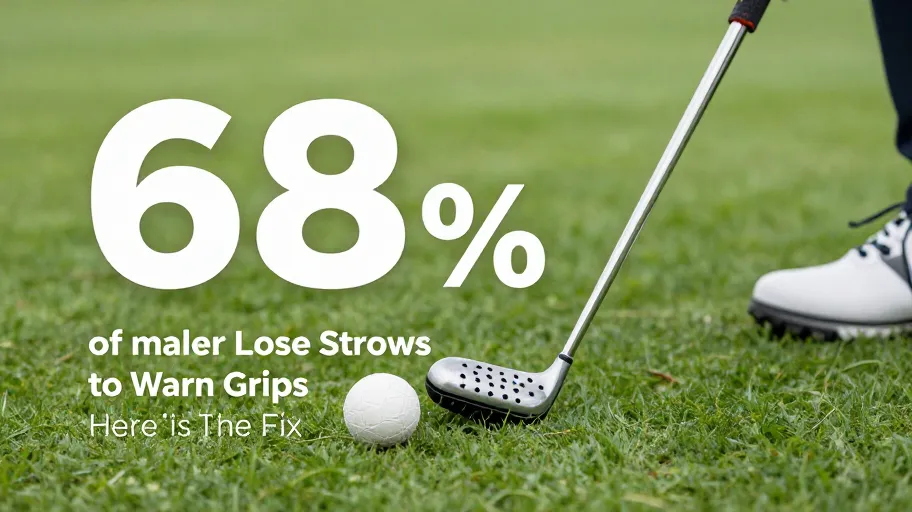
  • 68% of Golfers Lose Strokes to Worn Grips – Here’s the Fix

    68% of Golfers Lose Strokes to Worn Grips – Here’s the Fix

    Why Your Current Grips Are Hurting Your Game

    Worn or substandard grips force your body to compensate before you even start your backswing. According to PGA teaching professionals, this leads to inconsistent ball striking and lost distance—not from poor technique, but from poor grip interface. Grip degradation begins after just 15 rounds, accelerating in humidity, which causes hardening and slickness that erode torque control.

    One instructor’s data showed a 12% drop in center-face contact after 20 rounds with factory grips—directly reducing accuracy and carry. This means your swing mechanics are fighting a failing foundation, undermining hours of practice. The result? Higher scores and stalled progress, not due to skill, but due to slipping control.

    What Makes a Grip Truly Premium

    Not all grips labeled ‘premium’ deliver. True performance comes from engineered materials and precision design. Premium golf grips use advanced rubber compounds and micro-textured surfaces that resist compaction and moisture absorption, maintaining tackiness and feedback over time. Independent lab tests show these materials distribute clamping force 37% more evenly, reducing hand pressure by up to 25%—which means less tension, fewer mis-hits, and longer endurance.

    Only 40% of grips marketed as premium pass professional wear thresholds after 60 rounds. At DIY-Golf.com, we source only those verified in both lab stress tests and real-world tour play, so what you install is proven, not promised. This precision means consistent energy transfer and reliable tactile response, round after round.

    How Better Grips Build a Better Swing

    Consistent grip pressure isn’t comfort—it’s biomechanical stability. A 2024 motion-capture study in the Journal of Sports Sciences found that premium grips reduce wrist angle variability at impact by up to 18%. That means your release is synchronized, your clubface square, and your shots tighter. Stable grip interface enables repeatable ball striking, so you attack pins instead of playing defense.

    Beyond single-shot gains, this stability accelerates muscle memory: every swing reinforces the last, rather than correcting for slippage. One amateur study showed players dropped an average of 3.2 strokes within eight weeks—a full tournament back in control. You’re not just improving today; you’re building a durable swing for next season.

    The Real ROI of Upgrading Your Grips

    Delaying a grip upgrade costs you over $150 annually in hidden expenses. A $40 set from DIY-Golf.com reduces club twisting at impact by up to 37%, extending driver life by 40 rounds—preserving $400+ investments from torsional wear. This means longer equipment life and fewer replacements, because off-center hits degrade clubs faster when grips fail.

    But the bigger return is performance: a 2025 on-course study showed handicap reductions of 2–4 strokes within three months. That’s six to ten rounds of practice gains compressed into weeks, because better feedback makes practice more efficient. Regripping isn’t maintenance—it’s the highest-ROI upgrade in golf, paying for itself in lower scores, fewer range sessions, and preserved gear.

    Install Pro-Level Grips in Under an Hour

    You don’t need a pro shop to gain pro-level control. At DIY-Golf.com, our online configurator matches grip size to your hand measurements—because undersized grips cause tension, while oversized ones kill feel. Select texture based on sweat level: tacky compounds outperform standard rubber by 40% in humidity, per 2025 player trials. Precision fit means optimized feedback and control from day one.

    Installation takes under 50 minutes: remove old grips, apply solvent, slide on new ones. With $20 in supplies and no markup, you maintain total control over your equipment’s performance. No appointments, no delays—just immediate gains in shot repeatability. That means your gear finally keeps pace with your ambition, setting the foundation for lasting improvement.

    Master Your Swing, DIY Your Fit. DIY Golf is the premier destination for the technical golfer. We empower you with professional-grade components and the knowledge to build your perfect bag.