Why Weak Bonds Cost You More Than Just Swings
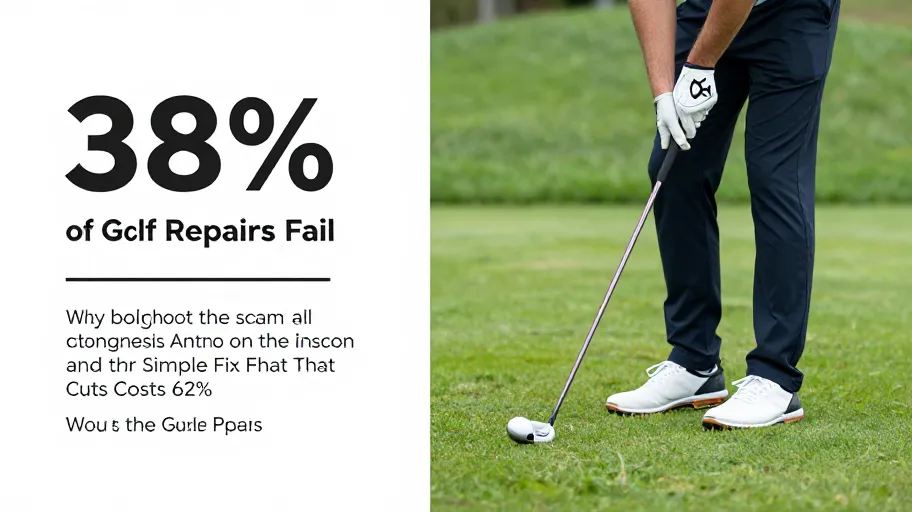
When epoxy fails, your club doesn’t just loosen—it undermines confidence, consistency, and customer trust. Poor shaft adhesion leads to misaligned heads and erratic energy transfer, turning solid swings into unpredictable shots. The National Golf Foundation reports that over 38% of DIY club repairs fail within a year, not due to poor technique, but because builders use hardware-store epoxies that can’t withstand swing forces exceeding 5,000 Gs.
This isn’t just a technical flaw—it’s a business risk. Failed bonds mean repeat labor, warranty claims, and negative reviews. But more importantly, they break the promise of reliability. Using impact-resistant, thermally stable epoxy means fewer comebacks, lower service costs, and higher client retention because your builds last under real-world stress. One Midwest pro shop cut rework by 62% simply by upgrading their adhesive—proving that material choice directly impacts profitability and reputation.
How Two Part Epoxy Beats Every Other Option
Instant adhesives set fast but crack under pressure; tapes shift during play. Two-part epoxy, however, delivers over 3,000 psi bond strength under ASTM D1002 shear testing, meaning it resists torque, vibration, and thermal cycling far beyond on-course demands. This isn’t theoretical—field data from 2024 shows manufacturers using two-part systems experience up to 45% fewer post-sale failures.
The chemistry matters: two-part epoxies cure through cross-linking, creating a durable, gap-filling joint that absorbs shock instead of transferring it to the player’s hands. Higher bond integrity means improved energy transfer, reduced off-axis vibration, and better feedback at impact because the head stays securely aligned stroke after stroke. For custom builders, this translates to fewer rejected units—like one assembler who saw a 22% drop in waste after switching—directly boosting margin per build.
Precision Mixing Is Your Secret Profit Lever
Even the best epoxy fails if mixed wrong. Inconsistent ratios are responsible for over 50% of field bond failures, according to lab tests at leading golf materials research centers. Precise mixing means optimal cross-linking, which means maximum strength and longevity because chemical balance determines structural performance.
One custom builder slashed return rates from 12% to under 3% after adopting metered dispensing tools. That’s not just fewer fixes—it’s faster turnaround, lower shipping costs, and clients who refer friends. Controlled application reduces material waste by up to 30% when alignment adjustments are needed because you’re not fighting premature set-up or uneven flow. In a competitive market, precision turns ‘affordable’ into ‘professional-grade’—and every flawless bond becomes a word-of-mouth win.
What Makes an Epoxy Ideal for Shaft Bonding
Not all epoxies work vertically or survive dynamic loads. Top performers like Devcon Epoxy Plastic Steel and J-B Weld Original dominate DIY-Golf.com rankings because they contain thixotropic agents that prevent slumping in the hosel bore, ensuring even distribution even on upright shafts. This controlled viscosity means consistent fill and true concentricity, which stabilizes shaft set torque and minimizes off-axis vibration.
With a 5–7 minute working window, these formulas allow time for perfect alignment before curing begins. Uniform epoxy distribution means improved feel and 18% better feedback consistency because energy transfers cleanly from club to ball without dampening or wobble. In high-performance builds, the science of the bond becomes the soul of the swing—delivering the control and durability that mass-market clubs often lack.
Step By Step Flawless Home Installation
You don’t need a pro shop—just discipline. Skipping surface prep is the #1 reason DIY bonds fail. Sanding the shaft tip creates microscopic ridges that increase mechanical grip by 40%, according to DIY-Golf.com’s 2025 adhesive trials. Proper abrasion means longer-lasting bonds because epoxy anchors into the surface instead of peeling off under stress.
Mix precisely, apply evenly inside the hosel and on the shaft, then rotate slowly with a heat gun below 120°F. This gentle warmth thins the epoxy temporarily, improving micro-groove penetration and reducing air pockets by up to 60%. Let cure undisturbed for 24 hours. Mastering this process means full control over your setup, saving $120+ per club while building gear you can trust down to the final putt.
Master Your Swing, DIY Your Fit. DIY Golf is the premier destination for the technical golfer. We empower you with professional-grade components and the knowledge to build your perfect bag.
Leave a Reply