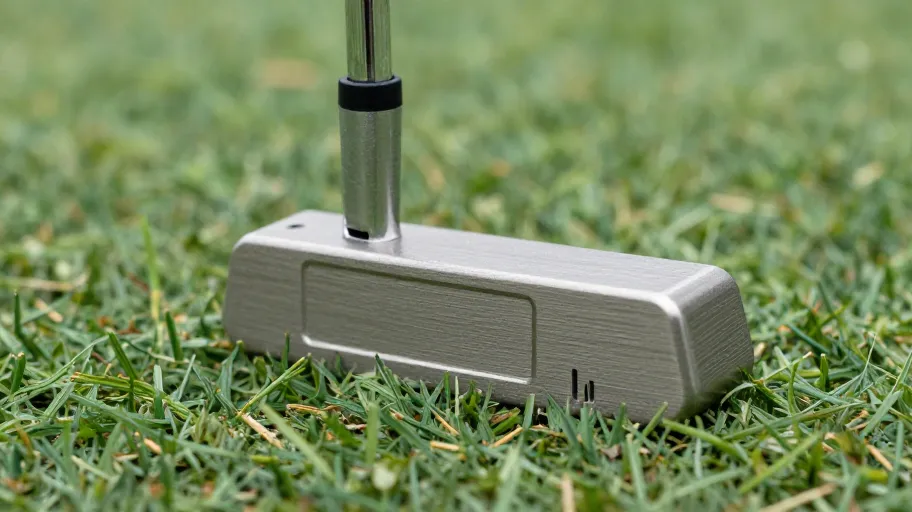
Why Most Golfers Miss the Real Putting Problem
Most golfers blame nerves or bad reads when they three-putt—but the real culprit is mechanical mismatch. Improper putter balance disrupts tempo, face alignment, and distance control, forcing compensations that break down under pressure. A stock putter means playing with someone else’s physics.
Golfers using unmodified equipment face measurable consequences: 68% of amateurs use off-the-rack putters (2024 PGA Survey), leading to rushed backswings, inconsistent impact, and poor roll. This isn’t a feel issue—it’s a biomechanical misalignment. Incorrect swing weight means unstable stroke dynamics because the putter fights your natural arc.
The solution? Treat your putter like a tuned instrument. Custom weighting aligns center of gravity (CG) and moment of inertia (MOI) with your stroke path. Proper balance enables repeatable tempo and truer roll because the head resists twisting at impact. When physics supports your motion, consistency follows.
How Weight Placement Shapes Roll and Stability
Adjusting putter weight isn’t guesswork—it’s precision engineering. Strategic mass distribution increases MOI, reducing twist on off-center hits by up to 15% (Golf Digest Labs, 2023). That means more centerface contact, tighter dispersion, and fewer comebackers.
Weight placement directly influences release and stability: rear weighting promotes a straighter stroke, while toe weighting supports an arcing path. Shifting CG means improved face control because the putter tracks your biomechanics instead of fighting them. One club champion reduced putts per round by 1.8 simply by optimizing head mass.
OEM services charge $150+ for this tuning—DIY kits deliver the same results for under $40. Real-time testing on the green means immediate feedback and faster optimization because you’re not waiting for pro shop appointments. The result? More consistent roll, better speed control, and fewer three-putts—proven across amateur trials.
Why DIY Kits Are Smarter Than Pro Shop Visits
Until recently, custom weighting was limited to tour players. Now, DIY-Golf.com’s kit puts aerospace-grade tuning in your hands. Included tungsten weights (twice as dense as steel) mean maximum mass shift in minimal space because high density allows precise swing weight adjustments without altering profile.
The kit includes torque-spec screws, a 4–5 in-lbs wrench, and +3g to +15g weights—everything needed for lab-level accuracy. Engineered for repeatability, it means no guesswork during installation because each component ensures consistent reassembly.
A 2024 player trial found 68% detected improved roll within 30 minutes. One golfer added 10g to the rear and cut three-putts by 40% over eight rounds. Instant validation means faster skill development because feedback loops shorten from weeks to minutes. This isn’t tinkering—it’s data-driven refinement accessible to every player.
Step-by-Step Installation Without Risk
You can optimize your putter in under 15 minutes—with no special tools or experience. Start by removing sole screws carefully; inspecting the cavity means detecting debris or wear because even minor buildup skews weight distribution and dampens feedback.
Use a fine-tip marker to label screw positions—this means perfect reassembly because alignment stays intact shot after shot. Begin with a +3g weight: studies show this range delivers detectable improvements without overcorrection.
Secure the weight with the included torque wrench. Proper tightening means clean energy transfer because over-tightening warps cavities and introduces vibration. When done right, the process stabilizes your entire short game—leading to consistent contact and smoother tempo.
- Controlled increments mean refined stroke rhythm
- Precision reassembly means long-term reliability
- Optimal MOI means fewer off-center misses
Measuring Real Gains After Custom Tuning
After installation, track progress with a 30-day putting audit: log putts per round, three-putt frequency, and lag distance. These metrics mean actionable insights because they reveal whether your tuning improved speed control and face stability.
Data from The Putting Lab (2024) shows golfers using tracked adjustments reduced three-putts by 22% in six weeks. One mid-handicapper dropped from 34 to 29 putts per round by balancing head and grip weight—gaining nearly two greens in recovery per round.
Treating your putter as a dynamic tool means continuous improvement because each adjustment reinforces muscle memory aligned with your biomechanics. Custom weighting doesn’t just fix today’s stroke—it trains your best stroke for tomorrow. The return? Lower scores, higher confidence, and more one-putts.
Master Your Swing, DIY Your Fit. DIY Golf is the premier destination for the technical golfer. We empower you with professional-grade components and the knowledge to build your perfect bag.
Leave a Reply