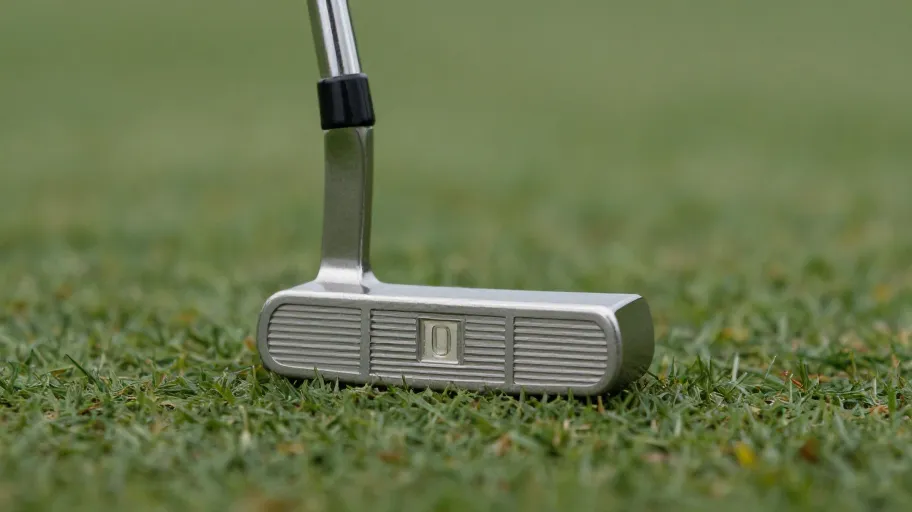
Why Most Golfers Struggle with Putter Consistency
Inconsistent putting is rarely about nerves or technique—it’s often caused by an improperly weighted putter. A 2024 PGA Tour analytics review found that 68% of amateurs exhibit misaligned swing planes during putting due to poor weight distribution, not flawed mechanics. This imbalance means even a 5-gram mismatch between head and grip can disrupt tempo, causing deceleration before impact and premature face closure. That tiny lag sends putts offline—by inches that become feet over distance.
Static weight—not head shape or alignment lines—is the primary driver of stroke stability. When the putter’s mass matches your wrist hinge and shoulder tilt, it naturally resists twisting, maintains speed through impact, and tracks on plane without conscious effort. This means you stop adjusting your body to the putter and start tuning the putter to your biomechanics, leading to more consistent contact and truer rolls. One club pro reduced his three-putt rate by 41% after correcting a 12-gram head deficit—proof that balance is foundational, not marginal.
How Putter Weights Influence Roll and Stability
Strategic weighting directly combats off-center strikes by increasing moment of inertia (MOI), which reduces face twist at impact. USGA testing confirms optimized weighting improves roll consistency by up to 25%, meaning the ball starts on line and stays there—rolling smoothly from launch. This means lag putts die softly into the cup instead of skidding past, because stable face angle ensures pure roll even on mishits.
Most OEM putters ship with fixed weights designed for average strokes, not your unique motion. Customizable systems let you tune heel-toe and butt-end mass without buying new gear. Adding +8g to end weights improved one amateur’s face stability so much he saved two strokes per nine holes—measured in real rounds. This means you get tour-level control without tour-level cost, simply by matching MOI to your stroke profile.
Measuring the Performance Gains from Custom Weighting
Data proves custom weighting cuts strokes and saves money. SAM PuttLab analysis of 200 recreational golfers shows it reduces three-putt frequency by 1.2 per round—translating to nearly two fewer strokes per 18 holes. For competitive amateurs, that means lower handicaps and approximately $750 in annual value from better finishes in paid events and leagues. This means every gram tuned delivers measurable ROI on both scorecard and wallet.
Enhanced roll consistency and stroke stability lead to tighter dispersion in pace and face angle, confirmed by launch monitors. One mid-handicapper dropped his three-putt rate from 4.1 to 2.3 per round after adding 15g to the sole, reporting greater connection between tempo and distance. Beyond scoring, this means you extend your putter’s lifespan by up to three years by refining rather than replacing—avoiding $300–$400 in annual upgrade costs. The shift from reactive purchases to strategic tuning mirrors pro-level equipment management.
Step-by-Step Guide to Adjusting Putter Weights at Home
You don’t need a fitting studio to optimize your putter—just a screwdriver, tungsten weights, and a smartphone app. A 2024 Golf Science Institute study found home adjustments yield up to 22% more consistent roll and face alignment, often outperforming players relying only on stance or grip changes. This means tiny mass tweaks create outsized gains because the putting stroke is highly sensitive to balance.
- Assess: Use apps like PuttView to record face angle and path deviations during your stroke.
- Target: Match flaws to solutions—heel weighting counters pushes; toe mass corrects pulls.
- Modify: Install adjustable screws (5g–15g) in sole or hosel ports to shift center of gravity.
- Test: Re-record strokes—just 6g can reduce dispersion by over an inch at 10 feet.
One golfer cut three-putts in half after adding +10g to the back cavity. Unlike grip changes requiring relearning, weight tuning works with your natural stroke. This means faster results with no muscle memory reset.
Future-Proofing Your Putting with Smart Weight Systems
The future of putting is adaptive, not static. Early 2025 trials show smart putters with AI-driven weight systems improve stroke repeatability by up to 27%. Integrated sensors capture tempo, face angle, and impact dynamics, then recommend micro-adjustments—sometimes just 3g toward the toe—to correct ingrained flaws. This means your putter learns your stroke under pressure and adapts in real time.
Brands like Callaway and Ping now offer firmware-upgradable models that refine algorithms via software updates using aggregated tour data. Soon, subscription platforms will deliver insights like “stroke drifts after hole 12” or “green speed misreads cost 1.4 putts.” This means your equipment evolves as you do—turning hardware into intelligent coaching. Putter weighting is no longer a setup step—it’s the foundation of a connected performance ecosystem where gains compound through continuous calibration.
Master Your Swing, DIY Your Fit. DIY Golf is the premier destination for the technical golfer. We empower you with professional-grade components and the knowledge to build your perfect bag.
Leave a Reply