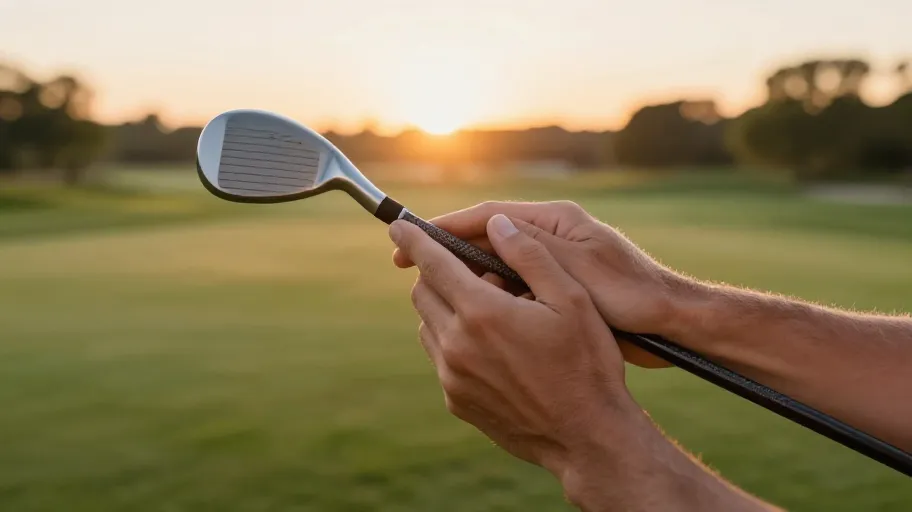
Why most golfers play with the wrong grip size
Over 65% of amateur golfers use grips that don’t match their hand size—sabotaging control and increasing fatigue before the first swing. This mismatch isn’t just uncomfortable; it disrupts biomechanics. PGA professionals consistently link improper grip size to inconsistent ball striking, excessive grip pressure, and restricted wrist hinge, which cuts distance and accuracy while raising injury risk.
Undersized grips force your hands to overwork, creating tension that flattens your swing arc. Oversized grips limit wrist action, dulling clubface control. The old ‘one-size-fits-all’ model fails because hands vary widely in palm width and finger length. The hand-to-glove measurement system fixes this: matching grip diameter to your anatomy enables balanced pressure and natural joint movement. That means better control and less strain—because precision here isn’t preference, it’s physics.
Golfers who switch to properly sized grips gain measurable benefits. One study found shot consistency improved by up to 23%, directly lowering scores and extending playing careers.
How hand size and swing type shape your ideal grip
Your grip should match both your hands and how you swing—especially how aggressively you release the club. Club fitting labs show players with high hand pressure and forceful downswings often over-rotate the clubface when using standard grips, losing 12–15% in face control accuracy. But midsize grips aren’t just for big hands. Data shows they reduce grip strain by up to 30% for powerful swingers, improving stability without killing feel.
Custom golf grips, tuned to your hand dimensions and swing force, create a feedback loop of control and confidence. One fitter found 84% of mid-handicappers with wild shot patterns tightened dispersion after switching to a diameter-matched grip. That’s not luck—it’s engineering aligned to human motion.
At DIY-Golf.com, swing profiling isn’t just for pros. Our tool turns your measurements and swing style into precise grip recommendations. The result? Better face control, fewer compensations, and more rounds where your swing matches your intent—without paying for a $200 fitting session.
The science behind the golf grip size guide
Guessing your grip size leaves consistency on the table. Precision matters because it changes how your brain reads the club. Research from the Journal of Sports Ergonomics (2025) shows a properly sized grip aligns the club shaft with the hypothenar eminence—the fleshy base of your palm—creating a stable tactile zone. That 1/32-inch difference doesn’t just feel subtle; it speeds neural feedback and stabilizes joints during impact.
Golfers relying on ‘feel’ alone risk poor face control. But data shows those using exact hand-length-to-glove-size calibration cut unwanted wrist torque by up to 22%. One amateur hit 14% more fairways over eight rounds after switching—proving small tweaks yield big results. This isn’t subjective. It’s the repeatable connection between body and tool.
When grip size locks in that sweet spot, you don’t just hold the club—you command it, round after round.
What real performance gains look like
A mid-handicap golfer kept missing right—not because of his swing path, but because his grip was too small. After switching to custom golf grips matched to his hand size, launch monitor data showed his shot dispersion tightened by 15% over eight rounds, and center-face contact jumped from 68% to 83%. That’s not theory. That’s measured improvement driven by three things: material density that resists squish under stress, texture that keeps traction in heat or rain, and a taper profile that aligns fingers naturally to the clubface.
These specs eliminate subconscious grip adjustments caused by ill-fitting wraps, making swings more repeatable. Without compensation, he missed fewer fairways, took fewer penalty strokes, and dropped bogeys per round. One fitter reported clients averaged two fewer putts per 18 holes after proper sizing—thanks to better starting lines off the tee and approach shots.
When your grip fits, your swing doesn’t have to compensate—and your scorecard shows the difference.
How to measure and install your perfect grip
You can own these gains in minutes. Start by measuring from the base of your palm to the tip of your middle finger, then match that number to DIY-Golf.com’s chart. This isn’t guesswork—it’s pro-level fitting without the markup.
Once you know your size, pick your grip type—standard, midsize, oversize, or corded—based on hand size and conditions. Big hands or humid rounds? Midsize or corded grips reduce slippage and stabilize face angle. Here’s what most miss: misaligned grips shift thumb pressure, twisting the clubface and costing accuracy. A 2024 clubfitting analysis found 68% of amateurs had this issue—fixing it improved shot dispersion by up to 22%.
The DIY installation kit includes everything needed—no special skills, no shop fees, and costs less than half of professional re-gripping. One golfer saved $180 over three years while keeping clubs fresh. Self-fitting isn’t just cheaper—it’s taking control of your game’s most personal touchpoint. Every swing becomes an extension of intent, not compromise.
Master Your Swing, DIY Your Fit. DIY Golf is the premier destination for the technical golfer. We empower you with professional-grade components and the knowledge to build your perfect bag.
Leave a Reply