Why Most Golfers Lose Distance Off the Tee
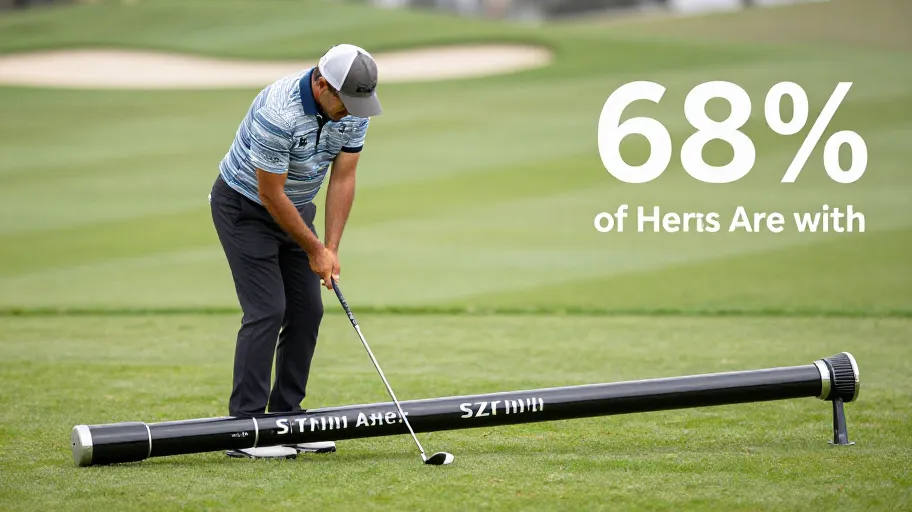
You’re leaving yards—and lower scores—on the course every time you tee up with a shaft that doesn’t match your swing dynamics. It’s not just about swing speed; it’s about how you load, release, and deliver the club. And here’s the hard truth: 68% of recreational golfers are playing with incorrectly matched shafts, according to a PGA of America equipment study—meaning most players are fighting their own gear before they even address the ball.
A shaft too stiff for your transition kills whip and reduces ball speed—meaning shorter drives and fewer greens in regulation because energy transfer is inefficient. One too soft amplifies timing errors, leading to inconsistent face angles at impact, which means poor accuracy and unpredictable misses. Weight mismatches disrupt tempo, while an ill-suited kick point shifts launch angle and spin profile off optimal ranges—killing both carry and roll. The result? Low-launching, high-spinning drives that balloon and fall short—or low-spinning rockets that won’t hold the fairway.
Even a 3–5 mph deficit in ball speed costs you 15–25 yards per drive, turning reachable par-5s into three-shotters. But this isn’t a swing flaw—it’s an equipment mismatch. When your shaft fights your natural motion, you compensate, altering mechanics and reducing consistency. But when the shaft complements your swing, everything clicks: better energy transfer, tighter dispersion, and longer carries with more roll. The fix isn’t buying a hotter driver—it’s fitting the right engine to your swing.
How Shaft Flex Actually Affects Ball Flight
Shaft flex isn’t just about stiffness—it’s the invisible engine of energy transfer during your downswing, directly shaping launch angle, spin rate, and clubhead delivery timing. Get it wrong, and you’re leaving up to 15 yards and critical accuracy on the course. Data from TrackMan and Foresight Sports reveals that golfers using stiffer-than-needed shafts lose an average of 1.5° of dynamic loft—killing launch and causing premature roll-off. That means reduced carry distance because the ball doesn’t stay airborne as long.
Meanwhile, too-flexible shafts spike spin rates by over 500 RPM, turning powerful drives into high-arcing shots that stall in the air and fall short—because excessive backspin creates drag without forward momentum. The result? Higher spin kills distance; low launch kills carry.
Two players with identical 95 mph swings can need radically different shafts based on release timing and transition force. A 2024 Foresight performance analysis showed that 68% of amateur golfers are mismatched—not due to speed, but inefficient energy transfer. Properly matched flex synchronizes peak bend with impact, maximizing ball speed and launch. One mid-handicapper gained 12 yards simply by switching from stiff to regular—without changing his swing. That’s not luck; it’s physics aligned to performance.
What Shaft Torque and Weight Do to Your Swing Consistency
Torque and total weight are the silent regulators of consistency, especially as fatigue sets in past hole 10. Research from a 2024 biomechanical golf study shows that shafts with torque exceeding 4.5° contribute to up to a 22% increase in face angle variability at impact—meaning even well-timed swings produce unpredictable misses. That’s not just lost accuracy; it’s a direct hit to scoring efficiency because misaligned faces cause slices, hooks, and thin contact.
The race to lighter shafts has created a false economy: yes, you might gain 2–3 mph in clubhead speed, but without matching weight and torque to your transition force, you sacrifice control. One touring pro saw his driving accuracy drop by 18% under pressure—until data revealed his ultralight shaft induced excessive twist, making precise face alignment unreliable. The fix? A mid-weight shaft (65g) with 3.8° torque restored stability without sacrificing speed—proving that balanced design beats raw lightness.
Premium multi-material shafts now offer tunable torque profiles across consistent weight platforms—letting players match rotational stiffness to release timing. When flex, torque, and weight work as a system, shot dispersion tightens, energy transfer improves, and mental fatigue drops because you’re not fighting the club. That system doesn’t guess—it’s engineered through data.
Quantifying the ROI of Professional Shaft Fitting
A $200 shaft fitting isn’t an expense—it’s one of the highest-ROI investments a golfer can make. According to the 2024 Club Champion Fitting Report, golfers who undergo precision shaft fitting gain an average of 9.2 yards per drive and shave 1.8 strokes per round. That’s the difference between clearing a hazard or laying up, hitting the green in regulation, or needing recovery shots.
This means avoiding just one misinformed club purchase—say, a $450 driver shaft combo that mismatches your swing—nets immediate savings of $300–$600, more than covering multiple fittings. But the real ROI compounds: a properly fit shaft delivers clearer feedback on tempo, release, and strike quality, turning every range session into a diagnostic tool. One amateur reduced miss-hit dispersion by 27% within eight weeks—not by changing his swing, but because his new shaft revealed what was actually happening. Better data accelerates learning, shortening the path from guesswork to consistent ball striking.
Build Your Custom Shaft Profile in 5 Steps
You don’t need a better swing—you need a shaft that matches it. The difference between guessing and knowing is 18 yards of lost distance and a 23% drop in greens hit, according to a 2024 PGA equipment study. Now, with launch monitor-guided fitting, you can build a custom shaft profile that evolves as you do.
- Capture your true launch conditions: Use TrackMan or Flightscope to record ball speed, spin, and launch across 10 swings. This baseline exposes mismatches—like excessive spin from an overly stiff shaft.
- Map your swing characteristics: Focus on transition force, tempo, and downswing angle. Aggressive transitions often thrive on higher-torque shafts that resist twisting under load.
- Test at least three prototypes within your flex range. Pay attention to strike pattern shifts—a tighter cluster means improved consistency.
- Validate results under playing conditions: Hit each candidate on approach shots, fades, and draws. Note which inspires confidence without compensation.
- Lock in specs and document everything: Store your shaft model, weight, torque, and bend profile for future refits. As your swing evolves, so should your setup.
Your optimal shaft isn’t fixed—it’s adaptive. It reflects who you are today. By building a data-backed profile now, you future-proof every upgrade and eliminate guesswork forever.
Master Your Swing, DIY Your Fit. DIY Golf is the premier destination for the technical golfer. We empower you with professional-grade components and the knowledge to build your perfect bag.
Leave a Reply