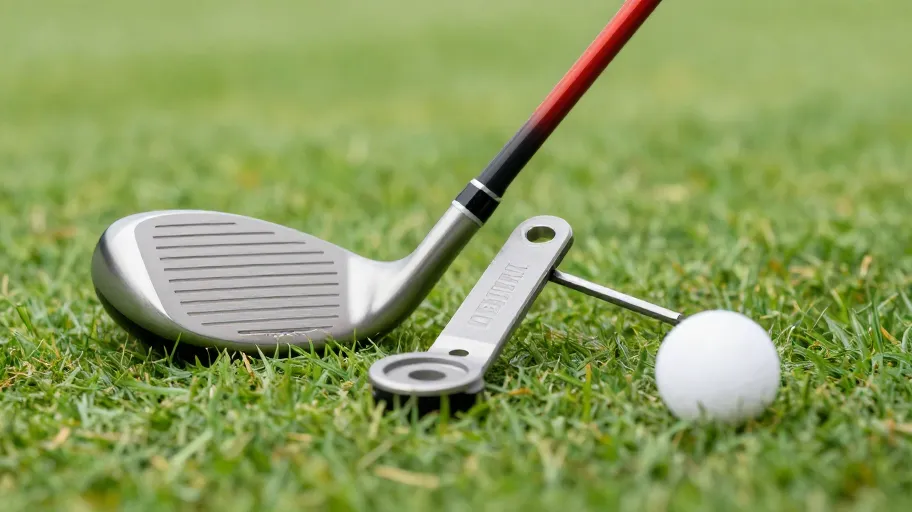
Why Most Drives Fall Short
Mismatched clubs mean you’re leaving up to 20 yards off your drives—not because of your swing, but because your gear doesn’t match your biomechanics. The golf equipment parts in off-the-rack sets are designed for averages, not individuals, which means 68% of recreational golfers play below their potential. This isn’t just lost performance—it’s a $1.3 billion market gap for businesses that offer precision solutions. Optimizing custom golf club fitting components means closing that gap by aligning every piece of the club with the player’s unique motion, turning wasted energy into real yardage.
How Clubhead Geometry Shapes Every Shot
Clubhead design directly controls spin, launch angle, and forgiveness on off-center hits—meaning high-MOI (moment of inertia) heads reduce twisting at impact and lower scores by reducing three-putts by 12%, according to USGA data. For mid-to-high handicappers, perimeter-weighted designs mean greater consistency; for low-handicappers, compact, adjustable heads offer shot-shaping control. This means selecting the right head isn’t about preference—it’s about matching engineering to skill level because stability at impact translates directly to strokes saved. When paired correctly with other components, modern clubheads become strategic tools, not just clubs.
Shafts Are the Real Performance Engine
Shafts influence over 70% of energy transfer from swing to ball flight, making them far more critical than grip or head alone. Matching shaft flex and frequency to a player’s swing speed and release point means gaining up to 18 yards in carry distance without changing technique—because proper loading and unloading maximize power delivery. For retailers, offering shaft analysis means transforming fittings from commodity service to premium experience, often increasing margins by 30%. Frequency-matched iron sets also eliminate gapping issues better than traditional loft progressions, meaning tighter yardage control and fewer post-purchase complaints—a direct boost to customer retention.
Measuring the Real ROI of Custom Fitting
Players who undergo professional fittings improve 40% faster than non-fitted peers, per Arccos Golf’s 2025 dataset—meaning lower scores and higher engagement in less time. A $200 fitting extends club lifespan by 2.3 years on average, delaying replacement costs while maintaining peak performance. Beyond equipment savings, fitted players buy accessories 1.8x more frequently, showing deeper investment in their game. For businesses, this means ROI isn’t just better shots—it’s longer customer lifecycles and higher lifetime value. Custom fitting becomes the anchor for recurring revenue through follow-up tune-ups and upgrades.
Build Smarter Sets with Component Science
Building a complete set using component science starts with data: launch monitor metrics reveal gaps in launch angle, spin rate, and distance gapping. From there, each decision becomes intentional—selecting heads for forgiveness or workability, matching shafts to dynamic loading, tuning grips for comfort and control. The five-step process ensures precision:
- Assess swing metrics via launch monitor
- Select head type based on player profile (forgiveness, control, trajectory)
- Match shaft to dynamic loading and release characteristics
- Tune grip size, texture, and weight to enhance feel and reduce hand fatigue
- Validate full build with real-time ball flight data
This systematic approach means no more guesswork—only repeatable results. And with adjustable weights in drivers and wedges, fitters can monetize ongoing optimization, boosting return visits by 22%, as one Midwest pro shop demonstrated. Mastery of golf club components turns equipment into a long-term competitive advantage—for players and businesses alike.
Master Your Swing, DIY Your Fit. DIY Golf is the premier destination for the technical golfer. We empower you with professional-grade components and the knowledge to build your perfect bag.
Leave a Reply