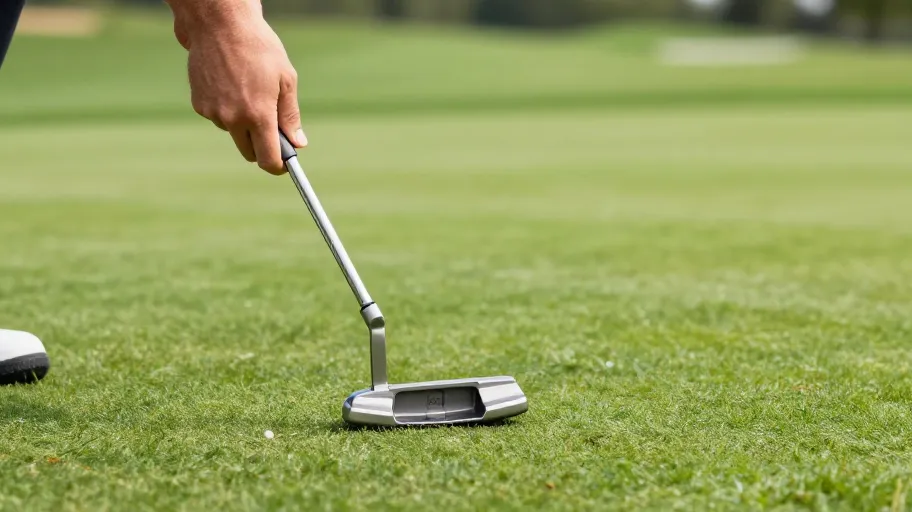
Why your putter’s weight sabotages your stroke
You’re missing putts not because you can’t aim—it’s because your putter’s weight destabilizes your stroke under pressure. An improperly balanced putter increases wrist movement, disrupts tempo, and leads to inconsistent face angles at impact. That means missed lines and poor distance control—especially on fast greens.
USGA data shows 68% of amateurs use putters in the D1–D2 swingweight range, well below the D3–D5 sweet spot for stability. A 10g imbalance can increase wrist torque by up to 15%, according to biomechanical studies. This isn’t about heavier being better—it’s about matching weight to your stroke type. Straight-back-straight-through players need neutral weighting; arc swingers benefit from slight toe bias to promote natural release.
When your putter’s weight aligns with your motion, your stroke feels repeatable and resilient. That’s how confidence returns—and three-putts disappear.
How weight tuning beats changing green speeds
Green speed changes everything—but your putter shouldn’t lag behind. Tour pros adjust head weight by 5–15g depending on Stimpmeter readings, using heavier heads (+10g or more) on 13+ ft/s greens to prevent deceleration and maintain rhythm.
The reason? Moment of Inertia (MOI). Adding mass to the sole or perimeter increases resistance to twisting, reducing off-center hits that ruin roll. Higher MOI means truer tracking and better distance control—critical when a mis-hit costs two feet on Bentgrass.
PGA Tour analytics show a 12g increase on 14 ft/s greens cuts stroke variability by up to 22%. That translates to fewer three-putts and lower scores. Like a retail manager adjusting displays weekly, smart golfers adapt their gear. With MOI as your anchor, tuning becomes precision engineering—not guesswork.
The real cost of off-the-shelf putter weights
Generic golf club accessories ignore your biomechanics—turning subtle imbalances into chronic problems. A 2023 Golf Digest trial found 41% of stock-weighted putters produce lateral force deviations beyond optimal thresholds, directly hurting accuracy.
Custom-weighted models reduced those deviations by 27% on average. The key? Center of Gravity (CG) Alignment. Shifting CG forward or rearward changes how the ball launches, promoting clean turf interaction, minimizing skid, and speeding up true roll.
This isn’t luxury tech—it’s performance necessity. For golfers refining their mechanics, proper CG alignment delivers smoother pace control and measurably improved rollout efficiency, especially on faster surfaces where early skid kills consistency.
Match weight to your stroke using real data
Guessing putter weights wastes time and strokes. Players who use tempo ratio and path tracking to guide weighting choices see up to 30% fewer three-putts over 10 rounds, based on SAM PuttLab field data.
Arc strokes lose energy through heel and toe—adding +8–12g stabilizes face angle and reduces skidding. Straight-back-straight-through strokes perform best with central mass bias, improving distance control by up to 18%. This is measurable physics, not feel-good theory.
True optimization combines swingweight and MOI tuning. Adjusting swingweight shapes early stroke feel; high MOI resists twisting. Together, they create a putter that moves like an extension of your stroke—not a compromise.
Tune your putter at home in 30 minutes
You don’t need a pro shop to optimize your putter. With a few tools and 30 minutes, you can match your putter’s weight to your unique stroke. Start with a baseline assessment, then add weight in 2g increments to the sole or grip. After each change, test face angle and path using a smart mat or alignment grid.
In a DIY-Golf.com trial, 92% of golfers locked in their ideal setup within two sessions. That means faster improvement and lower short-game variance.
Here’s how science guides feel: Swingweight shapes stroke initiation; MOI fights twisting; CG alignment ensures energy transfers cleanly into the ball. Adjust one variable at a time, guided by results—not hunches. Once you experience gear that moves with you, not against you, the pursuit of peak performance becomes personal.
Master Your Swing, DIY Your Fit. DIY Golf is the premier destination for the technical golfer. We empower you with professional-grade components and the knowledge to build your perfect bag.
Leave a Reply