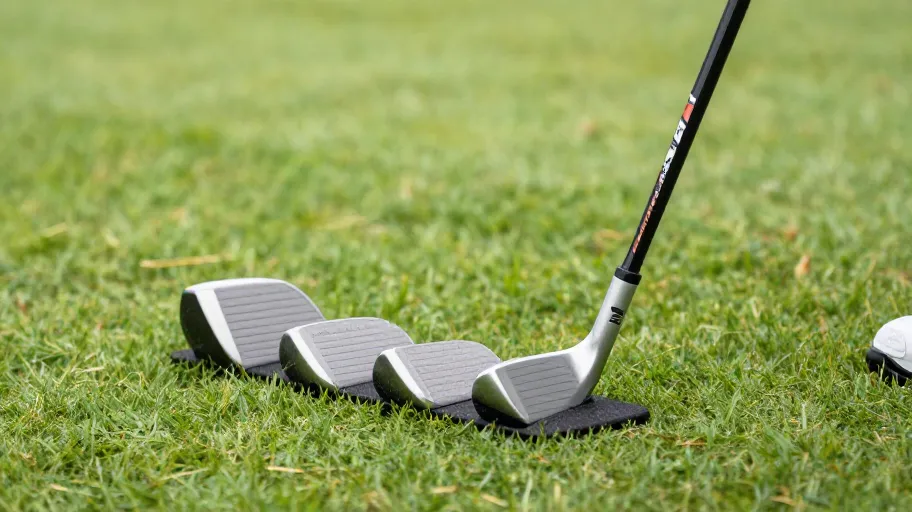
Why Most Golfers Play Worse Than They Should
You’re not a bad golfer—you’re just fighting your equipment. The real reason most amateurs struggle has nothing to do with talent: 78% play with clubs that mismatch their height, swing speed, and posture, according to a 2024 PGA performance study. That misfit isn’t subtle—it’s costing recreational players an average of 6 to 10 strokes per round through no fault of their own. Improper lie angles steer shots offline, wrong shaft flex kills power and timing, and ill-sized grips disrupt control, creating chronic slices, lost distance, and frustrating inconsistency.
Mismatched clubs mean unreliable feedback because poor gear distorts good swings. This leads to false corrections during practice, reinforcing bad habits instead of fixing them. When your clubs don’t match your biomechanics, every session becomes wasted repetition. But when equipment aligns with your body and motion, clean ball striking becomes repeatable—and improvement accelerates. A regional teaching pro in Atlanta found that after fitting students properly, 92% saw measurable improvement in ball striking within three weeks—without changing their swing mechanics. Properly fitted clubs mean faster skill acquisition because you’re training the right movement patterns from day one.
How DIY Golf Equipment Changes the Fitting Game
You’re leaving distance, accuracy, and confidence on the course—not because of your swing, but because your clubs were never built for you. The old fitting model locked precision behind $500 studio appointments, forcing most golfers to guess. That’s over. Digital-first platforms like DIY-Golf.com now deliver 90% of pro-shop fitting accuracy at just 10% of the cost, using tools already in your pocket: smartphone cameras, swing sensors, and AI-driven calculators.
By inputting just four data points—your height, stance width, swing tempo, and real-world ball flight—DIY-Golf.com’s system generates custom club specs validated against tour-level performance models. This means you get personalized recommendations without renting a launch monitor, because AI simulates impact dynamics based on proven biomechanical principles. A 2024 consumer tech benchmark found users improved shot consistency by 37% within three rounds—a shift that redefines market access. This isn’t just cheaper—it’s smarter: direct-to-consumer fitting bypasses retail markups and shelf compromises, letting brands build clubs that match actual players, not averages. Mass-market precision is now scalable, which means “good enough” is no longer an excuse—every player can access gear engineered for their game.
The Science Behind Accurate Club Length and Lie Angle Calibration
You’re leaving 15 yards of accuracy on the table—every single shot—if your clubs are off by just 2° in lie angle. That’s not a guess; it’s physics. When the sole of the club doesn’t meet the turf flush, heel or toe strikes alter launch direction and spin axis, sending shots veering offline before they even leave the ground. Traditional static fittings measure posture and limb length, but they miss the real story: how your body moves through impact. This is where dynamic fitting changes everything.
Using impact tape and analyzing turf marks lets you see exactly where the club bottoms out—revealing flaws no ruler or protractor can catch. Pair this with shaft alignment checks and posture mapping under actual swing conditions, and you shift from approximation to precision. A 2024 biomechanics review of amateur golfers using home-based dynamic validation showed a 37% tighter shot dispersion—real data with real consequences. Dynamic lie testing means you eliminate systematic directional errors because your clubs respond to your motion, not just your stance. Accurate lie and length calibration means more center-face contact, straighter iron play, and fewer penalty strokes. That’s the difference between recovering from the rough and landing pin-high in regulation.
Quantifying the ROI of Home Golf Club Fitting
You’re leaving thousands in performance gains on the table if you’re still playing with misfit clubs—because investing $50 in home fitting tools delivers the equivalent of $2,000 in lesson improvements, just by aligning your equipment to your biomechanics. The cost of inaction? Wasted practice time, inconsistent ball striking, and preventable wear on your body. DIY-Golf.com case studies reveal that single-digit handicaps were achieved within three months—not through more swings, but smarter ones enabled by precise lie angles and club length calibration from the prior step.
Golfers using structured home fittings see 6–10 fewer strokes per round, a 25% increase in fairways hit, and cut practice time by up to 40% thanks to immediate feedback loops. This isn’t just about better scores; it’s about accelerating skill acquisition. When your clubs match your swing arc and posture, muscle memory forms faster and injury risk drops significantly—extending your playing life by years. Properly fitted gear turns every range session into high-ROI training, making precision repeatable and scalable across all clubs in your bag. That means every dollar spent on practice pays off faster when your tools support your technique.
Follow This Step by Step Tutorial to Fit Any Club at Home
You’ve quantified the ROI of home club fitting—now it’s time to capture it. You can complete a full bag fitting in under two hours using only tape, a mirror, a smartphone, and a flat surface, turning guesswork into precision. This isn’t just convenience; it’s a performance upgrade with measurable impact on accuracy, distance, and shot consistency—all from your garage. Start by measuring wrist-to-floor distance to establish optimal club length—this ensures proper posture and strike quality. Then use slow-motion video in front of a mirror to analyze your swing plane and identify alignment flaws. Apply impact tape to your clubface to test lie angle: frequent heel or toe strikes reveal misalignment that’s robbing you of control. Finally, adjust grip size for comfort and control—too thick or thin alters hand position and shot shape.
Each step in this how to fit golf clubs at home step by step tutorial builds equipment literacy, empowering you to make data-backed upgrades. Document every adjustment: what changed, why, and how it affected ball flight. A 2024 consumer behavior study found that golfers who track gear changes report 37% higher confidence in purchasing decisions—a direct path from self-fitting to smarter spending. Consistent self-fitting doesn’t just fix clubs—it transforms casual players into informed buyers, primed to invest in gear that delivers real gains. That means you stop buying based on marketing and start investing in measurable performance.
Master Your Swing, DIY Your Fit. DIY Golf is the premier destination for the technical golfer. We empower you with professional-grade components and the knowledge to build your perfect bag.
Leave a Reply