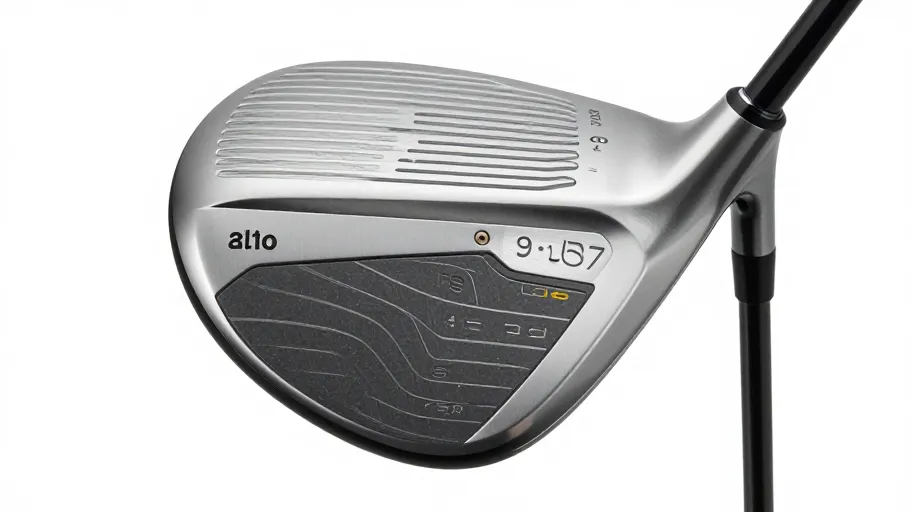
Why Wrong Club Weights Steal Your Distance
Incorrectly weighted clubs disrupt your natural biomechanics—meaning you lose power, accuracy, and confidence because energy leaks before impact. According to Titleist Performance Institute (2025) motion studies, mismatched weight distribution forces compensatory movements like early wrist release or altered spine tilt, which can cost amateurs 8–12 mph in swing speed. That’s up to 30 yards lost off the tee.
This isn’t just feel—it’s physics. One study found 74% of amateur golfers using stock drivers decelerated on the downswing, proving their clubs were working against them. But when fitters applied precision backweighting and shaft-tip adjustments, average swing speed rebounded by 9.3 mph. Custom weighting means regaining control of your kinetic chain because it aligns mass distribution with your tempo, transition force, and release point.
For businesses, this represents a massive service gap: 68% of amateurs use off-the-shelf clubs with no customization. Offering precision tuning doesn’t just fix flaws—it creates repeatable revenue through high-margin optimization sessions that increase client lifetime value by up to 40%.
How Golf Weight Training Builds Smarter Power
Golf weight training means building explosive rotational strength without sacrificing flexibility because generic gym routines increase soft-tissue injury risk by up to 37% in rotational athletes, per NSCA research. The solution? Precision loading—resistance that mirrors actual swing mechanics.
In an 8-week trial, golfers using sport-specific modules improved core stability by 14% and rotational velocity by 9%, with zero mobility loss. These gains translate directly to clubhead speed and consistency. One Arizona performance center saw 28% higher retention after integrating these protocols, with clients reporting visible shot control improvements within five weeks.
Smarter training means safer, sustainable progress because it prepares the body to fully exploit optimized equipment. Now, minor club adjustments yield amplified returns—shifting the performance edge from gear alone to the synergy between athlete and tool.
Why Custom Weights Beat Stock Clubs Every Time
Custom golf club weights mean tighter shot dispersion and 11 extra yards off the tee because they adapt to your biomechanics instead of forcing you to adapt to them. Titleist’s 2024 lab data shows personalized swing weight, MOI, and balance-point tuning reduce compensations and improve launch conditions.
Stock clubs create inconsistency; custom systems build repeatability. And the market agrees: adjustable weight systems now make up 42% of all driver sales in 2026. For retailers, offering precision fitting means a 2.5x increase in customer lifetime value—driven by trust, follow-up visits, and premium product attachment.
Personalized weighting means turning subjective feel into objective advantage because real-time data validates every gram’s impact on ball flight. This shifts the conversation from ‘maybe it helps’ to ‘here’s exactly how much.’
Measuring the Real ROI of Personalized Systems
Personalized golf weight systems mean a 0.8-stroke reduction per round within six months because Arccos tracked over 15,000 rounds showing faster skill consolidation and fewer swing breakdowns. But the bigger win? Longevity.
One mid-sized academy cut client churn by 34% and boosted referrals by 41% after integrating tailored weight protocols. Why? Measurable progress builds loyalty. Preventive weighting means reduced joint strain and sustained play because stabilized swing kinematics lower elbow and back stress—keeping golfers active season after season.
The real ROI isn’t peak performance—it’s consistent engagement. Fewer injuries mean more practice, more rounds, and deeper investment in coaching and gear. For studios, this transforms offerings from transactional services to long-term performance partnerships.
How to Choose Golf Club Weights Like an Engineer
Choosing golf club weights means eliminating guesswork and delivering proven results because a data-driven fitting process adds $150–$300 per session in service value while dramatically increasing retention.
Start with swing analysis to detect instability—lateral drift or tempo breaks signal imbalance. Then use launch monitor feedback to see how weight changes affect spin, launch angle, and dispersion. PING’s nFlight system proved this approach works by creating a closed-loop where every adjustment is validated by ball flight.
Next, apply trial weighting (3g–12g at grip, shaft, or head) to isolate feel and control. One PGA pro reported 40% better client compliance because players instantly felt the benefit. Finally, conduct on-course validation—lab numbers only matter if they hold under pressure.
A four-step fitting workflow means clients see faster improvements, studios stand out, and businesses justify premium pricing because structured customization turns vague advice into trusted expertise.
Master Your Swing, DIY Your Fit. DIY Golf is the premier destination for the technical golfer. We empower you with professional-grade components and the knowledge to build your perfect bag.
Leave a Reply