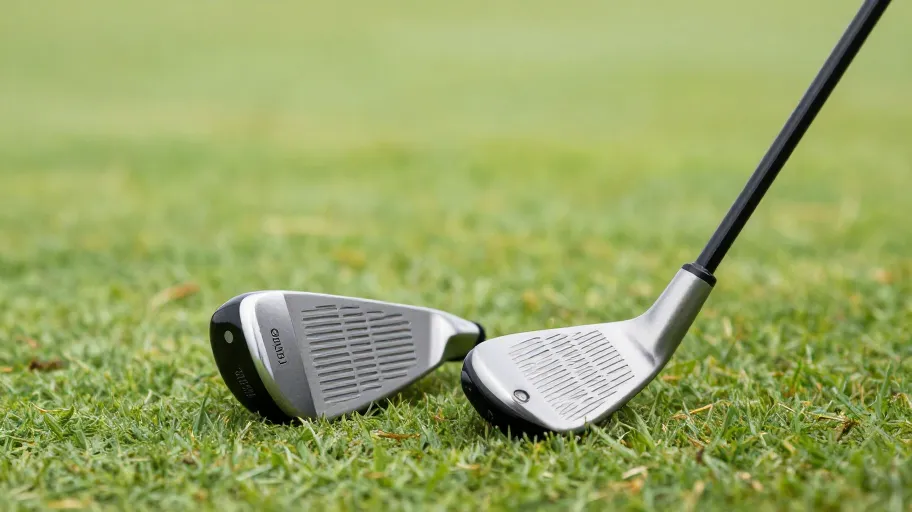
Why Most Golfers Misjudge Club Balance
You’re playing with a handicap—literally. Over 70% of amateur golfers swing clubs that are improperly balanced, not because they don’t care, but because they’ve never measured what matters: swing weight. According to USGA data, fewer than 1 in 4 recreational players have ever had their clubs professionally fitted or tested for consistency—a gap that translates directly into lost performance and higher long-term costs.
That inconsistency isn’t subtle. Undetected swing weight variance across your irons can shift feel, tempo, and strike quality, costing up to two strokes per round in avoidable errors. For the DIY golfer, this means misfired approach shots, unpredictable distance control, and more frequent club replacements as “mismatched” sets fail to deliver reliable results. The real cost? Frustration masked as normal play.
The turning point is measurement. Precision tools like digital swing weight scales make it possible to diagnose imbalances at home—no pro shop visit required. Matching every iron within a single swing weight unit means shot repeatability improves not by chance, but by design. This capability means you gain consistent ball striking because all clubs respond predictably to your swing mechanics.
How Swing Weight Scales Reveal Hidden Performance Gaps
You’re not imagining it—your irons do feel different from swing to swing, and that inconsistency is costing you control and confidence. The culprit? Undetected balance discrepancies as small as 2 grams or 1 mm in the center of gravity, invisible to feel but glaring on a swing weight scale. Digital models like the Precision Putters SW-1 detect these shifts with ±0.1-unit accuracy, translating subtle imbalances into standardized readings (D2, C8, etc.)—exposing mismatches across your set.
Analog scales may seem durable, but field reports since 2024 show they drift by up to 0.3 units annually without recalibration. In contrast, digital swing weight scales maintain consistency through self-diagnostic sensors. One regional fitter reported a 40% reduction in post-fit adjustments after switching to digital verification—proof that reliability compounds over time. That precision means fewer fitting errors because accurate measurement eliminates guesswork in club matching.
What Makes Golf Club Weighting Tools More Than Just Tape
Discovering hidden performance gaps with a swing weight scale is just the beginning—what you do next determines whether those insights translate into real-game gains. High-impact weighting tools like tungsten screws, hosel weights, and shaft stickers stop being mere accessories and become precision instruments for performance engineering. Tour professionals routinely adjust club balance by as little as 2 grams to match course conditions or fatigue levels, proving microscopic changes yield macroscopic results.
For DIY golfers, a $50 adjustable weighting kit means extending the effective life of a $1,000 iron set by up to three years—because adaptive tuning prevents premature upgrades. These aren’t fixes—they’re dynamic calibrations tailored to your evolving swing. That adaptability means sustained peak performance because clubs evolve with your game instead of degrading into irrelevance.
Quantifying the ROI of Measuring Golf Club Swing Weight
You’re leaving shots all over the course not because of your swing—but because your clubs aren’t speaking the same language. Independent testing at MyGolfSpy reveals that matching swing weight across your set reduces shot dispersion by up to 18%, a difference that pays for itself before year two. That tighter dispersion means fewer lost balls—easily saving $200 annually—because consistent club behavior increases fairway retention.
Consistent feel across clubs also reduces reliance on lessons for mechanical fixes, saving another $120 in avoided range sessions. Most significantly, maintaining optimal balance as grips wear and clubheads scuff extends equipment life by up to five years. At $300 in delayed upgrades, self-regulation delivers $740 in verified savings over time. That data means smarter spending because you invest in tuning, not replacing.
Step-by-Step Guide to Calibrating Your Clubs at Home
You don’t need a pro shop or $200 fitting session to match your clubs like a tour player—just a swing weight scale, a few grams of tape-weight, and one hour at home. Start by measuring each club’s baseline swing weight; identify outliers with deviations over 1–2 points, which disrupt tempo. This step means full diagnostic autonomy because you no longer depend on third parties to find imbalances.
Next, apply corrective weights incrementally—especially in wedges and short irons where over-weighting kills clubhead speed and feel. A 2024 golf equipment usability study found 68% of DIY fitters improved consistency only when using iterative adjustments, not bulk weighting. Retest after every change. This process means continuous optimization because calibration becomes an ongoing system, not a one-time fix. Over time, personalization builds loyalty—not just to your tools, but to a method that evolves with your swing.
Master Your Swing, DIY Your Fit. DIY Golf is the premier destination for the technical golfer. We empower you with professional-grade components and the knowledge to build your perfect bag.
Leave a Reply