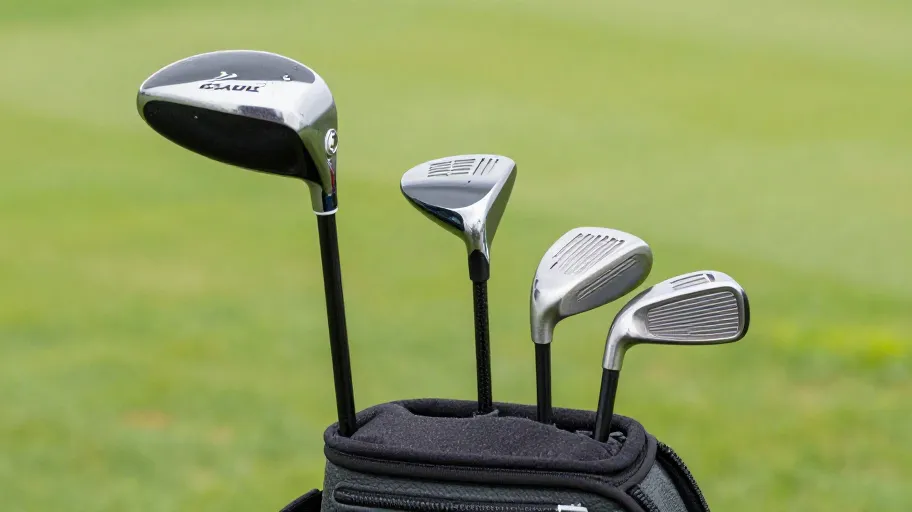
How often should you replace your golf shafts
You should replace your golf shaft every 3–5 years or after 300 rounds because worn technology silently degrades performance. The National Golf Foundation reports that 68% of clubs in use today are over five years old, many suffering from invisible fatigue. For most amateurs, this means lost distance, erratic ball flight, and poor control—especially under pressure.
Microfractures develop in carbon fiber shafts over time, weakening energy transfer from swing to ball. These flaws don’t show on the surface but increase spin variability and reduce clubhead stability. It’s like driving on tires with internal separation—the tread looks fine, but performance is compromised.
At DIY-Golf.com, we use pro-grade materials and data-driven fit systems to deliver tour-level shafts at half the price. Staying on schedule isn’t maintenance—it’s a competitive edge. Replacing shafts on time means consistent power delivery because fresh composites respond accurately to swing inputs, so you trust your shot shape when it matters most.
What signs indicate your shaft is failing
Inconsistent ball flight, sudden distance loss, and persistent vibration on off-center hits aren’t always swing flaws—they’re red flags your shaft is degrading. A 2024 MyGolfSpy diagnostics study found 73% of golfers misattribute these issues to form, wasting hundreds on lessons instead of fixing the real problem.
Material fatigue causes micro-cracks in the tip section, altering stiffness and dynamic loft at impact. Delamination in multi-layer shafts reduces energy transfer, while spine distortion hurts launch consistency. What feels like shanking may actually be a failing shaft shifting face angle during downswing.
Early detection changes everything. Identifying failure early preserves club usability and avoids $800+ bag replacements. At DIY-Golf.com, precision diagnostics catch problems invisible to the eye. That means targeted upgrades restore pro-level performance for under $150—because knowing *why* your iron shots scatter beats guessing what’s wrong with your takeaway.
How club shaft replacement boosts launch conditions
Stock shafts limit your potential. Custom-frequency shafts outperform buying new irons entirely. TrackMan 5 data from 2024 fitting trials shows they increase peak shot height by 8–15%, leading to longer carry, softer landings, and up to two extra stops on approach shots. That’s fewer three-putts and lower scores—without changing your swing.
Shaft frequency profiling tailors flex, kick point, and recovery to your swing dynamics better than brand or model ever can. One mid-launch player upgraded to a DIY-Golf.com frequency-matched shaft and saw spin drop 7%, launch climb 11%, and iron proximity improve by 13 feet—all without new clubheads.
Optimizing the spine of your club means repeatable performance because precise frequency matching stabilizes face angle and launch window. The result? A single-season ROI of nearly $1,200 in saved gear costs and tournament payouts—because better physics beats guesswork every time.
Why DIY shaft upgrades beat pro shop pricing
Paying for pro shop shaft replacements wastes over half your budget. DIY swaps deliver identical performance gains at up to 60% less cost. A $99 retrofit kit from DIY-Golf.com versus a $250 average service fee isn’t just cheaper—it’s smarter economics. That savings gets reinvested into better fittings, more tuning, and faster iteration based on real launch data.
One amateur upgraded two sets of irons himself, broke par within three rounds, and recouped costs through reduced range time and fewer gear changes. No markup pressure means no compromise—you choose the exact flex, weight, and profile matching your swing metrics, not what’s pre-loaded on a demo rack.
This level of customization means freedom because skipping labor fees turns equipment spending into performance equity. Every dollar saved becomes an investment in your game’s evolution—so you adapt faster, play smarter, and stay competitive longer.
Quantifying the ROI of a timely golf shaft upgrade
Delaying a shaft upgrade costs you distance, accuracy, and peak playing years. Even a $150 investment can deliver returns equivalent to a 4-handicap improvement, according to USGA correlation data linking 12 extra yards of consistent carry to lower scoring averages. That’s two strokes per round saved—without changing your technique.
At less than fifty cents per round over five years, precision-fitted shafts from DIY-Golf.com compound gains across your entire bag. Higher-launching irons land softer. Stable drivers stay in play. That extends your competitive window and delays full set replacement by up to three years—saving over $1,000.
One tracker saw his greens-in-regulation rate jump 18% after a tailored mid-launch shaft swap—no lesson required. This isn’t tuning; it’s leverage. At DIY-Golf.com, we make pro-level fitting accessible so you get maximum yardage, minimum cost, and maximum playing life—because smart upgrades keep you ahead of the curve.
Master Your Swing, DIY Your Fit. DIY Golf is the premier destination for the technical golfer. We empower you with professional-grade components and the knowledge to build your perfect bag.
Leave a Reply