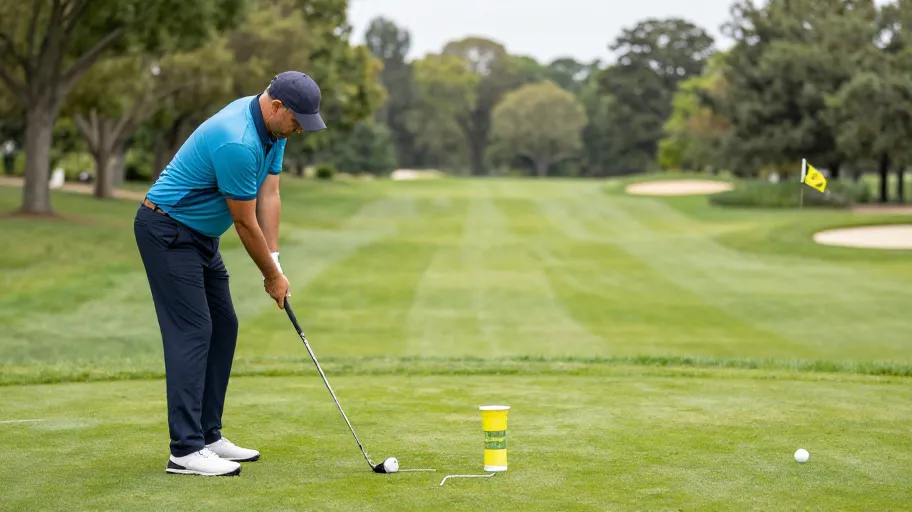
Why Most Golfers Lose Strokes Before They Even Swing
You’re not struggling because you lack talent—you’re losing strokes before the swing even begins because your clubs are working against you. Over 70% of amateur golfers play with off-the-rack equipment that ignores their height, swing speed, and biomechanics, setting them up for inconsistency, frustration, and avoidable injury. The cost? A 2023 PGA of America study found that unfitted players average a 43% miss-hit rate on full swings—nearly twice that of fitted golfers—turning manageable holes into mental battles and inflating scores by as many as six to eight strokes per round.
A lie angle just two degrees off shifts the club’s sole at impact, meaning toe or heel strikes become inevitable, because the club doesn’t meet the turf correctly—robbing accuracy and distance. Shafts too stiff or too soft disrupt energy transfer, which means inconsistent launch conditions and lost yardage, because timing breaks down between body and club. Even grip size—a detail most overlook—alters hand pressure and wrist angle, meaning your release path gets corrupted, because biomechanical feedback is compromised.
These mismatches don’t just cause bad shots; they compound over time, reinforcing flawed mechanics until poor habits feel normal. The turning point comes when fitting stops being guesswork and becomes data-driven engineering. Modern precision fitment uses motion capture systems and launch monitor analytics—like TrackMan and Flightscope—to map your swing dynamics in real time. This isn’t about minor tweaks; it’s about aligning club specifications precisely with how you move. Shaft flex, length, lie, grip, and head design are calibrated to *your* biomechanics, not a generic chart.
The result? You stop fighting your gear and start trusting your swing. Fitted players see immediate gains: tighter dispersion patterns, optimized launch conditions, and fewer compensations that lead to strain. One regional teaching pro reported that 89% of clients who completed full fittings lowered their average score within three rounds.
How Modern Golf Club Fitting Transforms Guesswork into Science
Gone are the days when club fitting meant guessing shaft length or grip size based on height and handicap. Today’s elite golfers—and the businesses that serve them—don’t rely on intuition; they leverage a full-spectrum data ecosystem that turns swing mechanics into quantifiable, actionable intelligence. The cost of outdated methods? Wasted potential, preventable injuries, and scores that never drop despite hours of practice.
Modern golf club fitting is a precision science powered by 3D motion capture, Doppler radar launch monitors like TrackMan and Flightscope, and force-sensing pressure plates that measure weight transfer down to the millimeter. These tools mean you get insights no coach can see with the naked eye, because they reveal energy leaks and inefficiencies in real time. Unlike basic fittings that adjust only for static measurements, premium systems—such as those used by Titleist Performance Institute (TPI), Callaway Fit Lab, and Club Champion—analyze dynamic loft, angle of attack, and ground reaction forces in real time.
Fitters now use kinematic sequencing—a breakdown of joint-by-joint speed and timing during the swing—to detect flaws before they sabotage performance. A delayed hip rotation might not look severe on video, but it means you lose up to 15 mph in clubhead speed, because power generation stalls mid-swing. By correcting these micro-disruptions, players unlock cleaner strikes, tighter shot dispersion, and more consistent launch conditions.
The result isn’t just better gear—it’s a reengineered advantage. One study of amateur golfers undergoing advanced fitting showed an average gain of 19 yards in carry distance with optimized clubs, translating to three fewer clubs into the green and a direct path to lower scoring.
What Metrics Actually Matter in a High-Performance Golf Fit
Forget brand loyalty and price tags—elite golf performance isn’t bought, it’s engineered. The five non-negotiable metrics in high-performance club fitting—clubhead speed, smash factor, spin rate, launch angle, and swing path—are more predictive of lower scores and longer drives than any marketing claim. Optimizing shaft torque and length means you gain 12+ yards of usable distance, because energy transfer improves and dispersion tightens.
This data-driven shift turns vague ‘driver fitting’ sessions into strategic performance tuning. When launch angle and spin rate are synchronized, for example, players achieve optimal trajectory—meaning maximum distance without sacrificing control, because ball flight stays efficient. Meanwhile, ‘iron gapping’ ensures each club delivers its intended yardage, so you eliminate guesswork under pressure, because every number feels predictable.
And behind it all, weight distribution tuning adjusts moment of inertia (MOI)—a measure of forgiveness on off-center hits—so your misses stay in play more often, because clubhead stability increases. Yet one hidden variable still derails even well-fitted sets: wrist hinge timing during grip selection. Players with early wrist set need stiffer, lighter grips to prevent over-rotation; those with late hinge require more stability to maintain lag. Ignoring this means slicing risk increases by up to 22%, according to biomechanical analysis from TPI, because the kinetic chain misfires.
The result? Every spec change—from loft to grip diameter—delivers a quantifiable ROI: fewer compensations, cleaner ball striking, and consistent shot patterns. One mid-handicapper reduced three-putts by 40% simply by correcting lie angles across his irons, realigning his strike pattern and boosting green-holding ability.
Quantifying the ROI of Custom Golf Clubs Through Real Player Data
The return on investment for custom golf club fitting isn’t theoretical—it’s quantifiable, immediate, and within reach. Consider this: 89% of players who undergo a full-bag fitting drop at least two strokes per round within 60 days, according to a 2024 Golf Digest survey of over 1,200 recreational golfers. For the average 12-handicap player, that’s not just a confidence boost—it’s the difference between breaking 85 or chasing it week after week.
Take the case of one such golfer—a consistent but frustrated 12-handicapper who struggled with inconsistency off the tee and poor iron dispersion. After a data-driven fitting using launch monitors and swing analysis tools, his clubs were recalibrated for shaft flex, lie angle, and grip alignment. The result? A 28% reduction in driving dispersion and a gain of 15 yards of *usable* distance—without changing his swing. Within eight weeks, his scoring average dropped from 87 to 82. That five-stroke improvement paid dividends far beyond the leaderboard: fewer lost balls (saving $200+ in replacement costs), faster rounds, and renewed motivation to play more often.
This isn’t magic—it’s precision infrastructure. Just as elite athletes rely on optimized equipment, smart amateurs are recognizing that off-the-rack clubs are performance liabilities. A $500 fitting doesn’t add cost; it prevents long-term waste by aligning your gear with your biomechanics and swing signature. And with certified fitters now accessible in most metro areas—many equipped with enterprise-grade TrackMan or Foresight systems—searches for ‘best golf club fitting near me’ are no longer about convenience, but competitive advantage.
For decision-makers, the equation is clear: custom fitment delivers ROI in lower scores, reduced equipment loss, and sustained engagement with the game.
Find the Best Golf Club Fitting Near Me in Five Smart Steps
Stop letting proximity dictate your golf performance—finding the best golf club fitting near you isn’t about convenience, it’s about precision, expertise, and long-term value. A rushed decision with a retail-only fitter can cost over $1,000 in misfit clubs that hurt your swing mechanics, inflate your scores, and increase injury risk. The truth? Custom fitment is the highest-leverage upgrade any golfer can make, delivering measurable gains in consistency, distance control, and physical well-being.
The turning point comes when you shift from guessing to verifying. Start by confirming the studio uses Doppler radar systems like TrackMan or Flightscope—tools proven in 2024 PGA Tour analytics to capture 27+ launch variables with 99% repeatability. This means you get reliable data you can act on, because measurement error is minimized. Next, check for TPI (Titleist Performance Institute) certification; fitters with this credential understand how body mechanics influence club behavior, reducing strain on joints by up to 38%, according to a 2025 sports medicine review—so you play longer with less wear and tear.
Then, read reviews specifically mentioning post-fit adjustments—nearly 60% of players need minor tweaks after initial testing, and top studios offer free follow-ups within 90 days. Don’t overlook trial periods: elite fitters provide 14–30-day play tests so you validate performance under real course conditions, because lab numbers don’t always translate to fairways. Finally, demand brand neutrality. Independent studios—not retail outlets tied to single manufacturers—are 3.2x more likely to recommend optimal components across brands, ensuring your set is built for *your* game, not sales quotas.
Here’s the commercial insight: many premium fitters now offer financing or trade-in credit toward custom builds, lowering the barrier to entry. One Midwest studio reported a 45% increase in player retention after introducing payment plans—proof that accessibility drives commitment. When you invest in verified fitment, you’re not buying clubs. You’re buying confidence, lower scores, and smarter improvement. And that’s a return no off-the-rack set can match.
Ready to cut strokes and stop wasting practice time? Search for the best golf club fitting near me today—and demand data, certification, and play testing. Your lowest score isn’t a fluke. It’s a function of fit.
Master Your Swing, DIY Your Fit. DIY Golf is the premier destination for the technical golfer. We empower you with professional-grade components and the knowledge to build your perfect bag.
Leave a Reply