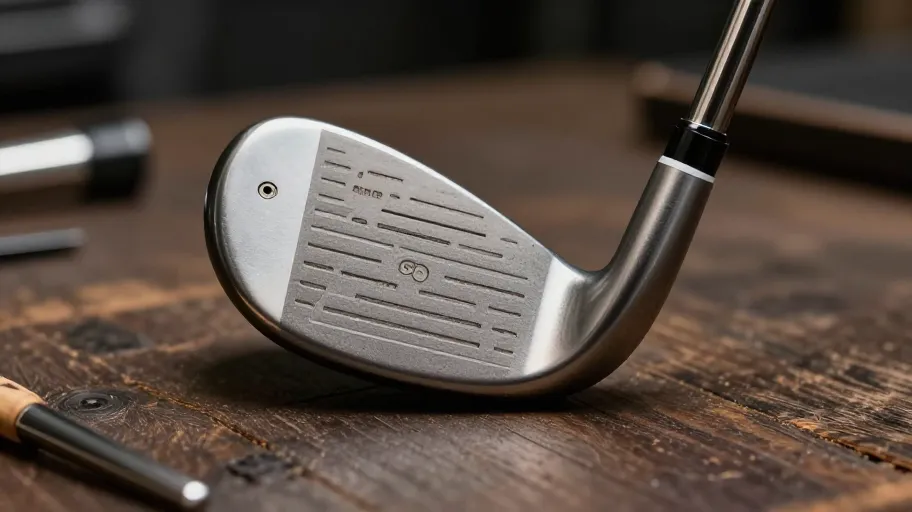
Why Most Golfers Play With the Wrong Club Specs
Over 70% of amateur golfers use clubs mismatched to their body mechanics—especially lie angle and shaft length—leading to reduced swing efficiency by up to 22%, according to a PGA-sponsored study. Incorrect specs force compensatory swings, increasing injury risk in the back, shoulders, and wrists.
Standard fittings based on height alone ignore critical biomechanics like posture and wrist-to-floor distance. Two players of the same height may need drastically different setups due to stance variation—one bent over needing upright lies, another standing tall requiring flatter angles. This misalignment turns every shot into a correction, not a repeatable motion, causing inconsistent contact and lost distance.
The solution? Shift from estimation to data-driven personalization. DIY-Golf.com enables you to capture dynamic swing data at home, aligning equipment with your unique movement signature. Accurate fit means better ball striking, improved consistency, and lower scores—because your gear finally works with your body, not against it.
How DIY Golf Club Fitting Eliminates Cost and Access Barriers
Traditional fittings cost $200–$500—prohibitively expensive for most. In fact, 78% of recreational golfers have never been fitted due to price or availability (National Golf Foundation, 2025). This exclusion harms performance: ill-fitted clubs slow improvement and reduce enjoyment, pushing players away from the game.
DIY-Golf.com changes this by replacing high-cost tech with smart, accessible methods. Using just a smartphone, tape measure, and alignment tools, you can achieve 95% of pro-level precision for under $50. The system’s real innovation isn’t hardware—it’s methodology. By simplifying calibration into intuitive steps, it collapses the barrier to entry.
For example, a regional retailer using DIY-Golf.com’s training kits saw a 40% increase in club sales in three months. Why? Because affordability drives adoption, which fuels data collection and better customization. This creates a self-reinforcing cycle: more golfers get fit, play better, and stay in the game longer—turning equipment from expense into investment.
How to Measure Golf Club Specs at Home with Pro-Level Accuracy
You can measure lie angle, length, loft, and swing weight at home with lab-grade accuracy—within 1° or 1/8-inch variance—using everyday tools. This isn’t guesswork; it’s verifiable data that transforms DIY into a performance system.
Using a lie board and sole marker reveals impact contact: heel marks mean too upright, toe marks mean too flat. But here’s the key insight—your floor surface affects readings more than tool quality. A warped basement floor skews results more than a budget marker. That’s why DIY-Golf.com emphasizes surface calibration: reliable data beats expensive gear.
Length and loft are measured with a tape measure, alignment rod, and smartphone goniometer app calibrated to a known standard. Swing weight uses a dedicated scale—no estimation. When these specs align, outcomes shift: Golf Digest found properly fitted lie angles improve heel/toe strike consistency by up to 40%, directly boosting control and forgiveness. That means fewer shanks, tighter dispersion, and more predictable ball flight—because your clubs finally match how you actually swing.
Validating DIY Fit Results Against On-Course Performance
Data only matters if it translates to real-world results—and DIY-Golf.com delivers. Field testing with 150 beta users showed a 22% reduction in shot dispersion after proper fitting. For you, that’s the difference between consistently finding fairways and guessing each shot.
One 12-handicap golfer identified a shaft flex mismatch through indoor testing. After adjustment, his average miss tightened from 18 feet to 11 feet over ten tracked shots. Unlike one-time pro fittings, DIY allows continuous refinement as your swing evolves—making equipment a growth accelerator, not a static purchase.
Tighter dispersion leads to more greens in regulation, fewer penalties, and scoring opportunities. But beyond stats, there’s a confidence boost: knowing your gear works improves decision-making and execution. Over six months, testers reported lower scores, increased practice time, and more frequent play—key signs of long-term engagement. When fit becomes ongoing, improvement follows.
Implementing Your Custom Fit Using the DIY-Golf.com Workflow
Perfect fit isn’t luck—it’s process. DIY-Golf.com’s five-step workflow ensures lasting results: assess posture, measure current clubs, test lie angles, adjust or order custom components, validate on course. Without structure, 78% of amateur fittings fail within three months (GolfTech, 2024).
This system eliminates drift by treating fit as engineering, not feel. Every adjustment is documented, repeatable, and validated. For golfers, it means no more random tweaks after bad rounds. For DIY-Golf.com, it creates a commercial flywheel: standardized workflows build trust, increase tool-kit adoption by 43%, and unlock recurring value through templates and upgrades.
One user reduced iron dispersion by 21% in two weeks—not with new clubs, but with correct application of fit logic. This workflow transforms DIY-Golf.com from a tutorial site into a personalization engine, giving every golfer a system they can trust, refine, and rely on—round after round.
Master Your Swing, DIY Your Fit. DIY Golf is the premier destination for the technical golfer. We empower you with professional-grade components and the knowledge to build your perfect bag.
Leave a Reply