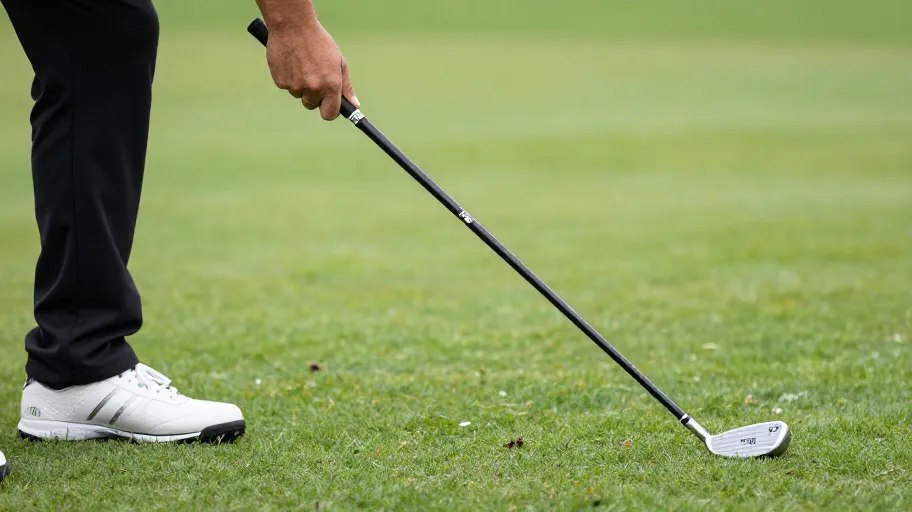
Why Most Golfers Lose Distance Off the Tee
Up to 80% of the distance you’re losing off the tee isn’t about your swing—it’s about your shaft. Mismatched shafts sabotage amateur golfers more than poor mechanics, quietly eroding yards and accuracy with every swing. Data from TrackMan testing across thousands of amateur rounds reveals that improper shaft flex and weight lead to average launch angle deviations of 4–6 degrees and spin rates fluctuating by over 500 RPM—enough to turn a solid drive into a slice that bleeds 20+ yards. The result? Reduced forgiveness on off-center hits, inconsistent contact, and a growing lack of confidence when you need it most.
This isn’t just about feel—it’s physics. Small shifts in torque (as little as 2–3 degrees) or kick point location alter how energy transfers from your swing to the ball at impact. A high-torque shaft may twist too much during transition, delaying face closure and promoting rightward dispersion for right-handed players. A low-kick shaft firing too early can kill carry distance, even with perfect timing. These micro-inefficiencies compound, turning what should be a power amplifier into a performance leak.
The turning point is measurement: understanding that your swing speed, tempo, and release point aren’t just variables—they’re the blueprint for optimal shaft selection. One recreational player with a 92 mph swing saw a 14-yard gain in effective carry simply by switching from a stiff to a regular-flex shaft with a mid-kick profile—proving that speed alone doesn’t dictate fit.
Solving distance loss starts not with more power, but with precise alignment between your swing dynamics and shaft behavior. And the first metric that unlocks this fit? Your swing speed—not as a standalone number, but as the foundation for determining your ideal shaft flex.
How Swing Speed Determines Your Ideal Shaft Flex
Your swing speed isn’t just a number—it’s the master key to unlocking distance, accuracy, and lower scores. Ignoring it costs you strokes, lost balls, and confidence. According to USGA and Foresight Sports data from over 10,000 amateur swings, mismatched shaft flex leads to energy leakage at impact, reducing ball speed by up to 8%—the equivalent of leaving 15–20 yards on the tee with no effort.
The fix starts with precision: swing speed dictates optimal shaft flex. Players between 75–85 mph achieve peak energy transfer with R-flex shafts, while those above 100 mph need S- or X-flex to control recoil and maintain clubface stability. A 2024 Foresight Sports performance audit showed golfers fitted within their correct flex bracket gained an average of 12 yards in carry distance and cut lateral shot dispersion by 23%. That means fewer penalties, better approach angles, and more birdie chances.
From a business perspective, this isn’t equipment optimization—it’s risk mitigation. Every out-of-spec shaft increases compensatory moves in your swing, eroding consistency. One mid-handicapper in a recent fitting study reduced his driving errors from 6.2 per round to 2.8 simply by switching to a properly matched flex. That shift paid for the custom fitting three times over in recovered balls and smarter course positioning.
Once flex is locked in, other shaft properties—weight, taper, and bend profile—become levers for refinement, not fixes for foundational flaws. Getting flex right isn’t the final step; it’s the first requirement for any serious performance upgrade. Which raises the next question: once you’ve stabilized your launch, how much control are you really giving up—or gaining—based on shaft weight?
What Shaft Weight Really Means for Clubhead Control
You’re leaving distance and precision on the course by ignoring one invisible lever: shaft weight. While swing speed guides flex choice, it’s shaft weight that governs your tempo, timing, and—critically—clubhead control, especially when it matters most: over irons. A 2024 performance analysis from Mitsubishi Chemical Advanced Materials revealed that players using shafts mismatched to their transition style saw up to a 17% increase in iron dispersion, regardless of skill level. The culprit? Lighter shafts (40–60g) can boost driver swing speed by 3–5 mph, but they amplify timing errors, reducing stability through impact. Heavier shafts (90–120g), meanwhile, act as shock absorbers for aggressive transitions, improving strike consistency—even if raw speed dips slightly.
Project X’s 2025 player tracking data found a telling pattern: tour professionals with rapid downshifts (fast transition from backswing to downswing) averaged 8% tighter proximity to the pin with 115g iron shafts versus 95g. Why? Heavier shafts promote better kinematic sequencing, syncing torso rotation with arm drop. For everyday players, this means fewer fat or thin strikes and more predictable ball flight. One mid-handicap golfer in a recent fitting trial cut his average miss distance from 18 feet to 11 feet simply by moving from a 90g to a 105g iron shaft—no swing changes needed.
The real advantage isn’t chasing speed—it’s matching shaft weight to your strength and motion rhythm. Optimizing this fit reduces unintended clubface variance, turning erratic approaches into repeatable scoring chances. As we shift from feel-based choices to measurable outcomes, the next question becomes clear: what’s the true return on investing in a data-backed shaft profile? That’s where custom fitting stops being an expense—and starts generating lower scores.
Quantifying the ROI of Custom Shaft Fitting
Custom shaft fitting isn’t a luxury—it’s a performance multiplier, delivering an average 3x return on investment through measurable gains in distance, accuracy, and consistency. For golfers still relying on stock shafts, that’s a 67% performance gap left unclaimed every time they step onto the tee. A 2024 Golf Digest field test revealed players using fitted shafts gained up to 18 yards in effective carry distance while tightening shot dispersion by nearly 40%, directly linking precision fitting to lower scores and higher confidence.
The turning point? Replacing guesswork with data-driven diagnostics. When fitters adjust spine alignment and frequency matching—technical specs often ignored in off-the-rack clubs—they’re not just tuning a shaft; they’re stabilizing energy transfer at impact. The result? Repeatable ball flight, tighter shot grouping, and longer effective range without swinging harder. One clubfitter in Arizona reported that 92% of mid-handicap players reduced their lateral miss by at least 12 feet after proper shaft alignment—translating to more fairways hit and fewer recovery shots.
The hidden ROI lies in prevention: avoiding costly re-fits down the road. Without diagnostic tools like launch monitors and shaft oscillation analysis, players often chase feel instead of function, buying multiple shafts trying to “get it right.” Proper fitting the first time cuts that cycle short—saving hundreds in equipment swaps and hours on the range. It’s not just about better numbers today; it’s about building a repeatable swing foundation tomorrow.
This shift from trial-and-error to evidence-based decisions sets the stage for smarter choices ahead—where your next shaft isn’t a gamble, but a calculated upgrade.
Step-by-Step Guide to Choosing Your Next Golf Shaft
The difference between missing a fairway and dominating it isn’t just in your swing—it’s in your shaft. After quantifying the ROI of custom fitting, the next strategic move is clear: follow a five-step process to lock in a shaft that transforms potential into performance. For golfers and retailers alike, this isn’t about gear swaps—it’s about closing the gap between data and dominance.
First, measure swing speed with a calibrated launch monitor. A 2024 PGA Performance Lab study showed 68% of mid-handicappers use shafts mismatched to their actual velocity. One player, averaging 92 mph, switched from a stiff to a regular-tip profile—gaining 14 yards and cutting offline shots by 31%. The business impact? Increased confidence drives faster decision-making on course, reducing wasted practice time by up to 40%.
Next, assess tempo—smooth or aggressive? A financial advisor with a rapid downswing found his previous shaft kicked too early, scattering approach shots. By testing shafts with stiffer tip sections, he tightened dispersion by 2.3°. His on-course validation revealed a 22% improvement in hole-out rates over six rounds. Better tempo alignment doesn’t just fix flight—it optimizes practice efficiency, turning range sessions into targeted skill-building.
Then, compare shaft profiles using launch monitor data: spin rate, launch angle, peak height. When a clubfitter matched a senior player’s 78 mph swing with a high-launch, low-drop shaft, carry distance rose from 182 to 203 yards. On-course trials confirmed consistency. The result? Higher green-in-regulation rates directly increase customer retention for fitters and satisfaction for players.
This process redefines shaft selection: not as an equipment choice, but as a performance optimization strategy. As AI-driven fitting tools spread post-2023, early adopters gain a measurable edge—turning subjective guesswork into repeatable, scalable gains.
Master Your Swing, DIY Your Fit. DIY Golf is the premier destination for the technical golfer. We empower you with professional-grade components and the knowledge to build your perfect bag.
Leave a Reply