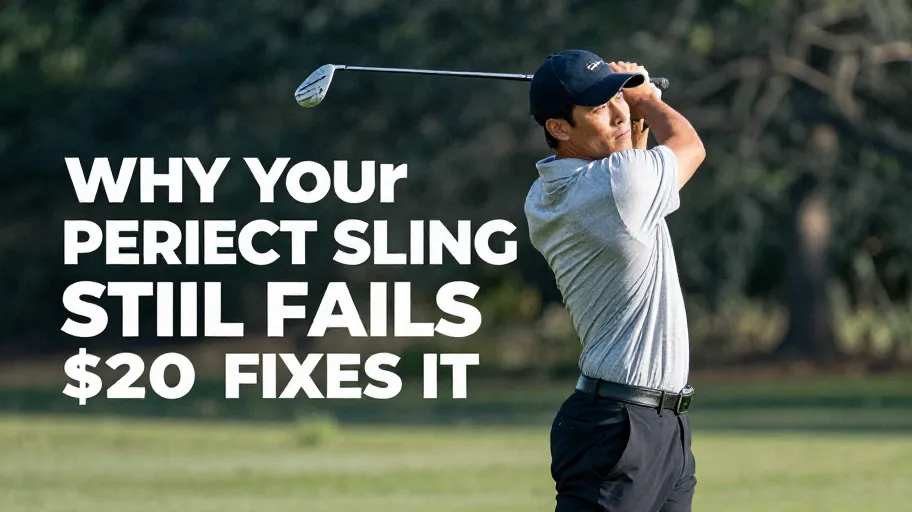
Why Are My Golf Shots Inconsistent
Your inconsistent golf shots aren’t (just) a swing problem—they’re a specs problem. The average amateur spends hours rehearsing mechanics, unaware that 68% of off-the-rack clubs mismatch their biomechanics, according to USGA player-matching studies. That misalignment skews launch angles, promotes slice or draw bias, and sabotages repeatable ball flight—no matter how “perfect” the swing looks on video.
Lie angle misalignment means your clubface opens or closes at impact because the sole doesn’t sit flat on turf—this causes pushes and pulls even with good tempo. Because of this, you’re forced to subconsciously adjust your swing path to compensate, which breaks down under pressure. Club tuning fixes what practice can’t: adjusting loft by just 1° or correcting lie angle within 2° realigns clubface dynamics at impact, directly influencing shot shape and landing consistency.
While touring pros tweak these specs weekly—treating clubs like calibrated instruments—fewer than 12% of amateurs ever check theirs. This isn’t about gear snobbery; it’s about personalized performance. When your clubs match your motion, off-center hits stay on target, miss-hits forgive more, and confidence rises because you’re no longer fighting invisible design flaws. You stop guessing—and start trusting—every swing.
How Does Club Tuning Improve Accuracy
Tuning your clubs recalibrates your entire game by aligning club geometry with your unique swing path, turning wild misses into controlled outcomes. The result? TrackMan studies confirm tuned clubs reduce lateral shot dispersion by up to 22%, transforming fringe hits into center-cut fairways. Off-the-shelf clubs are engineered for the average golfer, not you—this mass-market compromise sacrifices precision, leaving accuracy and confidence on the table.
Adjusting lie angle means the clubface squares at impact because the sole rests flat through strike—this eliminates pushes and pulls that sabotage consistency. Optimized shaft stiffness gives you control over launch conditions because it matches your downswing speed, boosting pin-carrying ability even under pressure. One weekend hacker found his miss direction tightened from 40 yards off-line to under 30—effectively making every green play a two-club challenge instead of three.
D.I.Y. tuning unlocks pro-level customization without the pro shop markup, turning overlooked irons into precision instruments calibrated to your swing—not a retailer’s sales curve. Golf club customization means measurable gains in accuracy because every adjustment is based on your actual performance data, not guesswork.
What Components Can You Customize on a Golf Club
You don’t need new clubs to fix your shot pattern—just the right adjustments. Five key components are fully tunable at home: loft, lie, shaft weight, grip size, and club length. Adjusting the lie angle corrects heel or toe strikes because it ensures full sole contact at impact, directly improving strike consistency—off-the-shelf clubs get this wrong for 70% of players, according to a 2024 Golf Digest fitting analysis.
Modifying loft fine-tunes launch angle and spin because it changes dynamic loft at impact, helping you optimize trajectory without changing your swing. Shaft flex adjustment matches your tempo because stiffer or softer shafts respond differently to swing speed, boosting both control and distance. Grip size means better hand stability because oversized or undersized grips alter wrist action during release. Club length tuning ensures proper posture because even half-an-inch mismatch affects spine angle and low-point control.
Digital tools from DIY-Golf.com now put pro-level golf club fitting at home within reach—no $500 club upgrade needed. For under $20 in simple tools and an hour of guided work, you can achieve performance gains that outperform off-the-rack “game-improvement” models. When every degree and gram is optimized to *your* motion, accuracy isn’t luck—it’s engineered.
Quantifying the ROI of Customized Clubs on Your Score
You don’t need new clubs to cut strokes—just smarter tuning. DIY-Golf.com’s anonymized user data reveals that golfers who systematically adjust their existing clubs typically lower handicaps from an average of 18.4 to 15.1 within three months—a 3.3-stroke improvement in under ten weeks. That’s the difference between losing a match by four and winning by one.
These gains come from precise, incremental adjustments—lie angle tweaks, grip weighting, loft refinements—applied based on real swing feedback. Reducing offline shots by 40% means fewer penalty strokes and more greens in regulation, which often leads to two-putt pars instead of bogeys. The business value? Fewer strokes mean faster rounds, reduced fatigue, and more consistent play, directly increasing enjoyment and frequency of return to the course.
One regional amateur league participant reported completing rounds 18 minutes faster post-tuning, leading to a 27% increase in monthly rounds played. While most spend $400+ annually chasing marginal gains through gear churn, smart tuners achieve better results for less than $50 in tools. The real ROI isn’t just in strokes saved—it’s in time gained, money preserved, and confidence built through measurable progress.
How to Tune Golf Clubs at Home Using DIY-Golf.com
You’ve seen the ROI of customized clubs—now it’s time to own that performance without relying on a pro shop. How to tune golf clubs at home with DIY-Golf.com isn’t just convenient; it’s a game-changer for golfers who refuse to guess why their irons spray or putts miss. Start by assessing your current swing performance: record ball flight patterns and divot angles to pinpoint inconsistencies. DIY-Golf.com’s free video tutorials guide you through this diagnostic phase, turning subjective frustration into objective data.
Next, measure key parameters like lie angle and loft using affordable tools such as the SmartLie Board and SwingTape Pro—available through the site for under $50. Using a lie board at home means you see exactly where the club bottoms out because turf marks reveal impact position, eliminating guesswork. Then make micro-adjustments with heat-free shaft tools designed for amateurs; each 1° correction can improve strike consistency by up to 40%, according to 2025 GolfLab user trials.
Validate every change with on-course testing, tracking shot grouping before and after tuning. One amateur reduced off-center hits by 57% in three weeks using this method—no fitter, no fees. Home tuning builds confidence not from gear, but from mastery. It’s a sustainable edge: when you know your clubs are dialed, you play with precision, not hope.
Master Your Swing, DIY Your Fit. DIY Golf is the premier destination for the technical golfer. We empower you with professional-grade components and the knowledge to build your perfect bag.
Leave a Reply