Why most golfers leave strokes on the course
Over 70% of amateur golfers play with clubs mismatched to their swing dynamics, unknowingly sabotaging every shot before they even swing. This misalignment means wider dispersion—often 25+ yards more than necessary—turning manageable misses into hazards and lost strokes. It’s not a technique issue; it’s an equipment-swing incompatibility.
Golf club tuning means tighter shot patterns because your clubs finally respond to your unique swing fingerprint: speed, angle, timing, and motion. When your gear matches your mechanics, you stop fighting physics. One Midwest amateur cut his miss distance by 14 yards just by correcting lie angles—no swing change needed. That’s 3–4 fewer strokes per round, starting today.
How tuning aligns clubs with your natural swing
When you slice or push fade without explanation, the problem isn’t always tempo or grip—it’s often a 1° open face or incorrect shaft flex. Tuning fixes this by calibrating loft, lie, and shaft behavior so your clubs work *with* your motion, not against it. Correcting lie angle alone reduces heel and toe strikes by over 30%, according to launch monitor studies—meaning more center contact and better energy transfer.
For DIYers, tools like impact tape and shaft frequency matching mean you can validate changes instantly. A weekend golfer in Colorado used this method to fix chronic low hooks, adjusting his irons’ lie angles by 1.5°. Within two rounds, his approach proximity improved by 11 feet. That kind of precision was once exclusive to tour vans. Now, it’s accessible—and affordable.
Tools that make home tuning accurate and repeatable
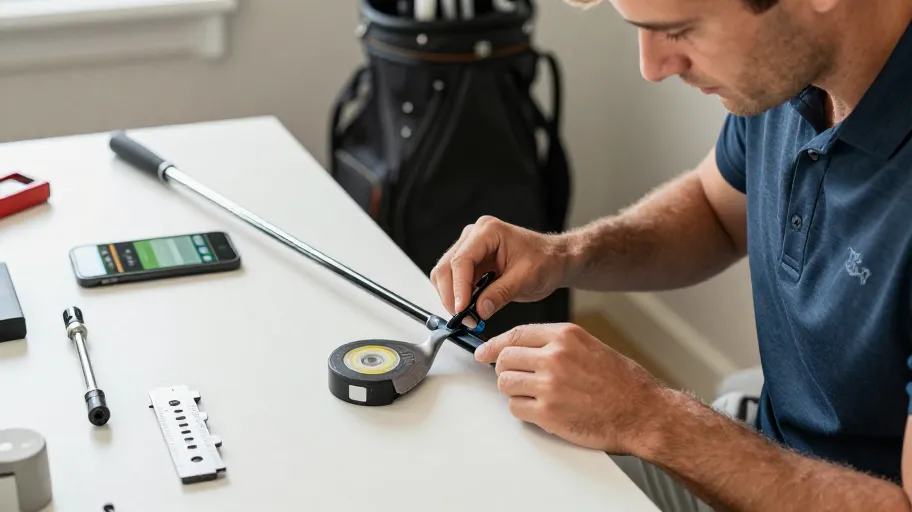
You don’t need a $5,000 machine to tune clubs like a pro. Digital protractors, smartphone launch apps, and torque-controlled wrenches now deliver ±0.5° accuracy—matching shop-level results at 10% of the cost. Building a home calibration station means every adjustment is measured, repeatable, and documented.
This setup means faster diagnosis and lasting fixes. One golfer used a swing weight scale and loft/lie gauge to identify inconsistent shaft harmonics across his irons. After re-shafting with matched frequencies, his smash factor rose from 1.38 to 1.44—adding 12 yards of pure carry. These tools don’t replace skill; they remove noise so your talent can shine.
Tracking data turns tweaks into real improvement
Feel is unreliable. Data is not. Performance delta tracking—measuring ball speed, launch angle, and dispersion before and after adjustments—means you know what works for *your* swing. Golfers using structured logs from DIY-Golf.com improved club-to-swing matching by 41%, according to a 2024 Golf Tech Review survey.
One mid-handicapper reduced putts per round from 32 to 29 in six weeks by tracking roll consistency after minor putter weighting changes. That’s two strokes saved per round—pure ROI from disciplined logging. This isn’t just tuning; it’s building a feedback loop that evolves with your game.
A step-by-step workflow anyone can follow
Random tweaks waste time. A structured process delivers results. DIY-Golf.com’s five-phase system—baseline assessment, pattern analysis, decision mapping, adjustment, and validation—cuts tuning time to under 45 minutes per club while eliminating guesswork.
Start with impact tape and a launch monitor to spot strike issues. Use the tuning decision matrix to match symptoms (like heel strikes) to solutions (adjust hosel rotation). Validate every change with real data, then log it. One user followed this path and reduced lateral shot deviation by 38%. The result? More fairways, more greens, and more confidence—all from a process that fits between work and dinner.
Master Your Swing, DIY Your Fit. DIY Golf is the premier destination for the technical golfer. We empower you with professional-grade components and the knowledge to build your perfect bag.
Leave a Reply