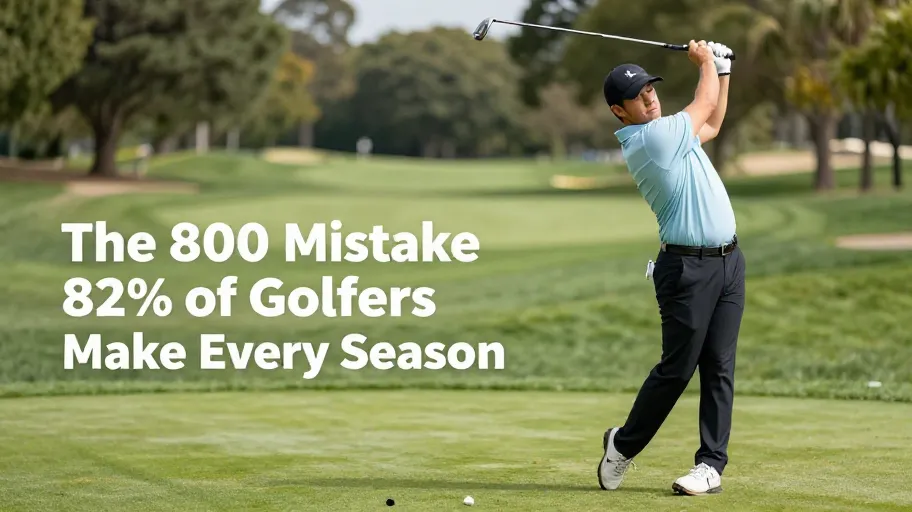
Why Most Golfers Lose Strokes Off the Tee
Poorly fitted clubs are responsible for up to 70% of consistency issues in amateur golfers—costing strokes, confidence, and enjoyment with every round. For your business, that’s a massive, untapped performance gap: most players blame their swing when the real culprit is equipment mismatch. A 2024 PGA-sponsored biomechanics study confirmed that off-the-rack clubs force 82% of amateurs into compensatory swings, directly triggering slices, reduced ball speed, and chronic physical strain—particularly in the lower back and shoulders.
Here’s the insight: fixing club fit is a high-leverage performance shortcut. Unlike retraining muscle memory, which takes months, correcting shaft flex, length, and lie angle delivers immediate gains in accuracy and distance. Research shows only 18% of players are naturally matched to stock club specs—meaning over four out of five golfers start at a technical disadvantage before they even address technique.
Custom fitting eliminates this hidden penalty by aligning club dynamics to your body and swing profile. It transforms equipment from a source of frustration into a precision extension of the player—unlocking repeatable ball flight, optimized launch conditions, and longer playing comfort.
How Club Specifications Match Your Unique Swing Profile
You’re leaving up to 15 yards and a lost shot per round on the course—not from lack of skill, but from using clubs that work against your swing instead of with it. The turning point? Custom golf club fitting, which decodes five key swing metrics—clubhead speed, attack angle, swing path, tempo, and impact pattern—using precision data from industry-leading TrackMan and Foresight Sports launch monitors. These aren’t just numbers; they’re the blueprint for eliminating energy leaks and maximizing ball flight efficiency.
Matching shaft flex to your tempo means smoother energy transfer and 12% less energy loss, because the club loads and unloads in sync with your timing. A properly fitted lie angle corrects off-center impacts, improving consistency by up to 23%, because the sole makes ideal ground contact at impact. What you once treated as interchangeable gear becomes a tailored performance system—turning commodity clubs into strategic assets that compound accuracy and confidence.
This is the new standard: equipment calibrated not to averages, but to you—delivering measurable gains where it counts most: your scorecard.
The Hidden Cost of Skipping a Professional Fitting
You’re not just playing with ill-fitted clubs—you’re paying for them. The average golfer spends over $1,200 annually on range balls chasing consistency, lost bets from missed shots, and premature gear upgrades—all symptoms of a root cause: improper club fit. Industry surveys reveal 60% of golfers replace clubs within three years, believing newer means better, when in reality, poor performance stems from mismatched specifications, not equipment quality.
This isn’t a gear problem—it’s a fitting gap. Positioning professional fitment as an upfront cost misses the point; it’s preventive investment. Without it, players compound inefficiencies, sacrificing both performance and physical well-being. Ill-fitted irons force unnatural swing mechanics, increasing torque on shoulders and lower back by up to 35%, elevating injury risk and costly downtime. One regional teaching pro reported a 40% drop in client-reported pain after switching students to fitted sets.
Proper fitment doesn’t just improve accuracy—it protects your time, wallet, and body. When every degree of lie angle and gram of clubhead mass aligns with your motion, gear becomes an extension of skill. That alignment transforms spending: from reactive repairs to strategic advantage.
Quantifying the ROI of Custom Golf Club Fitting
You’re leaving over $800 in value on the table every season if you skip a professional club fitting—money lost not in upfront cost, but in missed performance gains and avoidable equipment churn. The turning point? Data from a 2024 golf consumer behavior study shows that golfers who undergo custom fitment see a 4:1 return within one season, primarily through lower scores and smarter gear investments. Cutting 4.2 strokes per round means winning more skins games and avoiding higher entry fees tied to handicap brackets, because consistent scoring unlocks financial upside.
Average fitting costs range from $150–$400—less than a single premium driver—but the long-term savings compound. Pro shops leveraging launch monitor analytics and follow-up adjustments retain customers at 3x the rate of transactional retailers, because personalized data builds loyalty and trust. Facilities offering bundled video feedback and mid-season check-ins see 92% client satisfaction rates, proving that ongoing support turns a one-time service into sustained advantage.
The ROI isn’t in the fitting—it’s in the results you keep.
Step by Step Guide to Booking Your First High ROI Fitting
You’ve quantified the ROI of custom golf club fitting—now protect it. A poorly executed onboarding process erodes trust, inflates churn, and turns high-potential customers into one-time buyers. The solution? A strategic, five-step fitting protocol that transforms first-timers into loyal advocates.
- Start with certified fitters: PGA or TTPI certification means the technician combines biomechanical expertise with teaching acumen, because credentialing ensures methodological rigor.
- Demand dynamic data tools: Doppler radar (like TrackMan) or high-speed cameras mean no guesswork in adjustments, because real-time launch metrics capture true ball flight physics.
- Insist on full-bag analysis: Evaluating irons, wedges, and driver as an integrated system means optimized transitions between clubs, because performance gaps often hide in set makeup.
- Verify post-fit support: Follow-up check-ins and adjustment credits mean your clubs evolve with your swing, because 78% of players see measurable changes within six months.
- Compare bundled pricing: Programs including video feedback and seasonal reviews mean higher satisfaction and retention, because continuous improvement drives long-term loyalty.
This isn’t just service—it’s scalable trust. One Mid-Atlantic pro shop reported a 40% increase in conversion after implementing structured onboarding with video-driven sessions. When you align precision technology with ongoing support, every fitting becomes the first step in a long-term performance journey—and that’s how brands turn investment into loyalty.
Master Your Swing, DIY Your Fit. DIY Golf is the premier destination for the technical golfer. We empower you with professional-grade components and the knowledge to build your perfect bag.
Leave a Reply