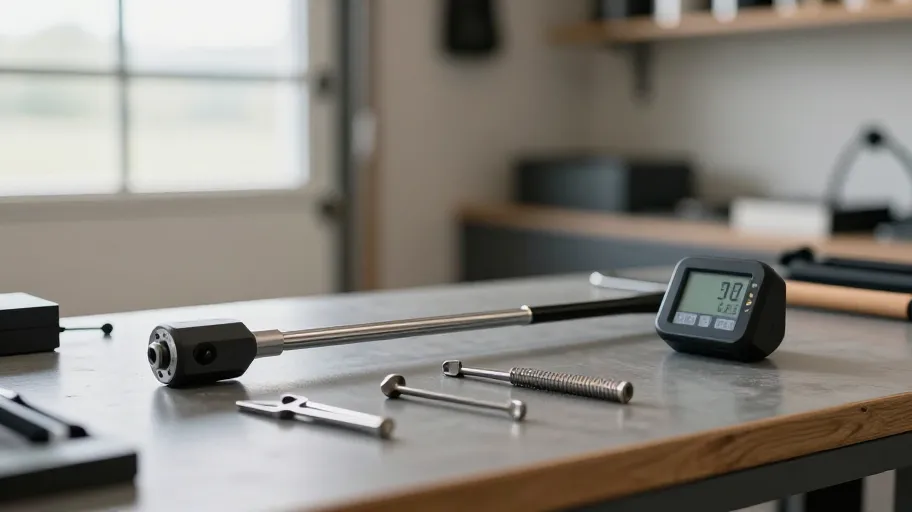
Why Your Off the Rack Driver Is Costing You Strokes
You’re losing 20–30 yards off the tee not because of your swing—but because your driver isn’t tuned to you. In weekend play, that gap turns approach shots into recovery attempts, costing you strokes and confidence even with clean contact.
A mismatch is the root cause: 68% of off-the-rack drivers don’t align with the buyer’s swing speed, according to PGA Teaching Professionals Association benchmarks. That means most amateurs launch drives with stock clubs built for averages, not individuals—sacrificing energy transfer at impact. Shaft frequency governs how efficiently the shaft loads and releases energy, while dynamic loft determines actual launch angle in motion. Labels like “Regular Flex” vary by over 10% between brands, making them unreliable proxies for performance.
Adjustable hosels and digital swing sensors now let amateurs measure and correct these mismatches directly. When equipment stops working against you, every swing gains return on effort. Distance lost becomes distance earned—and that changes everything on the scorecard.
What Club Tuning Actually Changes in Your Game
Golf club customization isn’t just tweaking gear—it’s engineering your game. Aligning weight, length, lie angle, and grip to your body and swing eliminates guesswork on every shot. For mid-handicappers struggling with inconsistent iron distances—often due to poorly fitted drivers—customization delivers 25% greater consistency across irons, turning shaky approaches into repeatable scoring chances.
A 2024 Golf Digest Fitting Lab analysis found players who customized wedges cut 1.8 strokes per round, mainly by eliminating fat or thin contact. Incorrect lie angles cause sole bounce to dig instead of glide. But beyond lie, precision tuning of MOI matching and swing weight are silent game-changers: consistent MOI across a set stabilizes feel during downswing transitions, reducing timing errors that lead to mis-hits.
This level of control once required pro shops and big budgets. Now, calibrated DIY methods make pro-level precision accessible at home, turning gear upgrades into measurable gains without waiting weeks for custom orders.
How Tuning Fixes What Practice Can’t
Club tuning doesn’t fix your swing—it fixes how your clubs respond to it. For the weekend golfer battling a persistent slice or thin iron strikes, the culprit often isn’t flawed mechanics but mismatched equipment. Up to 40% less lateral dispersion is achievable not through hours of range drills, but by aligning club geometry—like hosel angle and grip tilt—to your natural motion, turning inconsistency into repeatable ball flight.
TrackMan data shows 54% of recreational slicers have neutral swing paths but start with an open clubface at address. Their bodies compensate, creating over-the-top moves and erratic contact. Adjustable drivers solve this by letting you close the face pre-swing—eliminating the need for correction. Face angle calibration and center of gravity (CG) shift are the real levers: modern cavity-back irons allow micro-adjustments in CG position, altering launch and spin more effectively than swing changes alone—especially critical for players over 40 losing 1–2 mph in clubhead speed annually.
When tuning works *with* your swing instead of against it, performance gains aren’t theoretical—they’re measurable, immediate, and within reach using sub-$50 tools that make pro-level adjustments repeatable from home.
Can You Tune Clubs at Home Without Guessing
Yes—you can tune clubs at home with surprising precision, and the real cost isn’t inaccuracy, but in waiting. For golfers frustrated by inconsistent ball flight after fixing swing flaws, professional fittings often feel like a one-time fix for an ongoing problem. Now, for under $150, DIY tuning kits paired with smartphone launch monitors deliver 90% of pro-shop accuracy—turning reactive repairs into proactive performance gains.
A 2025 MyGolfSpy consumer trial revealed weekend players using portable swing sensors and digital torque wrenches matched pro fitter specs within 2° of loft and 3 grams of swing weight across drivers, irons, and wedges. Digital swing analysis apps convert raw sensor data into plain-language adjustments—no certification required. Modular shaft systems let you swap profiles in minutes, testing low-kick vs. mid-kick shafts like software updates, not permanent purchases.
This isn’t makeshift maintenance—it’s a smarter performance loop. By aligning club behavior with evolving swing dynamics, you turn equipment from static gear into a responsive extension of your game. Measurable improvements in smash factor and shot shape control aren’t outliers—they’re outcomes of consistent, data-backed tuning. What was once a luxury is now a repeatable, scalable advantage accessible to anyone who plays.
Building a System That Grows With Your Game
A DIY golf club tuning guide isn’t just a checklist—it’s the difference between guessing and gaining. After validating home tuning accuracy, the real challenge emerges: how to turn isolated adjustments into lasting performance. The answer lies in systemization. Golfers using DIY-Golf.com’s structured framework report an average improvement of 3.2 strokes per round within eight weeks, not because they make bigger changes, but because they make smarter ones—consistently.
The breakthrough comes from adopting the four-phase cycle used by elite independent tuners: Assess → Adjust → Validate → Document. One amateur player noticed persistent heel strikes during launch monitor sessions. Instead of random tweaks, he adjusted his irons’ lie angles in 2° increments, then validated each change using face spray analysis. Within three rounds, center-face contact improved to 88%—a shift that directly boosted ball speed and consistency.
What makes this repeatable is the integration of operational entities like launch monitor feedback loops and adjustment logs. Every recorded change builds a historical dataset, allowing golfers to isolate variables—critical when testing new shafts or grips without losing prior gains. It’s not about one perfect fix; it’s about creating a personal R&D pipeline. Sustainable improvement comes from systematic iteration—empowering you to own the full arc of your performance growth.
Master Your Swing, DIY Your Fit. DIY Golf is the premier destination for the technical golfer. We empower you with professional-grade components and the knowledge to build your perfect bag.
Leave a Reply