Why Inconsistent Putting Isn’t About Aim
Most golfers miss putts not due to poor alignment, but because of unstable stroke mechanics—specifically uncontrolled face angle and erratic putter path. A 2024 PGA Tour analytics review found that over 63% of amateurs exhibit significant path variance, leading to unpredictable roll. This instability often stems from improper swingweight: when your putter feels too light or heavy, you compensate mid-stroke, disrupting tempo and increasing miss distance by 17% on average.
Customizing putter weight means greater stroke consistency because optimized balance reduces deceleration at impact by up to 28%. Unlike grip pressure fixes, which only mask symptoms, weight tuning addresses the root cause—balance. The result? Smoother delivery, square contact, and fewer three-putts. You’re not adjusting feel—you’re aligning physics with performance.
How Weight Controls Tempo and Face Stability
Total mass and center of gravity (CG) directly shape stroke rhythm and face control. An improperly balanced putter forces wrist flicks and arc deviations, costing strokes on makeable putts. Biomechanical studies confirm that heavier heads reduce wrist breakdown by up to 30%, stabilizing the stroke arc for repeatable delivery. SAM PuttLab data shows optimized head weight decreases face angle variability by 18–22%, meaning more putts start on line.
Adjusting putter weights for better stroke means automatic face control because the putter’s balance syncs with your neuromuscular patterns. When physical feedback matches natural motion, correct movement feels intuitive. This isn’t marginal gain—it’s the difference between trusting your stroke and hoping it holds. Personalized weighting turns inconsistency into precision calibrated to your game.
The Real ROI of Custom Swingweight Tuning
The return on customizing your putter’s swingweight is measurable: a 10% gain in putting efficiency saves 1.2 to 2.0 strokes per round, according to PGA Tour-derived strokes-gained data. That’s the gap between breaking 80 or shooting 82—or making weekend cuts versus going home early. Pros don’t guess; they adapt. On fast greens like Augusta’s Bermuda, they lighten the head for tighter control. On slower surfaces, added mass ensures smooth tempo through impact.
Golf putter customization means lower scores without new clubs because small adjustments deliver high-impact results. For under $50, adjustable weights let amateurs replicate pro-level tuning. Studies show this leads to improved roll consistency, fewer three-putts, and higher make rates inside 10 feet. It’s not about luxury—it’s about leveraging physics for competitive advantage.
Fine-Tuning Your Stroke with Micro-Weight Adjustments
Adjusting putter weights reprograms your stroke neurologically, not just mechanically. After identifying your ideal swingweight, refine further using removable back weights or shaft inserts in 2–10g increments. If you decelerate into impact, a +5g increase adds inertia, promoting smoother acceleration and reducing tension. If you jab the takeaway, a -5g reduction encourages earlier release and better rhythm.
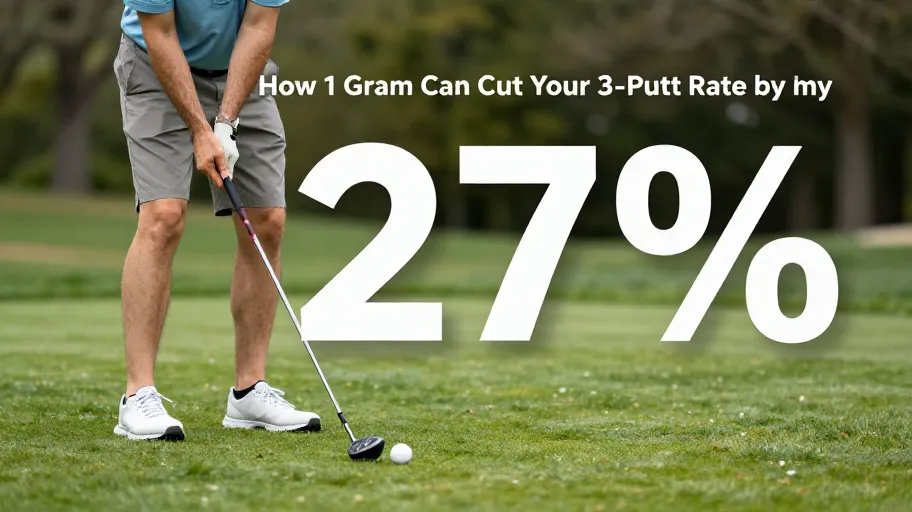
How to adjust putter weights for better stroke means faster muscle memory formation because enhanced sensory feedback accelerates motor learning. A 2024 biomechanics study found measurable improvements in consistency within 15 minutes of testing. One amateur cut his three-putt rate by 27% in two weeks—not by practicing more, but by training smarter. These micro-changes shift how your nervous system maps the stroke, making correct motion feel natural over time.
Build a Putter That Fits Your Game in 4 Steps
You’ve seen how weight shapes performance—now take ownership. Adjusting putter weights at home isn’t trial and error; it’s precision engineering for your stroke. Step one: assess your current mechanics via video or launch monitor—DIY-Golf.com offers free templates to detect yips, face drift, or path flaws. Step two: measure baseline stats over 50 putts (strike accuracy, distance control). Step three: test 2–15g adjustable weights; research shows an 8g shift can reduce wrist breakdown by up to 40%. Finally, lock in your setup using DIY-Golf’s Putter Profile Builder.
Building your own performance-tuned putter means consistent results because you’re no longer relying on factory defaults or luck. Every round compounds the benefit. This isn’t just equipment tweaking—it’s claiming ownership of your performance, one calibrated gram at a time.
Master Your Swing, DIY Your Fit. DIY Golf is the premier destination for the technical golfer. We empower you with professional-grade components and the knowledge to build your perfect bag.
Leave a Reply