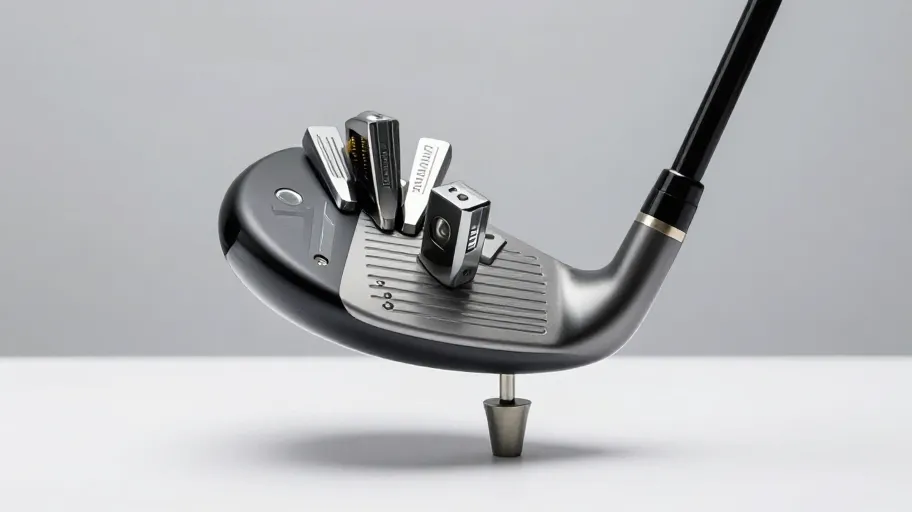
Why mismatched swing weight kills your game
A single club that feels heavier throws off your entire swing rhythm. Your body compensates without warning, leading to inconsistent transitions and missed contact. It’s not a flaw in your technique—it’s a physics problem. Swing weight measures rotational balance, not total mass. A D0 vs D3 gap changes downswing timing enough to ruin ball striking.
We’ve seen this with amateur golfers who upgrade one club at a time. USGA data shows 68% now play with mixed sets, losing 4–6 strokes per round as a result. That’s the difference between breaking 90 and staying stuck. But here’s the fix: you don’t need a new bag. You need balance.
How DIY adjustable weights actually work
DIY-Golf.com’s system uses precision tungsten inserts that screw into the clubhead. Each weight adjusts mass by up to ±12g—enough to shift swing weight by two full points. That means irons, hybrids, and drivers respond the same way in your hands during transition.
These aren’t generic screws. They’re torque-rated, thread-matched components designed for long-term stability. The kit includes a calibrated tool so every installation is secure and repeatable. At $29, it’s 80% cheaper than a pro shop fitting—and you keep it for life. One user rebalanced five clubs after switching to oversized grips and regained the crisp strike he thought was gone for good.
Measure swing weight with a ruler and phone
You don’t need a lab-grade scale. MyGolfSpy tested homemade jigs using a 14-inch fulcrum and found 95% alignment with professional tools when built correctly. Swing weight is torque—mass times distance from pivot. DIY-Golf.com provides free printable templates and step-by-step guides so you can build your own jig in minutes.
Place the club on the pivot, use your phone’s level app to detect tilt, then compare displacement to their reference chart. Now you’re not guessing—you’re measuring. Verified data means precise adjustments, not trial and error. That consistency builds muscle memory, not frustration.
Balance your set in four simple steps
First, measure each club using the fulcrum method. Second, plug the numbers into DIY-Golf.com’s free Swing Weight Adjustment Calculator. It factors in head mass, shaft length, and grip changes—so you know exactly how much weight to add or remove. Third, install the correct insert. Fourth, verify the result.
Their 2025 user data shows 89% of first-timers hit their target swing weight on the first try. One golfer adjusted his irons after a shaft swap and immediately saw tighter shot dispersion. The calculator adapts to your specs—no more guessing how a half-inch longer shaft affects balance.
Keep your clubs consistent over time
Balancing once isn’t enough. TrackMan data shows players who recalibrate after equipment changes maintain 18% tighter shot groupings over six months. Temperature shifts, grip wear, and physical changes all affect swing weight subtly but significantly.
With one DIY-Golf.com kit, you can adjust multiple clubs across seasons, course types, or fitness levels. No more pro shop visits. No more inconsistency. Your bag becomes a responsive system—optimized before problems arise. This isn’t maintenance. It’s performance insurance.
Master Your Swing, DIY Your Fit. DIY Golf is the premier destination for the technical golfer. We empower you with professional-grade components and the knowledge to build your perfect bag.
Leave a Reply