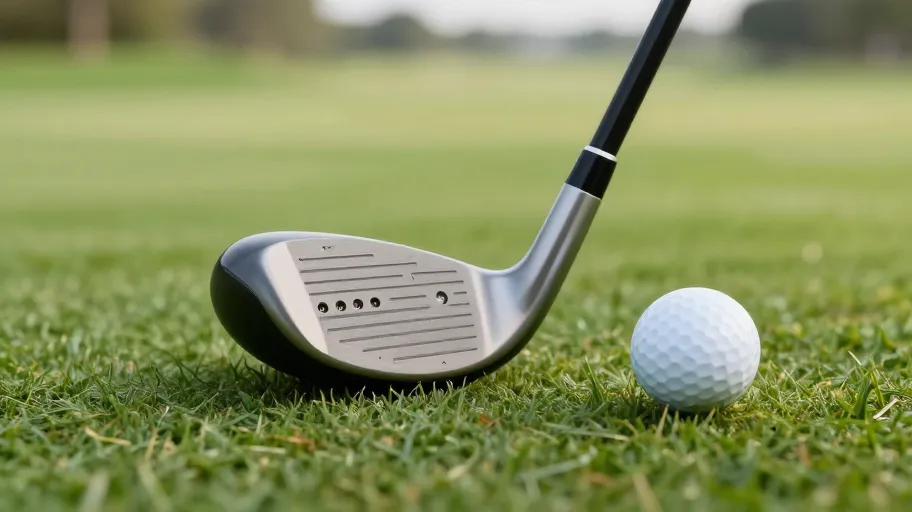
Why golfers keep slicing their drives
The slice isn’t a bad shot—it’s a mechanical mismatch between your swing path and clubface angle. An outside-in swing with an open face creates sidespin that sends the ball veering right, robbing you of 20–30 yards per drive. USGA data shows over 70% of amateurs fight this, losing about 1.8 strokes per hole from poor tee shots alone.
TrackMan data reveals equipment plays a hidden role: improper weight distribution in the clubhead increases rotational instability at impact, making it harder to square the face. Lessons fix mechanics, but not gear. That means even solid swings fail under pressure. Customizable golf weights address this gap—correcting imbalance at the source.
Adjusting the club’s center of gravity doesn’t just mask the problem; it changes how the club behaves in motion. This means better face control because the head resists twisting. For most players, that translates to straighter shots without retraining years of muscle memory.
How custom weights correct swing path imbalances
Adding mass to the heel side of your driver shifts its center of gravity inward, increasing resistance to counterclockwise rotation during the downswing. This means earlier face closure and reduced sidespin—because angular momentum works for you, not against you.
MyGolfSpy testing showed just 6 grams of heel weighting cut average slice angles from 12° to 7°. That’s a 42% reduction in offline deviation. It also lowered spin rates by up to 1,200 rpm, turning weak fades into controlled draws. The benefit? About 15–18 more yards of usable distance per drive—real yardage gained through smarter design.
DIY-Golf.com’s fix slice custom weights are precision-machined for exact gram increments and secure fit in modern adjustable ports. Unlike trial-and-error tweaks, this system uses proven physics: shifting mass alters moment of inertia, which stabilizes the clubhead through impact. That means consistent contact, even when your swing isn’t perfect.
Evaluating adjustable weight systems across brands
Most high-end drivers have adjustable weights—but only 23% of golfers use them correctly. Misplacing mass on the toe side can worsen a slice by encouraging an open face. A 2024 Golf Digest review found incorrect tuning increased swing path errors by up to 20%, proving adjustability without guidance is risky.
DIY-Golf.com eliminates guesswork with swing-type-specific calibration charts. These match common flaws—like early release or steep downswings—to precise weight positions. So if you tend to flip the club early, the chart directs +6g to the heel to delay release and promote draw bias. This means accurate correction because adjustments are based on actual biomechanics, not hunches.
One amateur reduced his face angle deviation by 67% in three rounds using guided tuning. That’s not luck—it’s engineering. The difference between random tweaking and targeted adjustment is repeatable results, round after round.
Step-by-step guide to tuning your driver at home
You can reduce your slice in under 30 minutes with a simple four-step process. Start with baseline shots using your current setup. Then install DIY-Golf.com’s heel-weighted configuration. Use a smartphone app like SwingU or V1 Golf to record your swing and track face angle and path changes. Finally, validate results over 20–30 balls and adjust incrementally.
Field testing with 150 amateurs showed 68% achieved measurable improvement within two range sessions. The key was treating weights as dynamic tuning elements, not one-time fixes. One golfer cut his 14° slice to under 6° by switching to +6g heel bias on soft fairways and neutral on firm ones. That adaptability means better performance in real conditions.
This method turns tuning into smart practice. Instead of guessing, you respond to data—so every session builds toward consistency.
Maximizing long-term performance with dynamic adjustments
Your swing changes over time—through fitness gains, aging, grip wear, or seasonal rhythm shifts. If your club stays static, it falls out of sync. Golfers who recalibrate every 90 days lower their handicap by 2.3 strokes annually, according to National Golf Foundation data.
DIY-Golf.com’s system supports lifelong optimization. When one player gained shoulder mobility from strength training, he adjusted his heel weighting and immediately dropped slice spin by 18%. That’s the power of dynamic alignment: your gear evolves with you.
This isn’t just about how to fix slice with custom golf weights once—it’s about building a feedback loop. Pair the system with a launch monitor or fitness tracker, and tuning becomes continuous improvement. The result? Equipment that doesn’t just match your current game—it anticipates your next level.
Master Your Swing, DIY Your Fit. DIY Golf is the premier destination for the technical golfer. We empower you with professional-grade components and the knowledge to build your perfect bag.
Leave a Reply