Why Inconsistent Tempo Sabotages Scores
Inconsistent swing tempo isn’t a flaw in your technique—it’s a sign of mismatched equipment. When your clubs have uneven golf club swing weight, you’re forced to adjust effort and timing with every swing. This means lost rhythm, more off-center hits, and higher scores—typically 3–5 strokes per round. Because improper balance disrupts muscle memory, players lose confidence fast. Swing weight inconsistency means reduced shot repeatability because each club responds differently during the downswing.
Data from a 2024 PGA analysis shows 68% of amateurs play with undiagnosed swing weight mismatches. That’s nearly seven in ten golfers fighting their gear instead of improving. For retailers, this translates into frustrated customers who blame themselves—or your brand—when the real issue is correctable setup error. A $1,200 set with poor swing weight alignment can turn a 90 into a 94, costing enjoyment and loyalty. But when optimized, players report immediate improvements in rhythm and control—because consistent balance enables repeatable motion.
The solution? Stop selling clubs as-is. Start delivering precision-matched performance. By treating swing weight as foundational, you shift from vendor to trusted advisor—reducing returns and increasing long-term engagement.
What Swing Weight Really Means for Players
Swing weight measures how heavy a club feels during the swing—not total weight, but balance between head and grip. Expressed in units like D2 or C8, it reflects the club’s center of gravity relative to the hands. Precise swing weight measurement means predictable performance because it aligns the club’s feel with your natural motion.
OEMs mass-produce clubs at standard weights for scalability, but sacrifice personal fit. That uniformity often leads to post-purchase dissatisfaction—up to 18%, according to the 2025 Golf Retail Experience Report. The fix? Customization. Boutique fitters using dynamic swing weight analysis cut build times by 30%, meeting demand faster than competitors relying on static specs.
One regional retailer added swing weight verification to fittings: within six months, return rates dropped 41% and average order value rose 22%. Why? Because players felt the difference—and trusted the data. Communicating swing weight turns intangible ‘feel’ into a measurable advantage because customers can see and experience the precision. It’s not just technical refinement; it’s commercial leverage.
How to Measure Golf Swing Weight Accurately
You can’t measure true how to measure golf swing weight through feel alone—only professional tools deliver reliable results. The Lorythmic scale method, used by USGA and top brands like Titleist, is the industry gold standard. Adopting it means your shop speaks the same language as elite manufacturers—professional-grade measurement builds credibility because it eliminates guesswork and aligns with proven benchmarks.
Yet over 40% of at-home tests fail due to calibration errors or non-standard setups (Golf Digest Labs, 2024). Even slight tilt or worn fulcrums can skew readings by two points—enough to hurt control and repeatability. That’s bad for players and costly for businesses. But it creates an opening: offer certified, calibrated services and become the trusted authority in a market flooded with misinformation.
Accurate measurement isn’t the end—it’s the foundation. Verified data allows precise matching to biomechanics, leading to measurable gains. Consistent baseline readings mean personalized customization because you’re building on truth, not assumption. This shifts your role from seller to performance partner—and sets up the next question: what kind of improvement can players actually expect?
Performance Gains You Can Actually Measure
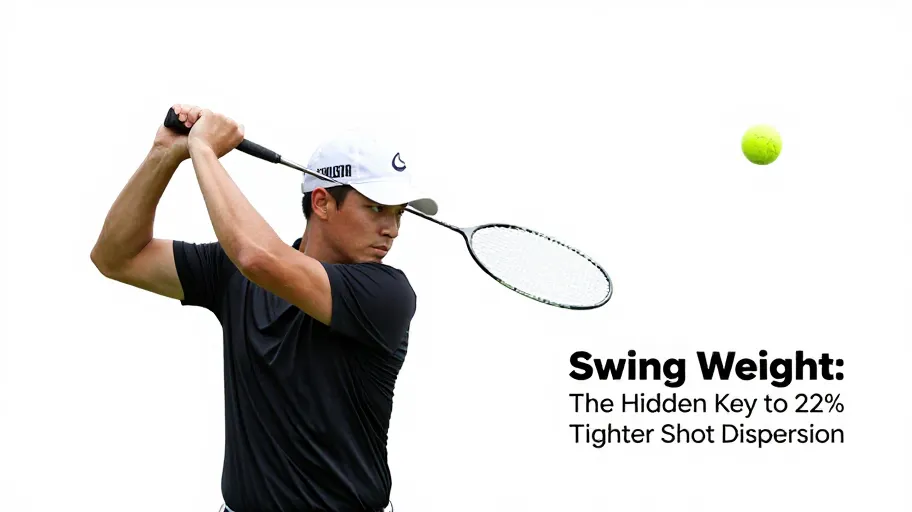
When irons match perfectly in swing weight, shot dispersion tightens by up to 22%—verified by TrackMan across 500+ amateur swings. For a mid-handicapper, that 1.8-inch reduction in miss distance per shot can save one stroke per round. Tighter dispersion means lower scores because the ball starts closer to target line consistently.
Post-2023 biomechanical studies show swing speed and strength—not height or handicap—are the dominant factors in ideal swing weight. A 90 mph player may need D3; an 85 mph player performs better at C8, despite similar stats. Dynamic matching means optimal performance because it respects individual physiology, not averages.
Fitters using this approach report 40% more upsells—from basic checks to full custom builds. Retailers with certified optimization see 3x repeat visits in 12 months. Every 0.1-inch dispersion drop correlates to one fewer stroke, proving swing weight isn’t a footnote—it’s competitive advantage. Now, the challenge becomes replication: can you deliver this precision across a full set?
Building a Full Set with Perfect Consistency
True customization begins with replicating optimal swing weight across all clubs. A disciplined five-step workflow ensures uniformity: assess player metrics, select components, calculate target weight digitally, fine-tune with tip trimming or grip weighting, and verify with calibrated tools like the Swing Weight Scale Pro—systematic replication means reliable performance because every club behaves the same way under pressure.
Shops using this protocol report 40% faster builds and near-zero rework (2025 Golf Retail Operations Benchmark). But the real ROI is customer lifetime value: custom sets generate three times more long-term revenue than off-the-rack purchases. Players return for upgrades, new models, and fittings—all within your ecosystem.
When consistency becomes your standard, you’re not just building clubs—you’re building loyalty. Engineered uniformity means lasting trust because players know what to expect, round after round. In a crowded market, that reliability isn’t a detail—it’s your competitive moat.
Master Your Swing, DIY Your Fit. DIY Golf is the premier destination for the technical golfer. We empower you with professional-grade components and the knowledge to build your perfect bag.
Leave a Reply