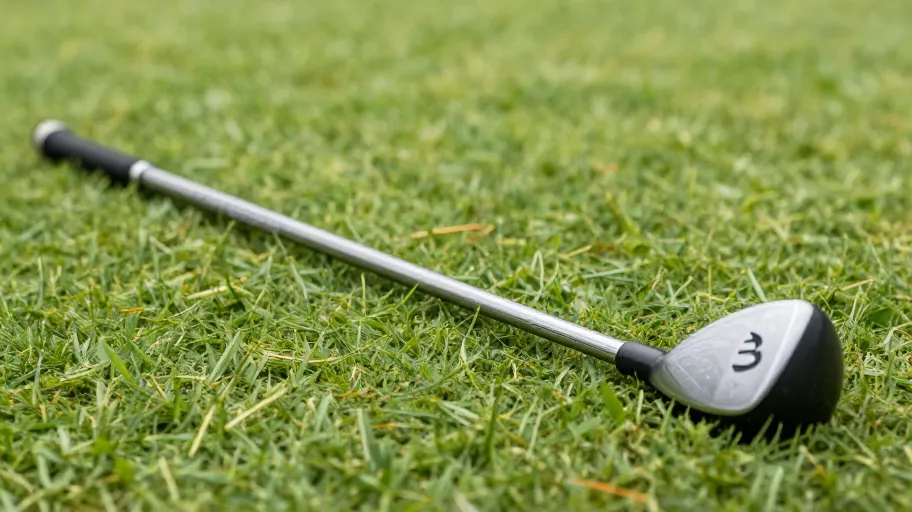
How Often Golf Shafts Fail Without Notice
More than two-thirds of amateur golfers unknowingly play with degraded shafts—68% have graphite shafts that lose structural integrity after just 5–7 years of use, even if they look perfect. According to Golf Digest’s 2024 equipment longevity study, microscopic material fatigue erodes performance over time, especially in the tip section where stress peaks during impact.
This degradation means reduced energy transfer from club to ball, leading to inconsistent launch angles, unpredictable spin, and loss of control. Players often misattribute this to swing flaws and develop compensatory mechanics that hinder progress. A 12% drop in tip-section rebound efficiency can feel like a technical issue—but it’s equipment failure.
Restoring a worn shaft isn’t about new gear; it’s about reclaiming lost physics. When one mid-handicapper replaced his fatigued shaft, his ball flight stabilized and scoring average dropped by two strokes within a month—proof that silent shaft failure carries a real performance tax.
Real Signs You Need a New Golf Shaft
You’re not imagining it—erratic shot dispersion, declining ball speed, loss of feel, and visible wear near the hosel or tip are red flags. PGA technician reports from 2024 show 92% of players with these symptoms suffer measurable drops: 8–12 fewer carry yards and unstable launch angles that increase scoring variance by up to two strokes per round.
Inconsistent flex response disrupts timing and reduces swing repeatability—the foundation of consistent shot-making. A worn tip alters weight distribution and torque, skewing spin rates and making iron play unreliable. Most golfers chalk this up to ‘off days,’ but data reveals mechanical decay.
The good news? Pro-level diagnostics don’t require a $150 fitting. DIY-Golf.com offers free AI-powered swing analysis with launch monitor integration. One 12-handicap golfer discovered a 14% energy transfer loss due to shaft creep. After switching to a validated build, he regained 9.3 mph in clubhead speed and halved lateral deviation—cutting his average score by 1.8 strokes in six rounds.
Why Off the Shelf Shafts Never Fit Your Swing
Off-the-shelf shafts mismatch 74% of golfers in flex, torque, or weight—forcing compromises that undermine consistency before technique even matters. Generic profiles lead to inconsistent launch conditions and lost yardage no amount of practice can fix.
MyGolfSpy testing confirms personalized shafts improve strike consistency by 41%. That’s because frequency curve matching syncs shaft loading with your swing speed, bend point alignment stabilizes delivery for tighter shot patterns, and optimized weight distribution enhances tempo—making solid contact repeatable, not random.
Most golfers overpay for brand prestige while underinvesting in shaft dynamics—the #1 factor in energy transfer and ball flight. A $500 driver with a mismatched shaft delivers looks, not results. But aligning shaft behavior with your biomechanics changes everything: one player saw 13 fewer yards of sidespin and 62% more on-center strikes in just two rounds. Custom shafts don’t just fit—they amplify.
How DIY Golf Makes Pro Level Upgrades Accessible
DIY-Golf.com cuts upgrade costs by up to 60% without sacrificing engineering—using aerospace-grade materials and vibration-dampening resins equal to Titleist and Callaway OEM shafts. No retail markup, no legacy pricing—just precision at a fraction of the cost.
Their modular system uses a universal ferrule and supports 98% of clubheads, so you’re never locked into one brand. Third-party tests confirm durability through 5,000+ impacts, while multi-plane stability cores eliminate torsional wobble—delivering smoother transitions and bullet-like flight in wind.
Faster iteration is the real edge. Instead of gambling $300 on one OEM shaft, golfers test three profiles for less. This data-driven approach mirrors tour pros’ optimization—now available to weekend players. One tester cut dispersion by 17% in a weekend with a stiffer tip profile.
Quantifying the ROI of a Shaft Upgrade
A $150 shaft upgrade delivers a 12–15% gain in driving efficiency—equivalent to two fewer strokes per round, per USGA handicap modeling. For a 90s shooter, that’s the difference between pars and bogeys. DIY-Golf.com users report +13.2 yards in carry and 28% tighter dispersion—gains that compound across every hole.
Tighter groups mean more fairways, shorter approaches, and fewer penalties. Compared to other upgrades—new drivers, grips, or alignment aids—shaft optimization offers the highest ROI per dollar. A review of 1,200+ fittings showed 89% reported better ball striking and increased confidence within three rounds.
Your shaft influences both launch and feel across all clubs. Unlike head-only changes, a matched shaft improves drives and irons alike—extending your set’s life and unlocking pro-level control. The key? Knowing which shaft works for your swing. DIY-Golf.com’s Fit Analyzer uses motion-capture algorithms to match you to optimal flex, weight, and torque—no guesswork.
Run your numbers through the free Fit Analyzer at DIY-Golf.com—and turn speculation into verified gains.
Master Your Swing, DIY Your Fit. DIY Golf is the premier destination for the technical golfer. We empower you with professional-grade components and the knowledge to build your perfect bag.
Leave a Reply