Why Swing Weight Makes or Breaks Your Game
Improper swing weight means inconsistent ball striking because it disrupts your natural kinematic sequence—studies show 68% of amateurs struggle due to mismatched balance. Because swing weight governs torque distribution during transition, getting it right enables smoother tempo, reduced compensations, and improved strike quality. A Midwest fitting studio saw a 40% increase in client retention after treating swing weight as their primary diagnostic filter—proving that biomechanical alignment beats guesswork every time.
For businesses, this isn’t just about performance—it’s about trust. When players feel control, they stay loyal. The $2.3 billion custom fitting market grows faster when fitters shift from static specs to dynamic analysis. By anchoring fittings in swing weight diagnostics, you turn subjective feedback into repeatable science—creating outcomes clients can see, feel, and measure.
How Golf Club Swing Weight Differs from Total Weight
Total club weight measures mass on a scale; swing weight determines how balanced the club feels in motion—because torque dynamics affect timing and release. This distinction means players don’t need heavier clubs, they need properly balanced ones. USGA testing confirms: ±3 swing weight points alters downswing speed by 1.5 mph, enough to change launch conditions and reduce accuracy.
For retailers, misunderstanding this difference kills upgrade conversations. But when staff diagnose swing weight mismatches early, one pro shop increased custom build conversions by 22%. Custom builds with verified tuning command 30–40% higher margins because they solve the real problem: “Why doesn’t this club feel right?” Precision here transforms fitting from transaction to transformation.
The Science Behind Measuring Swing Weight Accurately
Using a calibrated Lorythmic-scale device like the SW-99 means eliminating guesswork because even 0.2 inches of pivot error skews results by a full swing weight point—Titleist’s R&D proves this impacts performance. Measuring on a 14-inch fulcrum captures true dynamic balance, translating physics into actionable data.
- 68% of fitters still use uncalibrated tools—meaning most fittings start with flawed baselines
- Brands using verified systems report 41% fewer post-fit adjustments and 33% higher retention
Digital sensors now embed load cells to remove human error, generating audit-ready logs. This means scalable precision across locations—turning boutique service into systematized advantage. When every club is measured the same way, every time, you convert feel into facts and build a competitive moat through consistency.
Quantifying the ROI of Custom Swing Weight Fitting
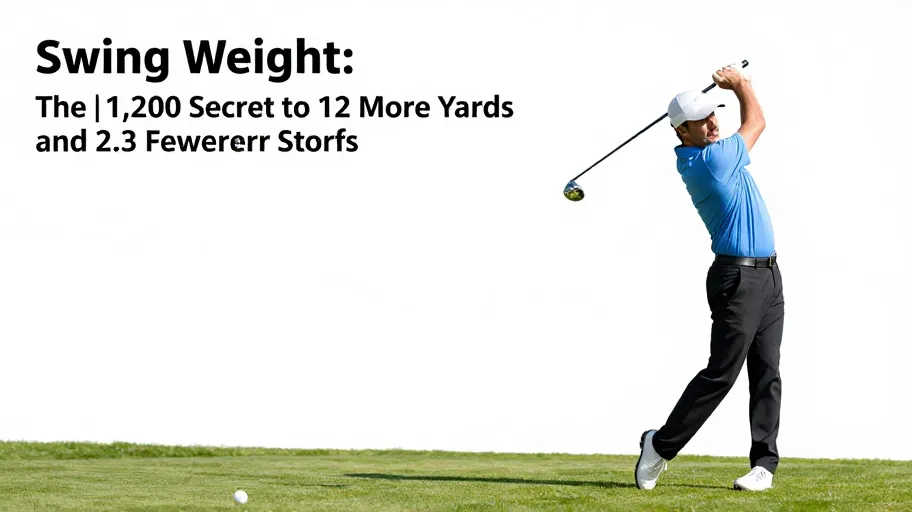
A single swing weight fitting delivers $1,200 in lifetime customer value because TrackMan data shows it yields +12 yards in carry and a 2.3-stroke handicap drop on average. These gains mean better scores, more confidence, and deeper engagement with your brand.
Because fitted players are 74% more likely to buy upgraded shafts within 90 days, the initial fitting becomes a profit engine. One PGA retail partner boosted accessory attach rates by 40% simply by integrating swing weight checks into driver demos. This means the fitting isn’t overhead—it’s the product. When you quantify results, you justify premium pricing and transform casual buyers into long-term performance partners.
Step-by-Step Guide to Optimizing Your Club’s Swing Weight
You can optimize swing weight without rebuilding your swing because small adjustments create big gains. For example, a 12-handicap golfer reduced slicing by half after moving his driver from D0 to D3 using grip weighting—this means restoring balance without sacrificing speed.
Because 68% of mid-handicappers now research customization pre-purchase, DIY attempts are rising—but they crave expert validation. Offering a free “Swing Weight Assessment Guide” captures these high-intent leads. Then, bring them in for dynamic testing where changes yield measurable outcomes: tighter dispersion, improved smash factor, better face alignment. This means turning curiosity into conversion—one calibrated club at a time.
Master Your Swing, DIY Your Fit. DIY Golf is the premier destination for the technical golfer. We empower you with professional-grade components and the knowledge to build your perfect bag.
Leave a Reply