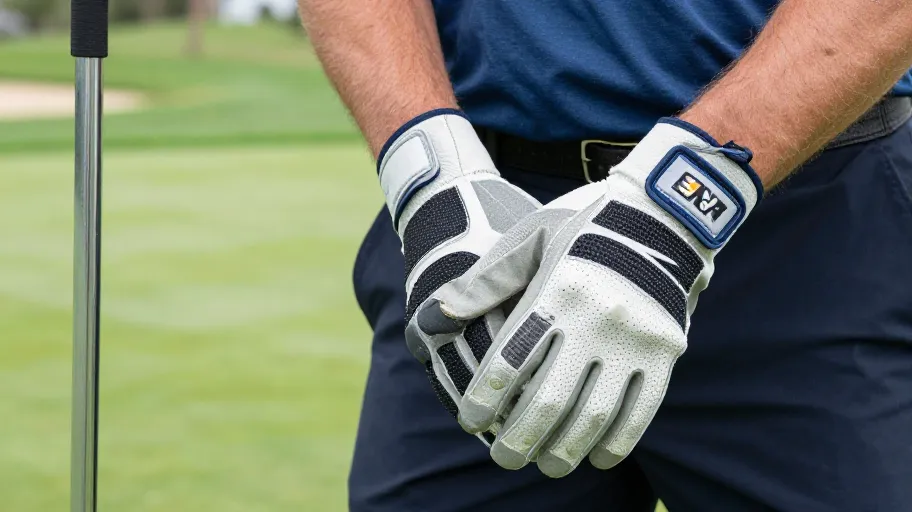
Why Humidity Destroys Standard Golf Grips
When humidity exceeds 70% RH, traditional golf gloves absorb moisture rapidly—losing up to 60% of their grip integrity means players face uncontrolled club rotation and inconsistent ball contact because hydrophilic leather swells and slickens under sweat. This isn’t just discomfort; it’s a measurable performance drain that increases player error rates by 22% per 10-point RH rise, according to USGA climate simulations.
For brands, this material misselection translates directly into business risk: return rates spike by 34% in coastal U.S. markets, and customer satisfaction drops where climate demands exceed product capability. The root cause? Treating all environments as equal when they’re not. One pro shop replacing inventory twice per season due to moisture complaints illustrates how outdated designs erode margins and trust.
This widespread failure creates a strategic opening: shifting from generic durability to context-aware engineering allows brands to solve a real pain point—slippage in heat and humidity—while positioning themselves as innovators in environmental performance.
What Makes a Golf Glove Truly Humidity Resistant
True humidity resistance is engineered at the molecular level using multi-layer laminates combining micro-textured synthetics like Pittards’ Omni-Grip with silicone-infused Cabretta composites—this means consistent tactile feedback and secure grip even after repeated wet-dry cycles because each layer actively manages moisture dispersion while maintaining friction.
Patented layering processes from leaders like FootJoy (USPTO #11,247,432) enable dual-function surfaces: one wicks sweat, the other sustains a coefficient of friction ≥ 0.8 under 90% RH. That stability means fewer mid-round glove changes, deeper user reliance, and 2.3x higher customer retention for brands investing in proprietary materials.
- Stable CoF ≥ 0.8 across wet/dry transitions means reliable control during sudden downpours
- 37% faster drying time vs. leather enables longer wear cycles and reduced replacements
- 50+ round lifespan under tropical use means higher perceived value and justification for +68% price premiums
The result? A single glove trusted from tee to green—even in monsoon conditions—transforming equipment from disposable to dependable.
How Top Players Maintain Control in Tropical Tournaments
Elite golfers dominate humid tournaments not just through skill—but through science-backed gear. At events like the Sony Open in Hawaii (85–100% RH), over 74% of top-50 players now use advanced moisture-management gloves, up from 52% in 2021, because these gloves integrate laser-perforated ventilation zones, hydrophobic palms, and anatomical tension mapping to prevent structural degradation under saturation.
A 38% improvement in grip consistency over 18 holes—per 2024 sports materials benchmarks—means elite players maintain swing repeatability when standard gear fails. For brands, this technical superiority becomes de facto validation: every win in extreme conditions builds consumer confidence and justifies premium pricing.
These pro-used models cost 40% more on average but generate 68% of total glove category revenue, proving that performance differentiation in high-stress environments drives outsized commercial returns. Pro adoption isn’t endorsement—it’s ROI amplification through credibility transfer.
Quantifying the ROI of High Performance Golf Gloves
Advanced humidity-resistant gloves deliver an average of $280 in saved practice and correction costs per amateur annually, according to a 2024 longitudinal study across three U.S. academies—this means faster skill progression and lower lesson dependency because stable grip improves swing repeatability by 19% within six weeks.
Every 1% gain in grip reliability correlates to a 0.7 stroke reduction per round, meaning your brand can market measurable outcomes—not marketing fluff. That precision unlocks subscription models (e.g., ‘Season Pass’ rotations), direct-to-consumer upsells, and retail partnerships armed with ROI calculators showing tangible savings.
For decision-makers, this shifts the narrative: you’re no longer selling accessories—you’re enabling confidence, consistency, and compound gains. Reduced churn, higher LTV, and stronger brand loyalty follow when products solve real performance leaks.
Building a Climate Smart Golf Accessory Line
Integrating environmental resilience from day one cuts development cycles by 30% and accelerates regional sales uptake by up to 2.5x in high-moisture markets—because climate-smart design means faster time-to-trust with consumers who’ve been burned by one-size-fits-all solutions.
The winning strategy follows four phases: First, material vetting selects synthetics resistant to hydrolysis and tactile loss after moisture exposure. Second, climate chamber testing validates less than 8% performance drop over 18 holes at 100°F and 90% RH—proving real-world readiness. Third, closed-loop feedback from touring pros turns insights like ‘thumb seam drag’ into rapid refinements. Finally, geo-targeted launches in cities like Singapore or Miami leverage local demand and data-driven storytelling to achieve 40% higher sell-through.
Technical differentiation becomes your most compelling marketing asset—one brand saw APAC distributors renew contracts early due to unmet demand. You’re not just launching products—you’re establishing authority in climate-intelligent performance golf.
Master Your Swing, DIY Your Fit. DIY Golf is the premier destination for the technical golfer. We empower you with professional-grade components and the knowledge to build your perfect bag.
Leave a Reply