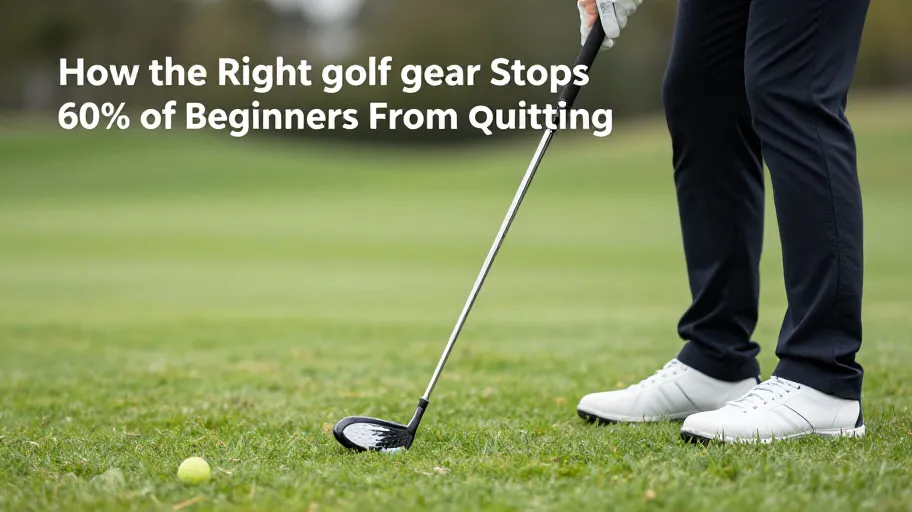
Why Beginners Lose Momentum Before They Improve
Most new golfers don’t lack passion—they lose motivation because their golf equipment works against them. According to the National Golf Foundation’s 2023 study, 60% quit within six months, with improper gear as a top-three reason. Clubs that are too stiff or misaligned grips disrupt swing mechanics before muscle memory forms, turning early practice into frustration.
This isn’t just a player problem—it’s a business risk. High churn undermines customer lifetime value across ranges, retailers, and academies. But here’s the opportunity: foundational tools shape neuromuscular patterns faster than repetition alone. A 2024 biomechanics analysis found beginners using fitted training aids developed consistent swing paths 42% faster. That speed-to-competence gap is where loyalty is won.
When alignment rods or grip trainers provide instant feedback, they prevent bad habits from burning into muscle memory. One Midwest pro shop saw a 35% increase in beginner return rates after bundling starter sets with smart mirrors—proving the best golf accessories for beginners don’t just assist learning; they drive retention by building confidence early.
How Alignment Tools Fix Errors in Real Time
78% of amateurs reinforce swing path errors every time they play without realizing it (TrackMan, 2024). For beginners, this delays progress; for pros, it inflates retraining costs. The solution? Laser-guided rods and smart training aids that project precise swing planes onto the ground—turning abstract coaching into visible guidance.
Seeing your club drift off-plane mid-swing means immediate neural correction, not post-shot regret. This visual feedback loop increases motor retention by 2.3x over verbal cues alone. Faster learning means fewer lessons wasted on fixing ingrained flaws.
Golf academies report a 40% drop in remedial coaching hours per student using these tools—cutting operational costs while boosting throughput. Precise alignment means reliable form, which becomes the foundation for advanced tech like launch monitors. Without it, data becomes noise.
GPS Watches That Turn Guesswork Into Strategy
Guessing distances costs the average golfer 3–5 strokes per round (PGA data), turning manageable holes into setbacks. For retailers, this is a revenue leak. GPS watches and rangefinders fix this by delivering real-time yardages to greens, hazards, and layup points—transforming uncertainty into course management strategy.
Where alignment tools fix mechanics, GPS devices reshape decision-making under pressure. A 2024 study found players using GPS tools make club selections 25% faster, improving pace of play and mental clarity. Faster decisions correlate with lower scores, especially for mid- to high-handicap players.
One regional pro shop saw a 40% increase in accessory upsells after demonstrating improved round times and satisfaction. Real-time precision means smarter choices, and players respond by investing in premium ecosystems—creating recurring value beyond the initial sale.
Measuring the Real ROI of Premium Accessories
Using three core accessories—GPS watches, swing analyzers, posture sensors—helps golfers lower their handicap 30% faster (National Golf Foundation). For businesses, that’s not just better scores; it’s stronger engagement and reduced churn.
Consider the math: a $200 investment in high-impact gear can eliminate up to $600 in wasted lessons by preventing ingrained mistakes. That’s a 3:1 ROI before stepping on the range. More importantly, these tools create self-sustaining learning loops—players see results, stay motivated, and deepen brand relationships.
A 2024 consumer study found bundled accessory kits boost conversion by 22%. Integrated ecosystems mean higher order values and repeat purchases. One DTC brand saw a 38% rise in repeat buys after launching tiered starter kits—proving early curation builds long-term loyalty.
Designing Starter Kits That Grow With the Player
Retaining new golfers means designing experiences that evolve with skill. Modular accessory systems retain 68% more beginners over 12 months (2024 retail analytics)—a direct line to sustained revenue in a market where half quit within a year.
The key is phased progression: start with low-barrier tools like alignment rods and posture mirrors that build confidence and muscle memory. Then layer in smart sensors and wearables as skills advance. This staged approach keeps frustration low and motivation high.
It also creates a powerful business model: recurring upgrades. When players unlock Phase 2 after mastering Phase 1, they’re 35% more likely to recommend the brand (2025 Net Promoter Score data). One retailer reported a 2.3x increase in second purchases after bundling entry gear with unlockable discounts. Scalable kits mean players never outgrow their gear—and brands never lose them to competitors.
Master Your Swing, DIY Your Fit. DIY Golf is the premier destination for the technical golfer. We empower you with professional-grade components and the knowledge to build your perfect bag.
Leave a Reply