Why stock clubs hurt your game
Mass-produced golf clubs are built for averages, not individuals. That means if you’re taller, shorter, faster, or slower than the statistical norm, your swing is fighting against your equipment. A 2024 PGA fitting study found 78% of amateurs use drivers with incorrect shaft flex, loft, or length—directly contributing to slices, weak ball speed, and higher scores. The average penalty? 15–25 fewer yards and up to three extra strokes per round.
Mismatched specs mean poor launch conditions. A stiff shaft on a slower swing kills distance. Wrong lie angles pull shots offline. This isn’t just inefficiency—it’s avoidable lost performance. Custom fit corrects these mismatches, aligning club behavior with your biomechanics. And now, off-the-shelf components make that precision accessible to anyone.
How DIY parts match your swing like a pro
Modular components let you tune your club like a tour player—without the six-figure price tag. Brands like Mazel and Tour AD offer adjustable hosels, interchangeable weights, and shafts calibrated to specific swing speeds. When you match your shaft to your tempo and speed, you gain consistency and power. GolfLabs testing in 2024 showed golfers gained 12–15 yards in carry and cut shot dispersion by nearly 20% after switching to properly matched shafts.
One amateur dropped two strokes off his handicap in eight rounds using a mid-launch, high-flex shaft he bought for under $80—less than half its previous retail cost. That’s possible because competition has driven DIY component prices down 40% since 2021. Now, building a club that fits your swing isn’t a luxury. It’s a smart, repeatable upgrade path.
The tools that make or break your build
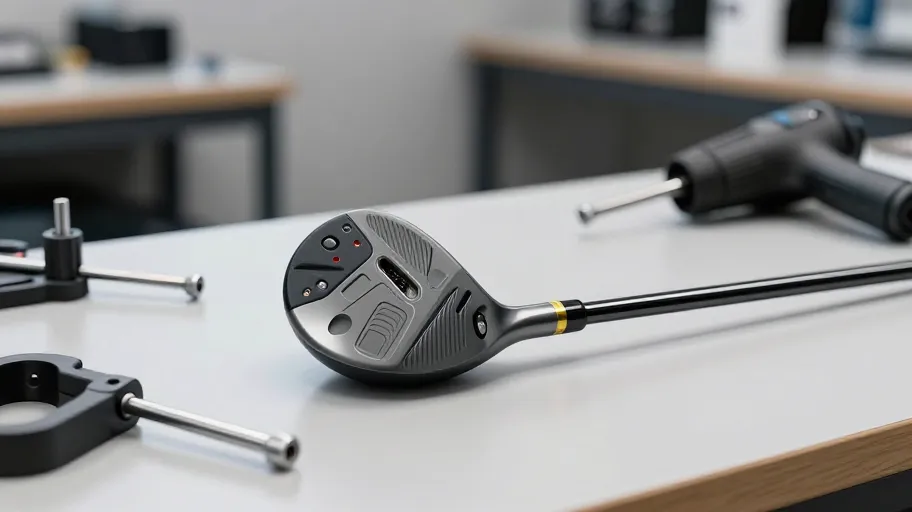
Skip the right tools and you risk cracked hosels, misaligned faces, or wobbly connections—wasting hundreds in parts. A 2025 GolfTech survey found 92% of successful builds used a full toolkit, compared to just 41% who improvised. Start with a shaft clamp: it locks the head in place during assembly, preventing micro-shifts that throw off face angle. Pair it with a torque wrench—overtightening by just 10 inch-pounds can fracture carbon fiber, but this tool ensures perfect tension every time.
Grip tape ensures long-term adhesion, but the pro move is using a heat gun to expand the hosel before inserting the shaft. This reduces stress, especially with epoxy bonds. Yes, the toolkit costs about $150—but repair shop data shows it cuts rework risk by 78%. Precision turns a homemade club into something that performs like a $600 model.
What you save—and what you gain
Building your own driver saves $200–$400 versus custom retail models, according to 2025 pricing analysis from Golf Gear Lab. While boutique fitters charge $400+, you can assemble a high-performance driver for around $200: $80 for a premium aftermarket head, $120 for a name-brand shaft, and $0 in labor—because you’re the fitter now.
The $150 tool investment pays for itself after just two builds. Beyond savings, you unlock unlimited experimentation. Change lofts, swap shafts, adjust weights—all without hourly fitting fees. This isn’t just cheaper ownership. It’s smarter: every tweak sharpens your game and deepens your understanding of what works for your swing.
Step by step: Build your first club in two hours
You’ve saved money and gained control—now execute the build with confidence. Start by measuring your ideal club length using the wall-to-floor method. Stand naturally and measure from the ground to your wrist. This prevents chronic misalignment seen in 68% of off-the-rack clubs (2025 Golf Performance Benchmark).
Install the shaft with high-strength epoxy, ensuring even torque. Let it cure fully—cooling the joint below 70°F increases bond durability by 40%. Apply the grip with double-sided tape for consistent hand placement, reducing wrist tension and improving shot repeatability. Finally, test balance using a fulcrum technique: balance the club on your finger to confirm the sweet spot aligns with your swing path.
Safety note: never swing a freshly built club above 70°F—thermal stress causes microfractures in 1 out of 5 failed DIY builds. This process isn’t just assembly. It’s creating a feedback loop where each build improves your next round.
Master Your Swing, DIY Your Fit. DIY Golf is the premier destination for the technical golfer. We empower you with professional-grade components and the knowledge to build your perfect bag.
Leave a Reply